How do you reach Gwalior by road from Agra, and what does the taxi cost?
Gwalior is about 120 km south of Agra on NH44, typically a 2.5-hour drive through Dholpur and Morena. RutzIndia.com charges Rs 4,320 Pay Now to Reserve one way in a sedan and Rs 6,840 Pay Now to Reserve in an Innova Crysta, before 5% GST. A same-day return is billed on the 250 km daily minimum: Rs 9,000 Pay Now to Reserve by sedan.
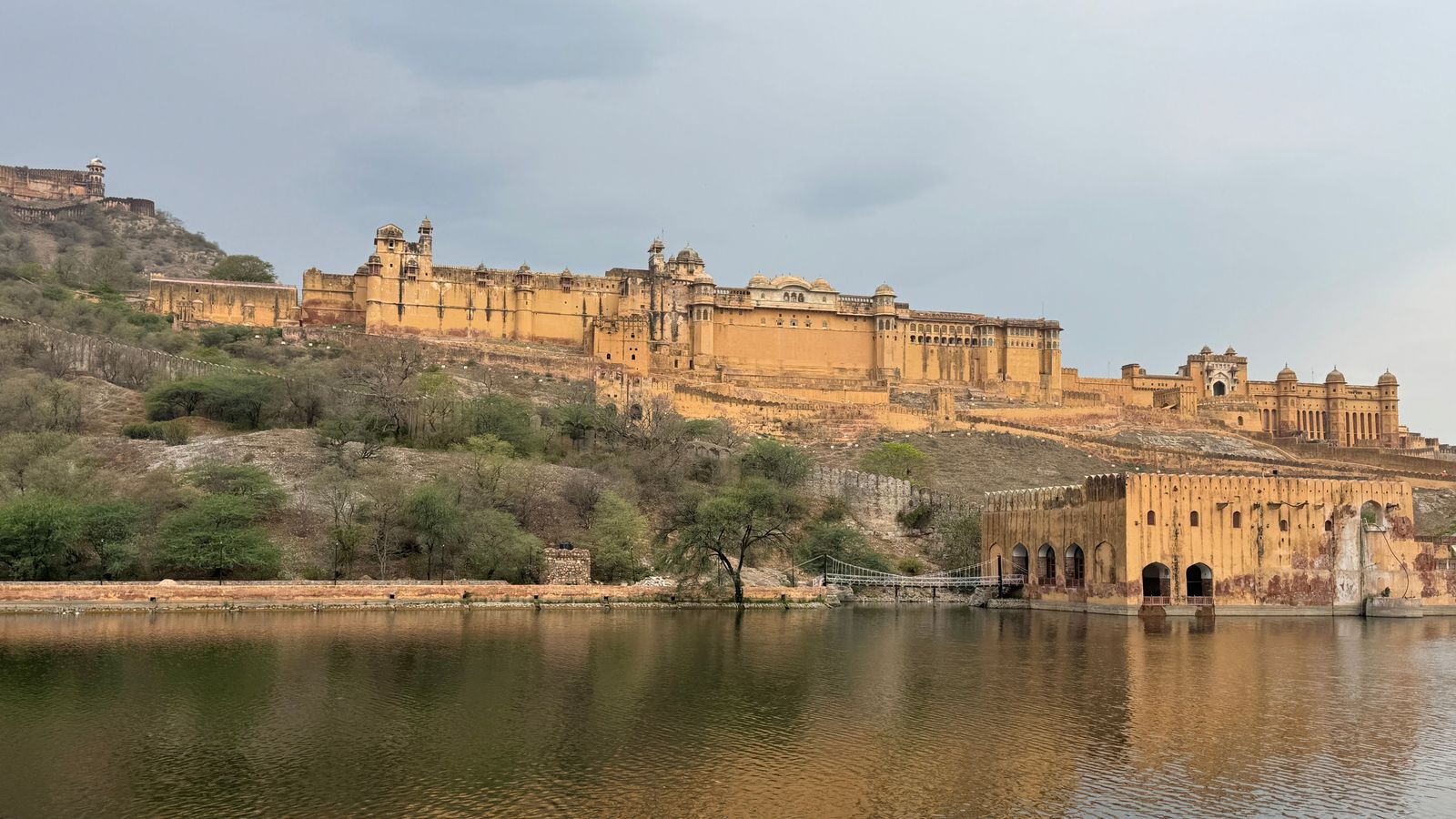
Most travellers treat Gwalior as a name on a railway timetable between Agra and Jhansi. That is a mistake worth correcting with a car. The city sits under one of the most dramatic hill forts in India, a flat-topped sandstone ridge nearly three kilometres long whose cliff faces are carved with colossal Jain figures and whose rim carries a palace tiled in turquoise and yellow. Below it lies a royal Maratha city of palaces, a Mughal-era musician's tomb that still hosts an annual music festival, and street food that people from Delhi drive down for on winter weekends.
This guide is written for the traveller who wants to do it properly with a chauffeur: a family extending a Taj Mahal visit by a day, a couple on a slower Golden Triangle, a history teacher with a group of students, or overseas visitors heading from Agra to Orchha and Khajuraho who want the road rather than the train. If you are starting from the capital, look at the Delhi to Agra taxi fares first; the Gwalior leg simply continues south from there.
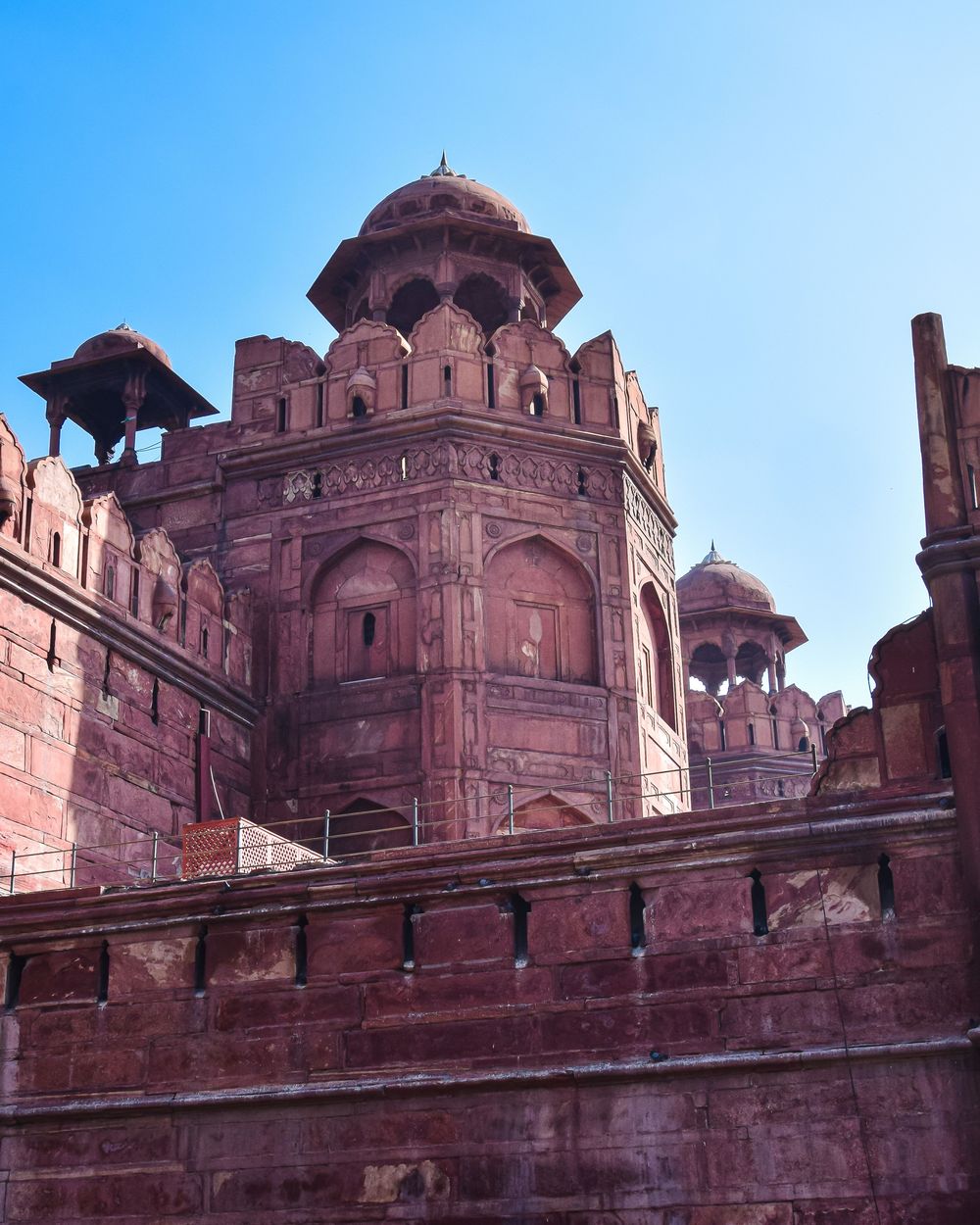
What to see in Gwalior: fort, palaces and music
Gwalior Fort. Start at the top. The fort has two approaches: the steep Gwalior Gate road on the east, lined with rock-cut shrines, and the Urwai Gate road on the west, which climbs past a gallery of enormous Jain Tirthankara statues cut into the cliff in the fifteenth century. Your chauffeur will usually drive up by Urwai so you can see the statues, then park near the Man Mandir.
Man Mandir palace. Built by Raja Man Singh Tomar around the turn of the sixteenth century, the palace is the reason the fort looks the way it does from the city: a long wall of blue, green and yellow glazed tiles with ducks, elephants and banana trees marching across it. Inside are cool, dim underground chambers that were later used as a prison. The evening sound-and-light show is held in the palace courtyard; the timings change with the season, so check at the ticket window.
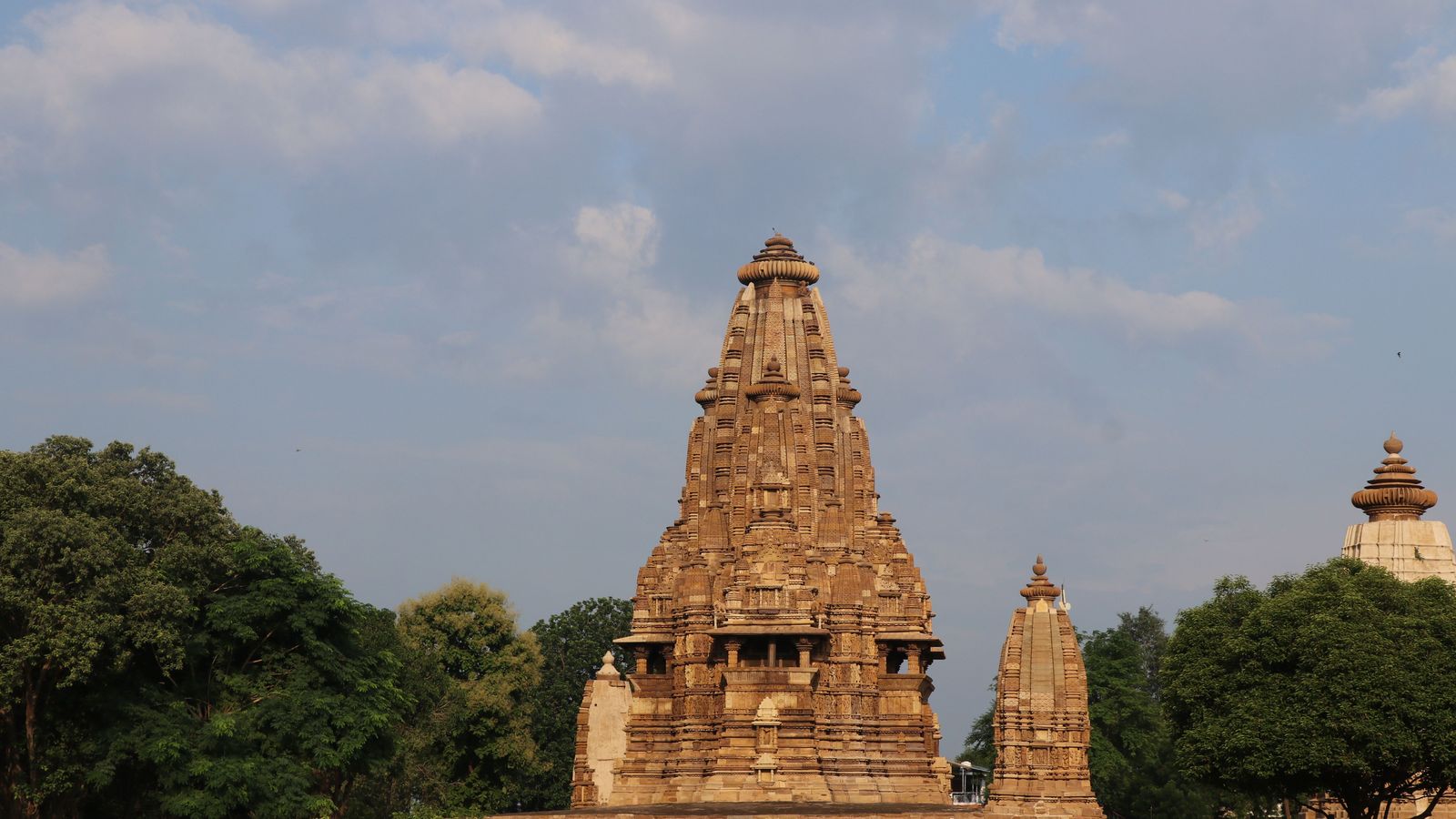
Teli ka Mandir and the Sas-Bahu temples. The Teli ka Mandir is one of the oldest structures on the hill, a tall temple with a wagon-vaulted roof that looks more southern than northern. The Sas-Bahu pair, dedicated to Vishnu and heavily carved, date from the eleventh century. Nearby, a small Vishnu temple on the eastern approach, the Chaturbhuj temple, carries an inscription that is often cited as one of the earliest written uses of zero as a numeral.
Gurdwara Data Bandi Chhod. The gurdwara on the fort commemorates Guru Hargobind, who is remembered as having secured the release of fifty-two imprisoned kings along with himself. It is a peaceful place with a langar, and visitors of all faiths are welcome; cover your head.
Gujari Mahal museum. At the foot of the fort, the palace Man Singh built for his Gujar queen Mrignayani now houses an archaeological museum. Ask for the Shalabhanjika, a small, famous sculpture of a woman beneath a tree, which is sometimes kept in a separate room.
Jai Vilas Palace. In the new city, the Scindia family's nineteenth-century palace mixes Italian, Tuscan and Corinthian styles. Part of it is the Jiwajirao Scindia Museum, whose Durbar Hall holds two of the largest chandeliers in the world and whose dining room is known for a silver model train that once carried brandy and cigars around the table.
Tansen's tomb. The great musician of Akbar's court lies in a garden next to the domed tomb of his teacher, the Sufi saint Muhammad Ghaus. Every December the Tansen Samaroh brings classical musicians here for several nights, and in 2023 Gwalior joined UNESCO's network of Creative Cities for music. The Madhya Pradesh Tourism guide to Gwalior keeps a current list of sights and festival dates.
Food. Breakfast is bedai and aloo sabzi with jalebi in the old market lanes around Sarafa Bazaar; evenings are for kachori, samosa and rabri. In winter, the gajak (sesame and jaggery brittle) from Morena is sold everywhere along the highway.
The road from Agra: NH44, the Chambal and three states in one morning
The drive from Agra is short but surprisingly varied. You leave Agra on NH44 heading south, and within the first hour you pass from Uttar Pradesh into Rajasthan at Dholpur, then into Madhya Pradesh across the long bridge over the Chambal. From the bridge you see the famous Chambal ravines: a maze of eroded clay gullies, once bandit country, now the edge of the National Chambal Sanctuary, where gharials and freshwater dolphins live in one of the cleanest rivers in north India. Ask your driver to pull over at a safe spot near the bridge for a photograph.
Because the route crosses state lines, a commercial taxi pays state entry permits for Rajasthan and Madhya Pradesh. RutzIndia.com passes these on at actual cost with the tolls on NH44; you never have to deal with a checkpost yourself. The road is a four-lane divided highway for almost the whole way, with dhabas at Dholpur and Morena. Traffic slows in Morena town and at the entry to Gwalior, where the highway meets the city at the Nirawali side; allow twenty extra minutes at evening peak.
Two detours are worth planning in advance. The first is the temple cluster around Mitaoli, Padavali and Bateshwar in Morena district, roughly 40 km short of Gwalior: a circular Chausath Yogini temple on a hilltop and a field of some two hundred small sandstone temples that archaeologists have painstakingly reassembled. The second, only for early risers, is a morning boat ride on the Chambal to see gharials; it needs to be arranged with the forest department at the sanctuary.
From Delhi the drive is about 320 km, via the Yamuna Expressway to Agra and then NH44, typically 5.5 to 6 hours. The NHAI website lists the toll plazas on both roads if you want to check the current charges.
When to go: winter music, summer heat and monsoon greens
Gwalior has a continental climate. October to March is the best window: clear, dry days, cool mornings and, in December and January, genuinely cold nights, sometimes with fog on the highway before 9 am. That is also when the Tansen Samaroh takes place and when the city's long-running winter trade fair draws crowds from across the Gwalior-Chambal region.
April to June is fierce. Afternoon temperatures in the mid-forties are normal, and walking the fort after 11 am is punishing. If summer is the only option, start at 6.30 am, finish the fort by 10, and spend the afternoon inside Jai Vilas and the museums.
The monsoon (July to September) greens the ravines and softens the heat, and the fort looks spectacular under low cloud. The highway stays open, though side roads to the Morena temples can be muddy. Holi in March is a lively time in the old city; Diwali brings lamps and fireworks to the ghat-like tanks inside the fort.
Chauffeured services RutzIndia.com runs for Gwalior
Most Gwalior guests use one of four patterns: a one-way drop from Agra, a same-day return, a multi-day circuit onward to Orchha and Khajuraho, or an airport transfer at Gwalior's own Rajmata Vijaya Raje Scindia airport, which is about 10 km from the city centre. Airport and railway station pickups include a name board; after a domestic arrival there are 30 minutes of free waiting, then waiting is billed at the hourly rate.
Families and school groups use a Tempo Traveller from Agra, and a few couples book a luxury sedan for a heritage-hotel stay. All cars are within four model years.
| Trip (from Agra unless noted) | Sedan (Dzire class) | Innova Crysta | Tempo Traveller |
|---|---|---|---|
| One way Agra to Gwalior, about 120 km (tempo at minimum fare) | Rs 4,320 Pay Now to Reserve | Rs 6,840 Pay Now to Reserve | Rs 9,870 Pay Now to Reserve |
| Same-day return (250 km daily minimum) | Rs 9,000 Pay Now to Reserve | Rs 14,250 Pay Now to Reserve | Rs 19,500 Pay Now to Reserve |
| Two days, Agra - Gwalior - Agra (500 km minimum) | Rs 18,000 Pay Now to Reserve | Rs 28,500 Pay Now to Reserve | Rs 39,000 Pay Now to Reserve |
| One way Delhi to Gwalior, about 320 km | Rs 11,520 Pay Now to Reserve | Rs 18,240 Pay Now to Reserve | Rs 24,960 Pay Now to Reserve |
| Gwalior airport or station transfer (up to 40 km) | Rs 3,960 Pay Now to Reserve | Rs 6,930 Pay Now to Reserve | Rs 10,740 Pay Now to Reserve |
Fares are before 5% GST. Tolls, state entry permits and parking are added at actual cost, and on multi-day trips a driver night allowance of Rs 1,500 per night applies. Round trips are billed on at least 250 km per calendar day. A Mercedes E-Class one way from Agra works out at Rs 19,800 Pay Now to Reserve at Rs 165.6/km, useful if you are staying at one of Gwalior's palace hotels.
Booking is simple: book online, pay by card or UPI, and receive the car and chauffeur details before the trip. Corporates get GST invoices. Cancellation is free until 72 hours before pickup, 10% within 72 hours, 50% within 48 hours and 100% inside 24 hours or on a no-show; the full wording is on our cancellation policy page. For all other routes, see our outstation cabs page.

Suggested itinerary: Gwalior in one or two days by car
Day 1, Agra to Gwalior (about 120 km). Leave Agra at 7 am, breakfast at a Dholpur dhaba, stop at the Chambal bridge viewpoint, and reach Gwalior by 10. Drive straight up the fort by the Urwai road past the Jain statues, and spend the late morning at Man Mandir, Teli ka Mandir and the Sas-Bahu temples. Lunch in the city, then Gujari Mahal in the afternoon and Tansen's tomb at golden hour. Return up the hill for the evening sound-and-light show if you are staying overnight. Around 140 km of driving in all.
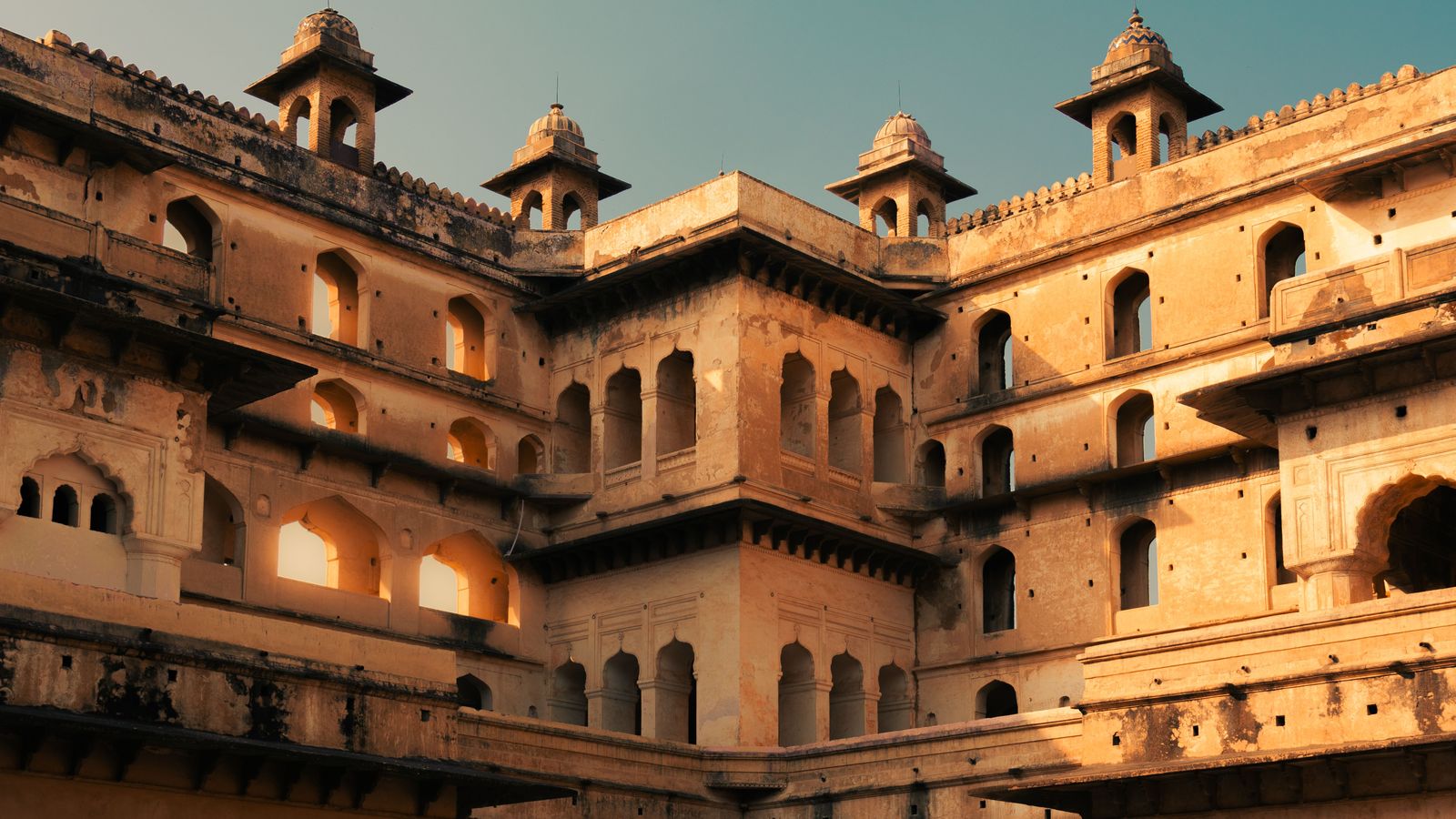
Day 2, Gwalior and back or onward (about 40-160 km). Morning at Jai Vilas Palace when it opens, then either return to Agra by mid-afternoon or continue to Orchha (about 120 km via Datia, where the seven-storey Bir Singh Palace is worth a quick stop). From Orchha, most guests continue to Khajuraho the next day.
With a third day. Add Shivpuri, about 120 km south-west: the marble chhatris of the Scindia rulers and the lakes and forests of Madhav National Park. It turns Gwalior into a slow, rewarding circuit rather than a detour.
If you are building a bigger holiday, our Golden Triangle tour by car can be extended from Agra to take in Gwalior, Orchha and Khajuraho before you fly out of Khajuraho or return to Delhi.
Practical tips for a Gwalior road trip
- Parking. Cars can drive up to the fort plateau and park near Man Mandir and the Sas-Bahu temples; the parking fee is on your invoice at actual cost. In the old city, the lanes around Sarafa Bazaar are tight, so your chauffeur will drop you and wait on a wider road.
- Tickets. The fort monuments are run by the Archaeological Survey of India and the state, and Jai Vilas is a private museum with its own ticket and camera fee. Rates change; check at the counter or on the Archaeological Survey of India website.
- Timing. Gujari Mahal and Jai Vilas each keep a weekly closing day, so confirm before you fix the day you plan to see them.
- Heat and water. Carry water and a hat even in March; the fort top has little shade.
- Dress. The gurdwara needs covered heads and bare feet; the temples need modest dress.
- Flights. If you are flying in, the Airports Authority of India page for Gwalior lists the terminal details; give us the flight number and we track the arrival.
Gwalior rewards the traveller who arrives by car: the road lets you see the Chambal, stop at forgotten temple fields and reach the fort top in the cool of the morning. For the Agra end of the trip, our Agra taxi service page covers local hire and airport transfers.