This Buddhist circuit tour package covers Varanasi, Sarnath, Bodhgaya, Rajgir and Nalanda in six days and five nights, starting and ending in Varanasi, with one private car and chauffeur. The car is priced per km on a minimum of 250 km a day; hotels, meals and entry tickets are quoted separately by our travel desk.
Who this six-day route is for
The six-day circuit takes in two of the four places the Buddha himself named as pilgrimage sites: Sarnath, where he taught first, and Bodhgaya, where he attained enlightenment. It adds Rajgir and Nalanda, which played a major role in early Buddhism and later in Buddhist scholarship. That makes it the right choice for pilgrims with limited time, students and teachers of Indian history, and travellers who want a meaningful week beyond the usual Delhi-Agra-Jaipur loop.
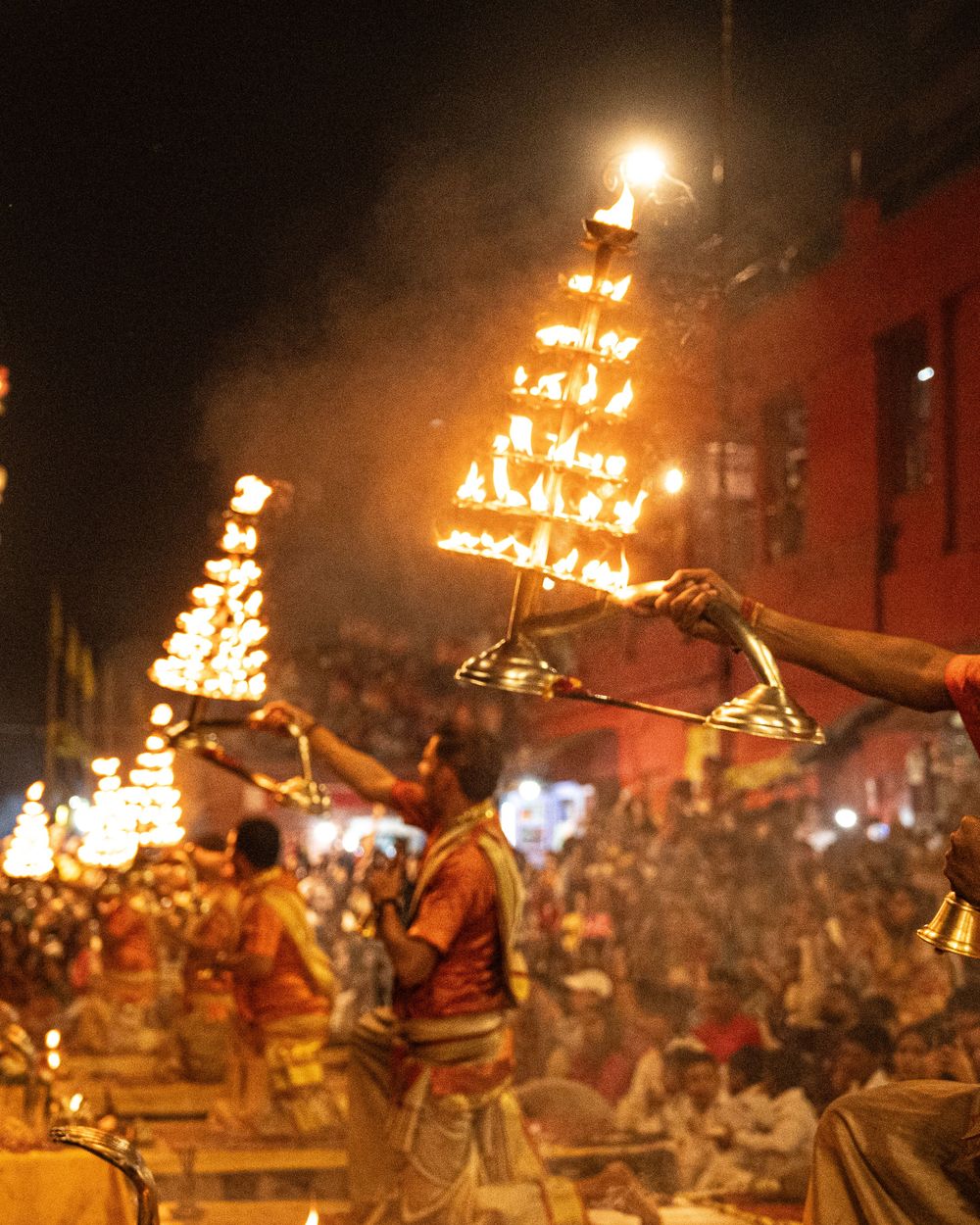
It also suits people who want Varanasi on the same trip. Two nights in the old city give you a dawn boat, an evening aarti and time for the lanes, before the drive into Bihar.
The pace is deliberately uneven. Days 3 and 6 are the only long drives; everything else is a short hop or a day spent almost entirely on foot at the sites. That rhythm works well for older pilgrims, who can rest in the car on the travel days and spend the site days slowly. It also means the Bodhgaya nights are consecutive, so you can unpack once and use the town as a base for Rajgir and Nalanda rather than moving hotels every morning. If you would rather sleep in Rajgir, the desk can swap one Bodhgaya night for a Rajgir hotel at no change to the car fare method.
If you want to complete more of the circuit, the eight-day Buddhist circuit package continues north from Bodhgaya to Vaishali, Kushinagar, where the Buddha died, and Sravasti, finishing in Lucknow. Choose the longer trip if Kushinagar matters to you; choose this one if you want a round trip from Varanasi and less time in the car.
The road: Grand Trunk Road into Bihar
Varanasi to Bodhgaya runs east along NH-19, the modern Grand Trunk Road, a wide highway that crosses into Bihar near Mohania and passes Sasaram, where Sher Shah Suri's tomb stands in its lake a short detour off the road. From Aurangabad the route continues to Dobhi and then south to Bodhgaya. Expect about five and a half to six hours with a lunch stop, most of it on good dual carriageway, with a few slow stretches through towns and at toll plazas.
The Rajgir and Nalanda day uses two-lane state roads through fields and villages; they are generally in fair condition but carry tractors, auto-rickshaws and livestock, so the pace is steady rather than fast. Winter mornings from mid-December to late January often bring dense fog on the plains of Bihar and eastern Uttar Pradesh. The chauffeur may delay the start of a long leg until visibility lifts, which is why the itinerary keeps Day 3 flexible.
Cars from outside Bihar pay a state entry permit, which we pass on at actual cost. Bihar is a dry state, and alcohol is not served or sold anywhere, including hotels.
At the sites: timings and etiquette
- Dress: shoulders and knees covered at temples and monasteries. Shoes come off inside shrines and on the platform around the Bodhi tree, so wear socks or easy slip-ons.
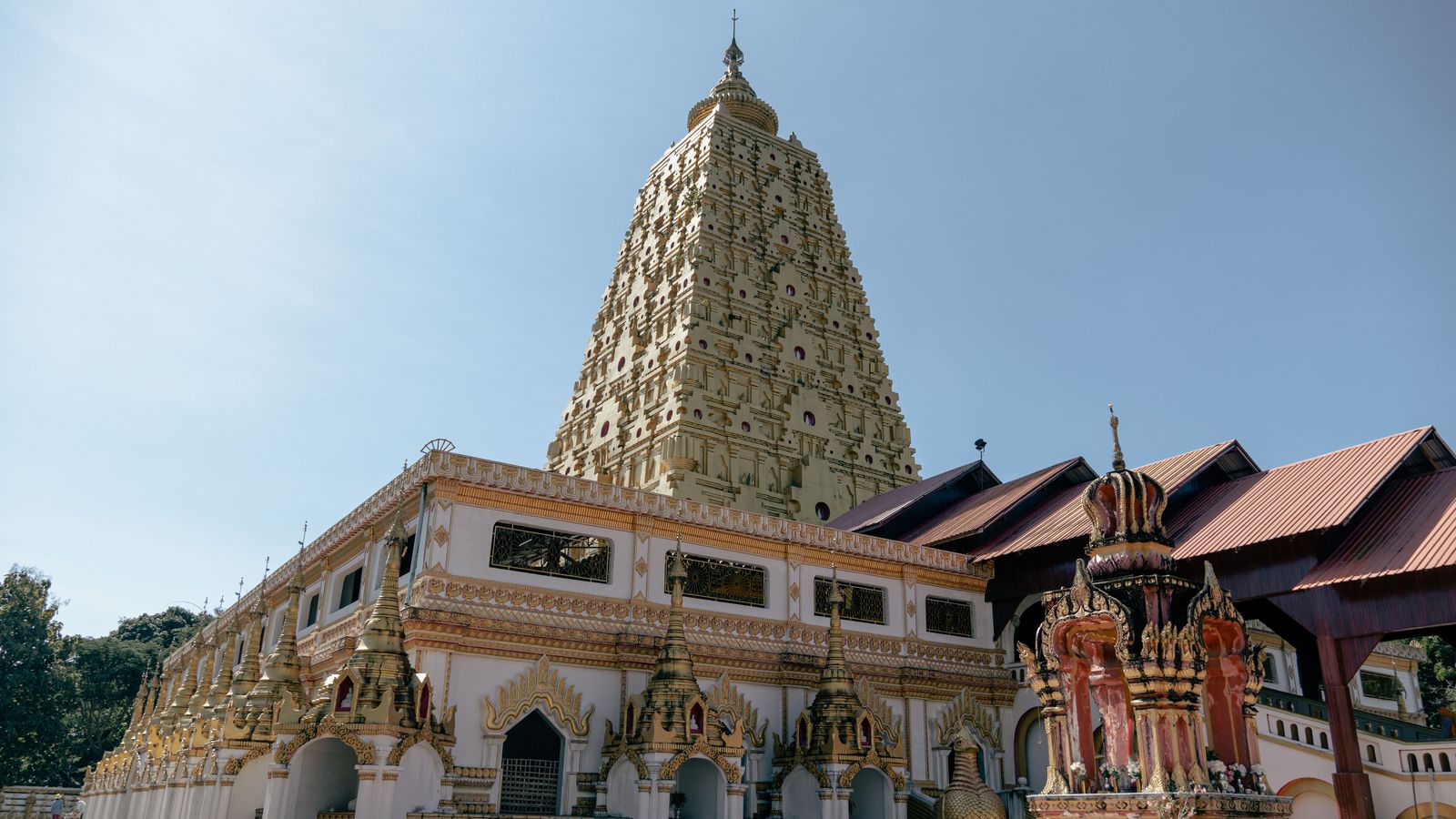
- Mahabodhi temple: opens before dawn and stays open into the evening. Rules on phones and cameras have changed over the years; if in doubt, leave them in the car with the chauffeur. The temple is a UNESCO World Heritage Site, and the Mahabodhi temple article gives its history.
- Sarnath and Nalanda museums: both are run by the Archaeological Survey of India and close on Fridays. Our plan places the museum visits on other days, so tell us if you move dates.
- Silence: meditation goes on at all hours around the Bodhi tree. Keep voices low and do not step over people sitting on the ground.
- Guides: licensed guides are available at each site and make the ruins at Nalanda far easier to read. The travel desk can arrange them.
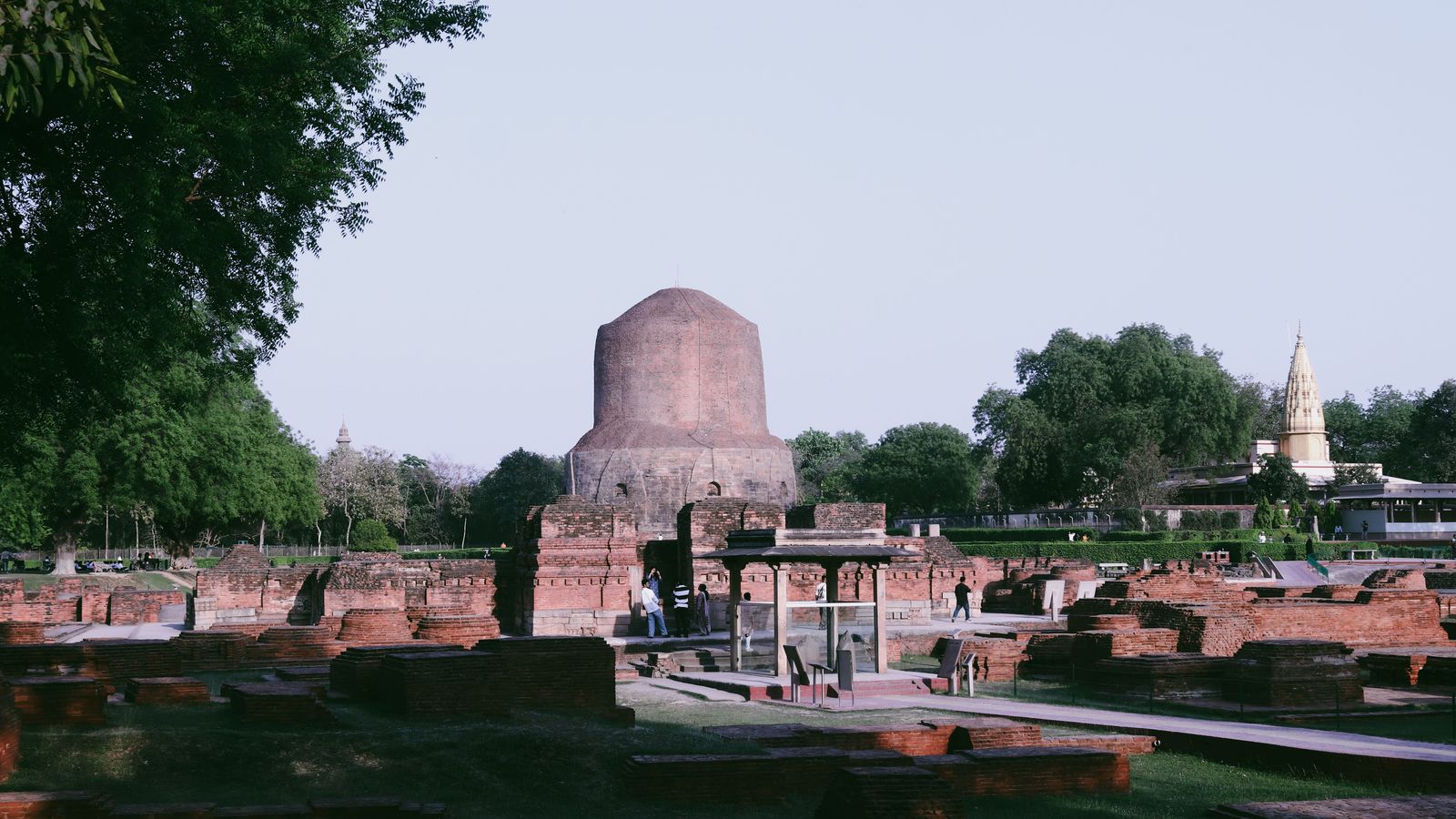
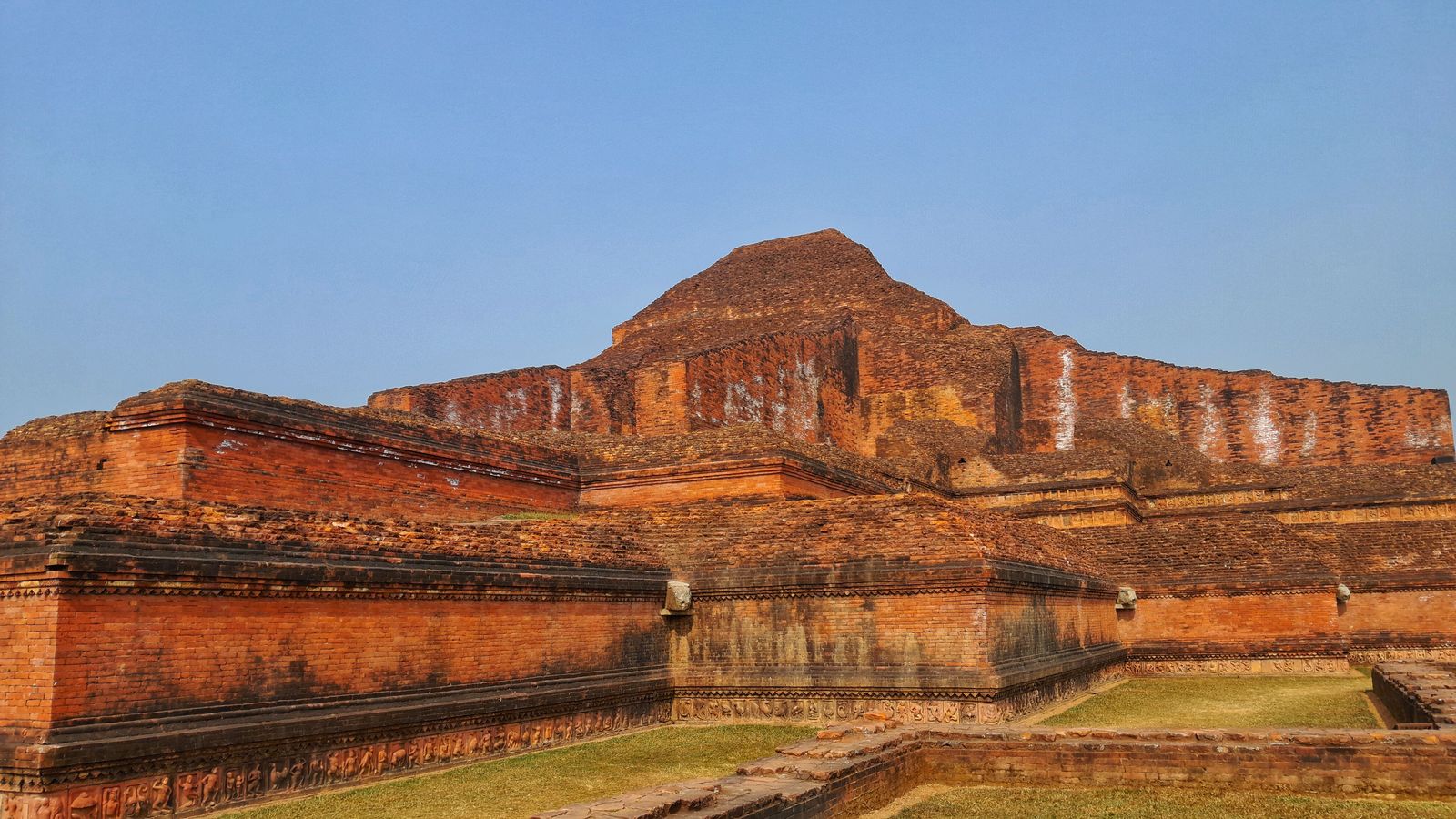
Background on Sarnath and its stupa is on the Sarnath article, and the Nalanda Mahavihara page covers the university's history.
Where to stay
Varanasi. Hotels near the ghats give you walking access to the river and the aarti, but cars cannot reach many of them, so a short walk with luggage is normal. Cantonment-area hotels are quieter, with easy car access, and the chauffeur drives you to the river each time.
Bodhgaya. Hotels cluster within walking distance of the Mahabodhi, from simple guesthouses to larger hotels built for pilgrim groups. Several monasteries run guesthouses for their own pilgrims. December to February brings large Tibetan Buddhist prayer gatherings and tour groups from across Asia, so rooms fill early.
The travel desk can hold rooms in both towns and put the car and hotels into one written quote.
Season and festivals
October to March is the comfortable season, with cool mornings and warm afternoons. December and January can be foggy at dawn and cold at night, especially in Bodhgaya. From April the plains heat up quickly, and May and June are very hot for long visits to exposed ruins; Buddha Purnima, the full moon of Vaisakha in April or May, is a special time in Bodhgaya but brings heat and crowds. July to September is the monsoon: humid, with heavy downpours. In October or November, Chhath Puja fills Bihar's ghats and roads for several days, and Diwali and Dev Deepawali bring huge crowds to Varanasi, beautiful but busy.
Picking a vehicle
- One or two travellers: a sedan at Rs 72/km is comfortable on the GT Road.
- Families of four or five: an Ertiga at Rs 84/km, or an Innova Crysta at Rs 114/km for more comfort on the long day into Bihar.
- Pilgrim groups and monasteries: a Tempo Traveller in Varanasi at Rs 156/km seats up to twelve with luggage; a Force Urbania at Rs 204/km is quieter and smoother for longer days.
Every vehicle is within four model years. The complete list is on the fleet page.
Extending or changing the route
The simplest extension is the eight-day version, which continues to Kushinagar and Sravasti. You can also add a day in Varanasi for the lanes and silk weavers, or a night in Rajgir to avoid driving back to Bodhgaya. Travellers leaving from the east can end in Patna, and those arriving from Kolkata can start there; see our tour packages from Kolkata. For another eastern trip, look at the Odisha tour package. Local transfers in Varanasi are covered on our Varanasi taxi service page.
Fare and booking
The fare table on this page uses the larger of two figures: the kilometres actually driven, roughly 800 km including airport and local runs, and 250 km for each of the six days. Here the daily floor of 1,500 km applies, multiplied by the per-km rate for your chosen class. The driver's night allowance of Rs 3,000 a night, tolls, state permits and parking are added at cost, followed by 5% GST.
Book the car in the web booker or at /book/ and pay by card or UPI. For an all-inclusive quote with hotels, guides and meals, write to the travel desk. Cancelling more than 72 hours before pickup is free; within 72 hours the charge is 10%, within 48 hours 50%, and within 24 hours or on a no-show 100%. Full terms are on the cancellation policy page. RutzIndia.com provides GST invoices for institutions and companies.