How to reach Bodh Gaya by road
Bodh Gaya is about 115 km from Patna, typically 3 hours by car on NH22 via Jehanabad and Gaya, and about 250 km from Varanasi on NH19. RutzIndia.com charges Rs 4,140 Pay Now to Reserve one way by sedan and Rs 6,930 Pay Now to Reserve by Innova Crysta (minimum fare applies) from Patna, and Rs 9,000 Pay Now to Reserve by sedan from Varanasi, before 5% GST.
For Buddhists, Bodh Gaya is the most sacred place on earth: the spot where, sitting beneath a pipal tree by the Niranjana river some two and a half thousand years ago, Siddhartha Gautama attained enlightenment and became the Buddha. The Mahabodhi Temple complex that marks the place is a UNESCO World Heritage Site, and around it has grown a small international town of monasteries, meditation centres and guesthouses, built by Buddhist communities from Thailand, Japan, Bhutan, Tibet, Myanmar, Vietnam, Sri Lanka and beyond.
Pilgrims arrive by road from three directions: from Patna, the state capital with the main airport; from Gaya, the nearby town with its own international airport and railway junction; and from Varanasi and Sarnath, where the Buddha preached his first sermon. Many continue to Rajgir and Nalanda to complete a Bihar Buddhist circuit. This guide covers each route, what to see, seasons and festivals, what a chauffeured trip costs and a practical three-day plan. When you are ready, book online with card or UPI.
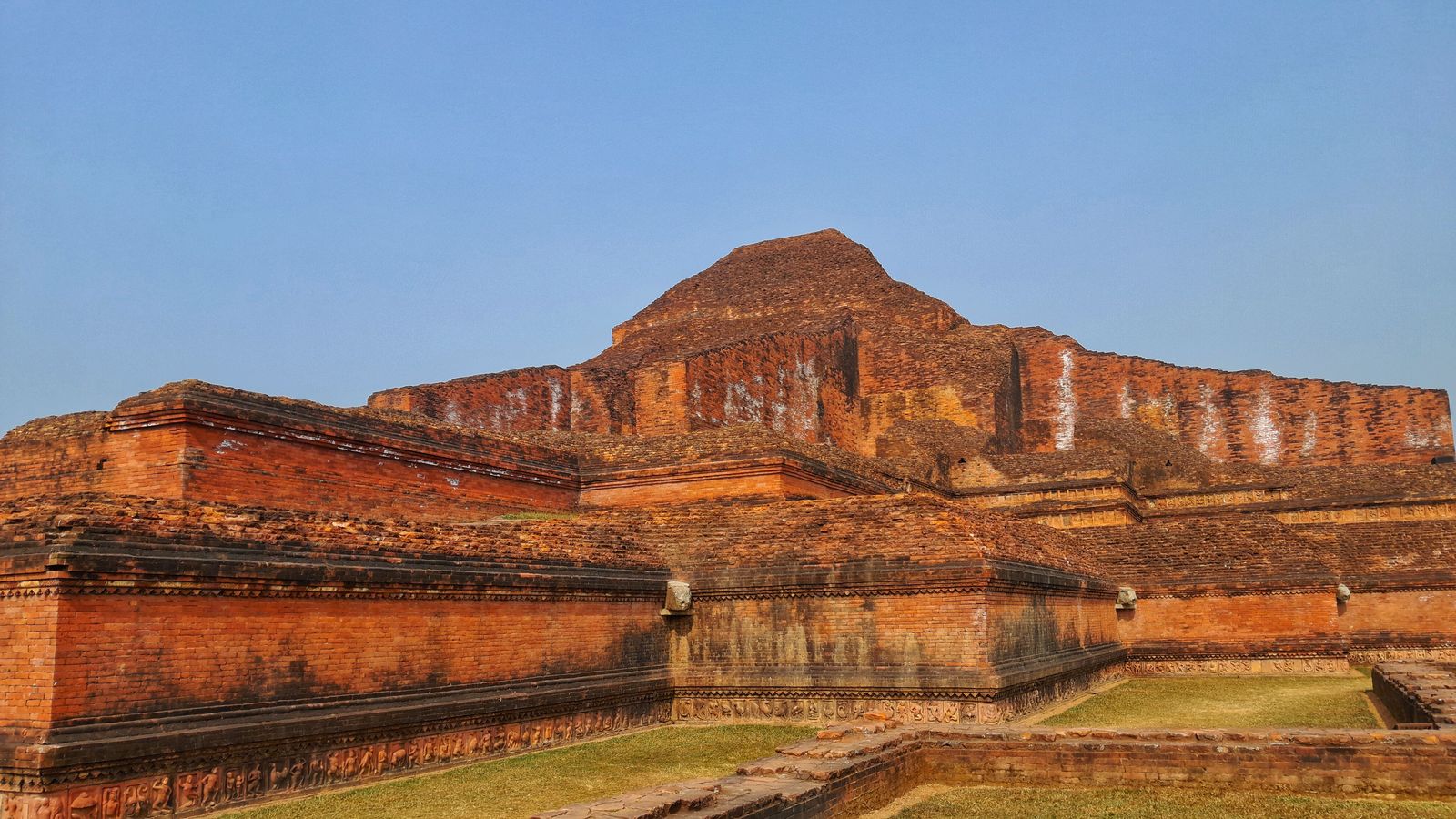
What to see in Bodh Gaya
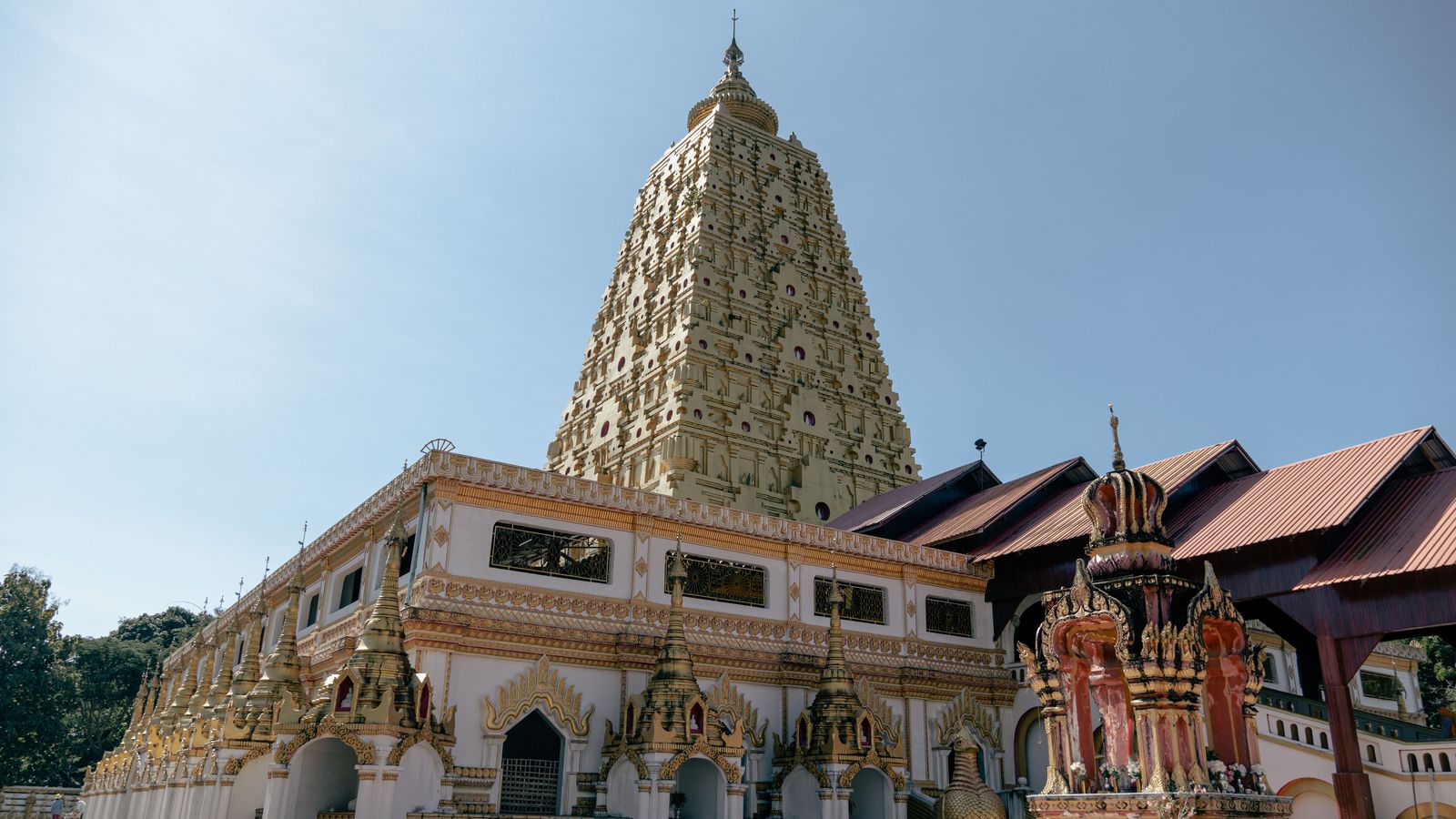
The Mahabodhi Temple. The tall, pyramidal brick tower, restored many times over the centuries, rises about 50 metres above a sunken courtyard. Inside, a gilded Buddha image sits in the earth-touching gesture. Behind the temple grows the Bodhi Tree, a descendant of the original, with the Vajrasana, the stone seat marking the place of enlightenment, at its foot. Around the complex are shrines tied to each of the seven weeks the Buddha is said to have spent here after enlightenment, including the Animesh Lochana stupa and the Muchalinda lotus pond. Pilgrims circumambulate, chant and meditate from dawn until the evening, and it is one of the most peaceful sacred sites in India.
Visitor rules, including restrictions on phones, cameras and bags, are set by the temple's management committee and have changed over the years, so be ready to deposit items at the counters near the entrance and follow current notices at the gate.
The Great Buddha Statue. A short walk away, the 25-metre seated Buddha in sandstone and red granite, consecrated in 1989, is surrounded by statues of the Buddha's ten principal disciples.
The international monasteries. Each reflects its home country's architecture: the gilded roofs of the Thai temple, the calm Japanese Indosan Nipponji, the Bhutanese monastery with its clay reliefs, and the Tibetan monasteries with prayer wheels and butter lamps. Most welcome respectful visitors at set hours.
Across the river. A short drive over the Niranjana (Falgu) brings you to the Sujata stupa at Bakraur, linked to the village woman who offered the fasting Siddhartha a bowl of rice pudding. About 15 km away, the Dungeshwari caves, also called Mahakala caves, are where he is believed to have practised severe austerities before coming to Bodh Gaya.
Gaya town. For Hindu pilgrims, the Vishnupad temple in Gaya is central to the pind daan rites for ancestors, especially during Pitru Paksha in September or October, when the town is full. North of Gaya, the Barabar caves, rock-cut chambers of the Mauryan period with astonishingly polished interiors, make a rewarding half-day detour.
Meditation and study. Many visitors stay longer than they planned. Several monasteries and meditation centres in and around Bodh Gaya, including a Vipassana centre on the outskirts, run residential courses and introductory sessions, mostly in the winter season, and some accept donations rather than fixed fees. Courses must be booked directly with the centre, often weeks ahead. If you are joining one, a one-way drop from Patna or Gaya airport is all you need; the car can return to collect you when the course ends, and the driver will know where the centre gates are, which is not always obvious from the main road.
The roads to Bodh Gaya
From Patna (about 115 km). The car leaves Patna by the southern bypass and takes NH22 south through Masaurhi and Jehanabad to Gaya, then 12 km on to Bodh Gaya. Much of the road is four-laned and it typically takes about 3 hours; the slow parts are Patna's exit in the morning rush and the crowded stretch through Gaya town. Our drivers aim to leave Patna by 7 am or after 10.
From Gaya airport and railway station. Gaya's airport is only about 10 km from Bodh Gaya, and seasonal international flights from Buddhist countries land there in winter. A transfer takes 20 to 30 minutes. Check current schedules on the Airports Authority of India site.
From Varanasi and Sarnath (about 250 km). The route follows NH19, the historic Grand Trunk Road, east through Mohania, Sasaram (with the tomb of Sher Shah Suri beside the highway) and Aurangabad, then turns off at Dobhi for the last 20 km or so. Allow 5 to 6 hours. In December and January, dense fog on the GT Road can slow early starts; we plan these drives for mid-morning. Our Varanasi taxi service and Sarnath by road guide cover the western end.
From Rajgir (about 80 km). A two-lane road via Wazirganj and Hisua links Bodh Gaya to Rajgir and Nalanda in about 2 hours, forming the core of the Bihar circuit.
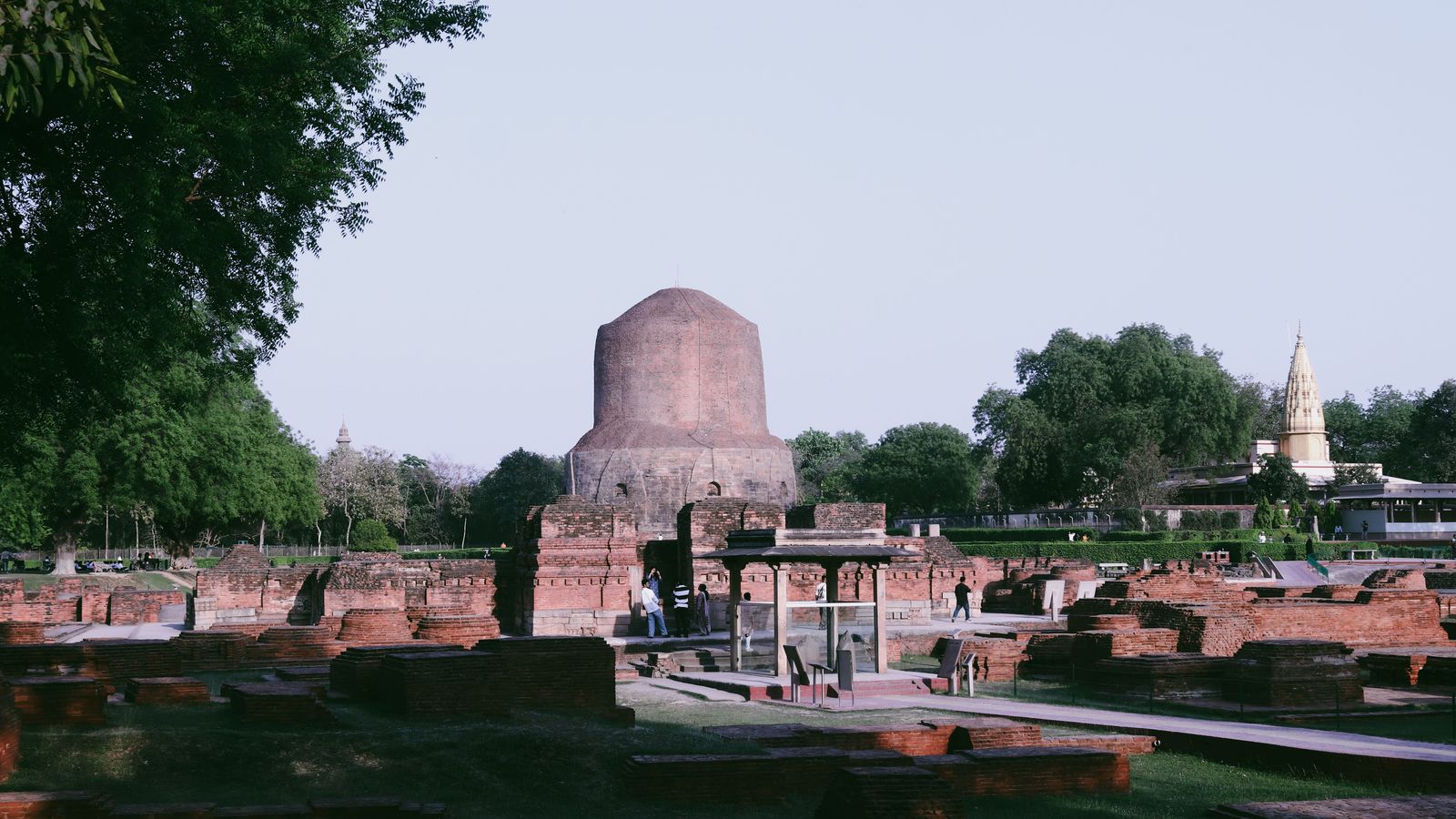
Best time to visit Bodh Gaya
October to March is the season. The weather is dry and pleasant, cold on winter mornings, and this is when monasteries hold their great gatherings: the Kagyu Monlam and other large prayer festivals usually take place around December and January, and the Dalai Lama has given teachings here in several winters. These events fill every guesthouse, so book months ahead. Buddha Purnima, the full moon of Vaishakh in April or May, marks the Buddha's birth, enlightenment and passing, with processions and prayers at the temple.
April to June is extremely hot, often above 40 degrees, so visits are best at dawn and dusk. The monsoon (July to September) is humid, with rain most afternoons, but the temple is quieter and greener. For wider background on the Buddhist sites of the region, see the Incredible India portal.
Chauffeured services and fares for Bodh Gaya
RutzIndia.com provides:
- One-way drops and returns between Patna, Gaya, Bodh Gaya and Varanasi.
- Airport pickups at Patna or Gaya with flight tracking and a name board; 30 minutes of free waiting after a domestic landing, 60 minutes after an international one.
- Bihar Buddhist circuit tours: Bodh Gaya, Rajgir, Nalanda, Patna and onward to Vaishali or Varanasi.
- Group pilgrimages in Urbania vans, Tempo Travellers and mini buses for monastery groups and tour parties; see Urbania on rent and our pilgrimage taxi service.
| Trip | Sedan (Rs 36/km) | Innova Crysta (Rs 57.6/km) | Tempo Traveller (Rs 78/km) | Urbania (Rs 102/km) |
|---|---|---|---|---|
| Patna to Bodh Gaya one way (about 115 km; Innova, tempo and Urbania at minimum fare) | Rs 4,140 Pay Now to Reserve | Rs 6,930 Pay Now to Reserve | Rs 10,740 Pay Now to Reserve | Rs 14,850 Pay Now to Reserve |
| Gaya airport to Bodh Gaya (about 10 km, transfer fare) | Rs 3,960 Pay Now to Reserve | Rs 6,930 Pay Now to Reserve | Rs 10,740 Pay Now to Reserve | Rs 14,850 Pay Now to Reserve |
| Varanasi to Bodh Gaya one way (about 250 km) | Rs 9,000 Pay Now to Reserve | Rs 14,250 Pay Now to Reserve | Rs 19,500 Pay Now to Reserve | Rs 25,500 Pay Now to Reserve |
| 4-day Buddhist circuit from Patna (1,000 km billed) | Rs 36,000 Pay Now to Reserve | Rs 57,000 Pay Now to Reserve | Rs 78,000 Pay Now to Reserve | Rs 1,02,000 Pay Now to Reserve |
All fares are before 5% GST. Tolls on NH22 and NH19, parking near the temple and any permits are billed at actual cost. Short transfers of up to 40 km, such as the Gaya airport run, are charged at our flat transfer fare rather than per kilometre. For multi-day circuits, each calendar day counts for a minimum of 250 km and the driver receives a night allowance of Rs 1,500. Rates for every vehicle class are on the fares page.
Cars are within four model years, and monastery groups can request GST invoices. If plans change, our cancellation policy allows free cancellation more than 72 hours before pickup; after that, 10% is charged within 72 hours, 50% within 48 hours and 100% within 24 hours or for a no-show.
A three-day Bodh Gaya, Rajgir and Nalanda plan
Day 1: Patna to Bodh Gaya (about 115 km). Morning pickup at Patna airport or your hotel, arrive by lunchtime, and spend the afternoon and evening at the Mahabodhi Temple, when the chanting and butter lamps are most atmospheric.
Day 2: Bodh Gaya and surroundings (about 60 km). Sunrise meditation at the temple, then the Great Buddha Statue and monasteries, the Sujata stupa across the river, and the Dungeshwari caves in the afternoon.
Day 3: Rajgir and Nalanda, back to Patna (about 200 km). Drive to Rajgir for the Vishwa Shanti Stupa and Vulture's Peak, then the ruins of Nalanda, and continue to Patna for the night. Our Rajgir and Nalanda by road guide has the details.
Coming from the west? Reverse it: start in Varanasi and Sarnath, drive to Bodh Gaya, then Rajgir and Nalanda, and fly out of Patna.
Practical tips for Bodh Gaya
- Dress modestly and remove shoes where required; walk clockwise around stupas and the Bodhi Tree.
- Silence is valued in the temple complex, especially in the meditation areas.
- Accommodation ranges from monastery guesthouses to hotels; winter festival weeks sell out early.
- Food: simple vegetarian and Tibetan cafes near the temple, with thukpa and momos in winter.
- Touts sometimes offer guided tours or donations for schools; give only through recognised institutions.
- Health: carry water and sun protection from March; mosquito repellent in the monsoon.
- Parking: vehicles cannot drive right up to the temple gates on busy days; your chauffeur drops you at the nearest permitted point and waits at a designated lot, so agree a pickup spot before you walk in.
A car and driver make the Bihar pilgrim circuit calm and simple, with no need to change taxis between Patna, Gaya, Rajgir and Varanasi. For other sacred journeys across India, see our tours by car.