The 8-day Buddhist circuit tour package runs one way from Varanasi to Lucknow via Sarnath, Bodhgaya, Rajgir, Nalanda, Vaishali, Kushinagar and Sravasti, with a private car and chauffeur throughout. The car is priced per km on at least 250 km a day, and hotels and guides are quoted separately by our travel desk.
Why take the longer circuit
Buddhist tradition names four places of pilgrimage: Lumbini, where the Buddha was born; Bodhgaya, where he became enlightened; Sarnath, where he first taught; and Kushinagar, where he died. Lumbini is across the border in Nepal. This eight-day route covers the three that are in India, and adds Rajgir, Nalanda, Vaishali and Sravasti, places associated with his teaching years. Together they complete most of what pilgrims call the eight great places.
The shorter six-day package returns to Varanasi after Bodhgaya and Nalanda. Choose it if you have limited time. Choose this one if Kushinagar matters, if you are travelling as a pilgrim group, or if you want the quieter sites of northern Uttar Pradesh, where you may share a ruin with only a handful of monks and a gardener.
Because the trip ends in Lucknow, you avoid backtracking. Lucknow has good flight connections, and the city is worth an extra day if you can spare it.
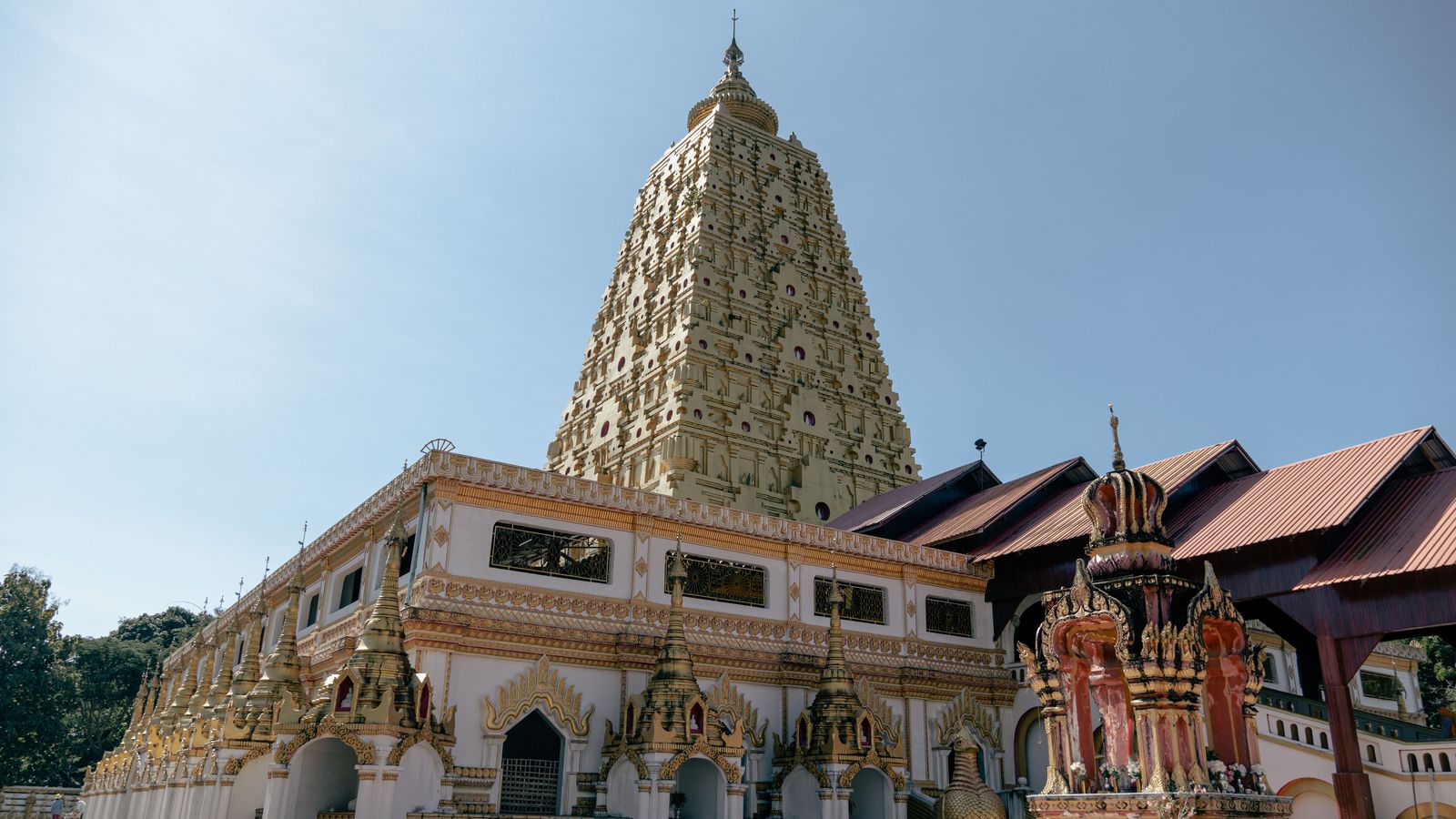
Reading the route as a life story
It helps to know what each stop means before you arrive, because several of the sites are ruins rather than working temples, and the story is what brings them to life.
- Bodhgaya is where the young prince Siddhartha, after years of hard asceticism, sat under a pipal tree and attained awakening. The present Bodhi tree is a descendant of the original.
- Sarnath, a few weeks later, is where he shared what he had understood with five former companions in a deer park. That first sermon is remembered as setting the wheel of the teaching in motion.
- Rajgir was the capital of the Magadha kingdom, whose king became a patron. The Buddha spent long periods here and on Vulture's Peak above the valley.
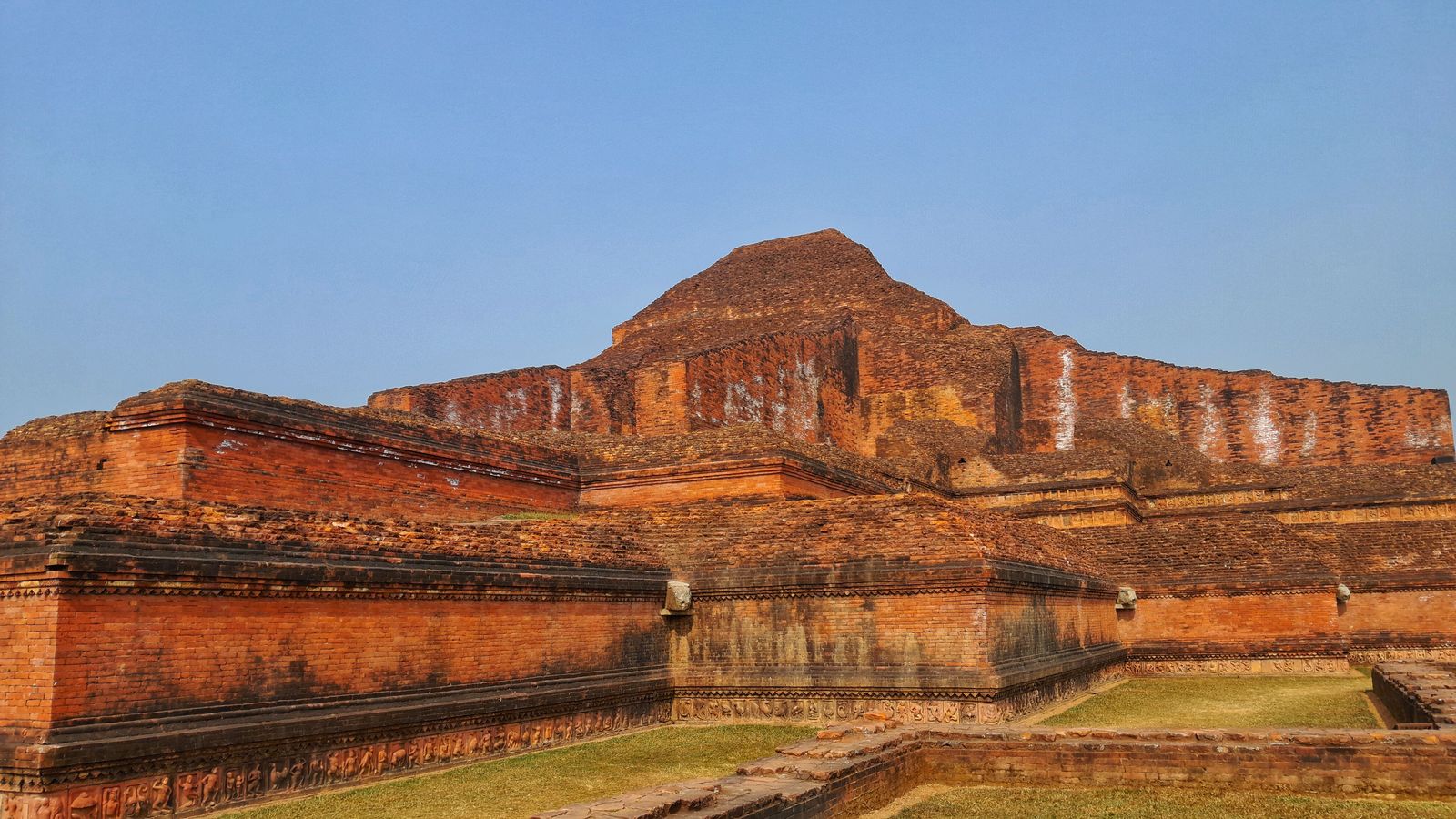
- Nalanda came centuries later: a monastic university that drew scholars from across Asia until its destruction around the end of the twelfth century.
- Vaishali was a republic where the Buddha often stayed, and where tradition places a gathering of monks a century after his death.
- Sravasti was a wealthy city where a merchant donated the Jetavana grove, and the Buddha spent many rainy-season retreats there.
- Kushinagar is where, aged about eighty, he lay down between two sal trees and passed away.
The itinerary follows geography rather than this order, so a guide or a little reading each evening ties it together.
The long day: Bodhgaya to Kushinagar
Day 5 is the hardest on the road. From Bodhgaya the car goes north to Patna, crosses the Ganga to Hajipur on one of the river bridges, and continues to Vaishali. Bridge traffic is unpredictable, which is why we leave early. At Vaishali you see the Ashokan pillar at Kolhua, one of the best preserved, with its single lion facing north, and the Relic Stupa. From there the road crosses the flat plains of north Bihar towards the Uttar Pradesh border and Kushinagar.
With the Vaishali stop, expect eight to nine hours. The chauffeur will build in a lunch break and short rests. Our drivers are used to long days on these highways, but they will not push through dense winter fog; if visibility drops, they slow down or wait.
Background on Rajgir is on the Rajgir article, and the Kushinagar article covers the temple and stupa.
Across the plain to Sravasti and Lucknow
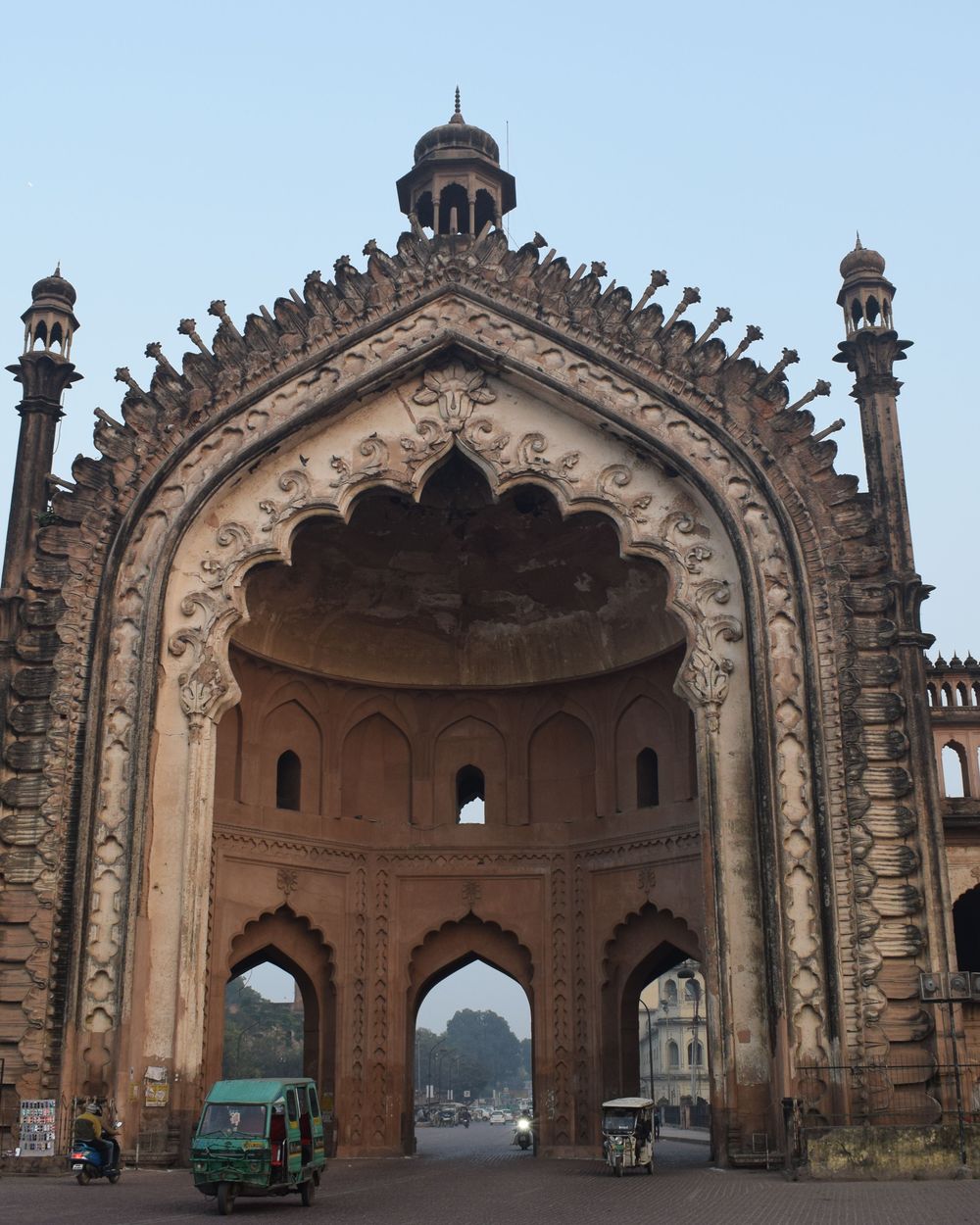
From Kushinagar, the road runs west through Gorakhpur and then along the edge of the Terai towards Sravasti. The roads here are two-lane highways through farmland, market towns and sugarcane fields. It is a steady drive rather than a fast one. Sravasti itself is small and quiet; the sites are close together, so the car has little to do on Day 7.
The last leg to Lucknow via Bahraich takes about four hours. If your flight is in the evening, there is time for the Bara Imambara and the old city. Our Lucknow taxi service covers local transfers if you stay on.
Where to stay along the circuit
Varanasi and Bodhgaya have the widest choice, from guesthouses to international-standard hotels. Kushinagar has a smaller range, including hotels built for pilgrims and several monastery guesthouses. Sravasti is the simplest, with a handful of hotels and monastery rest houses close to the sites. Standards here are more modest, and the travel desk will tell you honestly what to expect.
Our travel desk can reserve rooms at every stop and put them in one written quote with the car and guides.

Weather, fog and festivals
- October to November: warm days, cool nights, clear air after the monsoon. Chhath Puja and Diwali fill roads and ghats for a few days.
- December to February: peak pilgrimage season, with large gatherings in Bodhgaya and cold, foggy mornings on the plains. Hotels fill early.
- March: warmer, still pleasant; Holi in Varanasi is spectacular but lively.
- April to June: very hot. Buddha Purnima draws pilgrims, but long outdoor visits are tiring.
- July to September: monsoon, humid and wet.
Winter fog is the biggest practical issue on this route, especially from mid-December to late January. Early starts may be delayed, and the itinerary has some slack for that.
Vehicles for pilgrims and groups
- Solo or couple: a sedan at Rs 72/km.
- Families or small groups: an Innova Crysta at Rs 114/km, the best balance of comfort and space for eight days.
- Premium: a Toyota Fortuner at Rs 168/km rides better on uneven country roads.
- Groups of up to twelve: a Tempo Traveller at Rs 156/km or a Force Urbania at Rs 204/km. Our Tempo Traveller in Lucknow page has seat layouts.
All cars are within four model years. Compare all options on the fleet page.
Add-ons and side trips
- Lumbini: from Gorakhpur, the Sonauli border is a few hours' drive. Crossing into Nepal needs entry formalities for passengers and a customs permit for the car; the travel desk can advise and plan.
- Varanasi or Lucknow extra day: worth it for the old cities, food and craft.
- Ayodhya: reachable from Lucknow as a day trip.
- Guides: licensed guides at each site make the ruins far more meaningful.
For more ideas, see our India tour packages page and the Varanasi by road guide.
Fare method and booking
The car fare uses the higher of two numbers: the distance actually driven, about 1,300 km including local runs and airport transfers, or 250 km for each of the eight days, which is 2,000 km. The larger figure is multiplied by your car class rate. The driver's night allowance of Rs 3,000 per night, tolls, state permits and parking are added at actual cost, plus 5% GST. See our fares page for the method.
Book the car online at /book/ and pay by card or UPI. For a full quote with hotels, guides and meals, contact the travel desk. Cancellation is free until 72 hours before pickup; then 10% within 72 hours, 50% within 48 hours and 100% within 24 hours or on a no-show, as in our cancellation policy. RutzIndia.com issues GST invoices for monasteries, schools and companies.