How do you get to Gir National Park by road?
Sasan Gir, the base for Gir National Park, is about 360 km from Ahmedabad, typically 7 hours by car via Rajkot, Jetpur and Junagadh. A RutzIndia.com sedan one way costs Rs 12,960 Pay Now to Reserve and an Innova Crysta Rs 20,520 Pay Now to Reserve, before 5% GST, with tolls and parking at actual cost. Somnath is about 45 km away and Rajkot about 160 km.
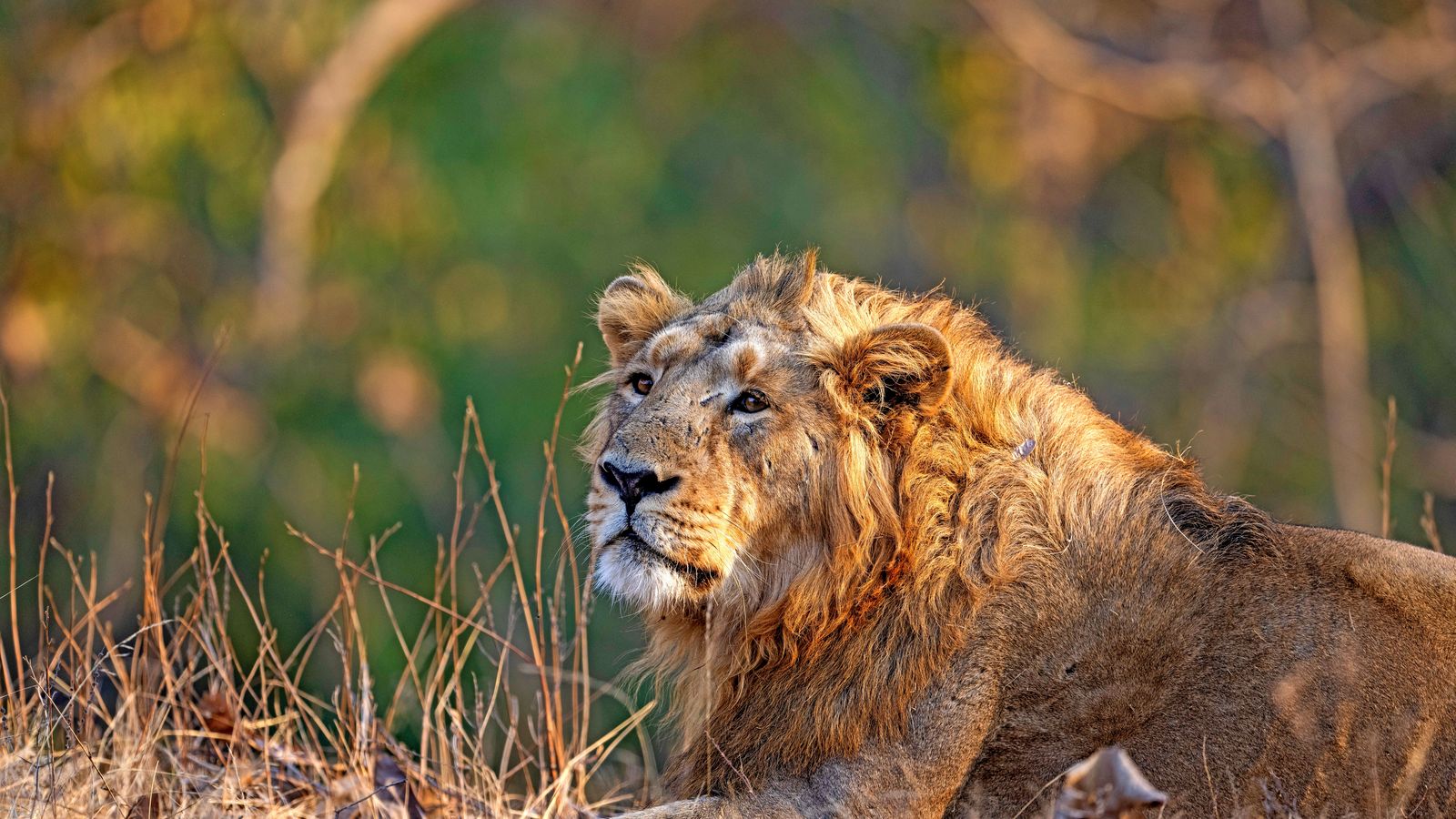
Gir is the only place in the world where Asiatic lions still live in the wild. A little over a century ago the population had fallen to a precarious handful; protection by the Nawabs of Junagadh and later by the Gujarat Forest Department has brought the species back, and lions now range well beyond the park's boundaries across the Saurashtra countryside. Seeing a pride resting in the dappled shade of a teak grove, or a big male padding down a dusty forest track in the early light, is one of the great wildlife experiences in Asia.
Sasan Gir itself is a small village at the edge of the forest, with lodges, resorts and the forest department's reception centre. There is no airport nearby and rail connections are limited, so nearly every visitor arrives by road. This guide explains how to drive there, how the safari permit system works, when the park is open, and what RutzIndia.com charges.
What you can see in Gir
Asiatic lions. Slightly smaller than their African cousins, with a distinctive fold of skin along the belly and a sparser mane, Gir's lions live in smaller prides and are often seen resting in the heat of the day. Sightings are never guaranteed, but they are frequent in the dry season.
Leopards and the supporting cast. Gir has a healthy leopard population, along with chital (spotted deer), sambar, nilgai, chinkara, four-horned antelope, wild boar, jungle cats and striped hyenas. Marsh crocodiles bask along the reservoirs, including the Kamleshwar dam deep inside the park.
Birds. Over three hundred species have been recorded, from crested serpent eagles and changeable hawk-eagles to paradise flycatchers, woodpeckers and, in winter, visiting migrants.
The forest itself. Dry deciduous teak mixed with acacia, jamun and banyan, bare and golden in the summer, lush after the monsoon. The Maldhari herders, whose settlements (nes) lie inside the forest and who have lived alongside lions for generations, are part of Gir's story.
Beyond the core. The Devalia Safari Park, also called the Gir Interpretation Zone, is a fenced area about 12 km from Sasan with lions, leopards and herbivores, visited by bus or jeep on a shorter circuit; it is useful when core-zone permits are sold out. The Ambardi Safari Park near Dhari, on the eastern side, is another option. The Kankai and Tulsishyam temples, both inside the wider sanctuary, draw pilgrims year-round.
Safari permits: how the system works
Safaris in the core zone of Gir National Park run in forest-department-registered gypsies with a trained guide along fixed routes. Private cars, including ours, are not allowed on safari tracks: your chauffeur drops you at the Sinh Sadan reception centre in Sasan and waits while you go out.
Permits are sold online through the official Gir lion safari booking site, usually in three daily slots (dawn, late morning and afternoon, varying by season), with limited numbers per slot. The permit is issued for a named group, and the same photo ID used at booking must be shown at the gate. Weekend, Diwali and Christmas slots sell out weeks ahead. Book the permit first, then the hotel, then the car.
Devalia and Ambardi are booked on the same portal or at the counter, with their own timings and closing days. Rules, prices and slot timings change from season to season, so always rely on the official site rather than any figure you read elsewhere.
The road to Sasan Gir
From Ahmedabad (about 360 km, 7 hours). West to Bagodara, then the six-lane highway via Limbdi and Chotila to Rajkot. From Rajkot you continue south through Gondal and Jetpur to Junagadh, and on via Mendarda or Visavadar to Sasan. The main highways are good; the last hour is on narrower rural roads through farmland and mango orchards, where tractors and cattle set the pace. Leave Ahmedabad by 6 am to reach Sasan by early afternoon, in time for an afternoon safari if you have a permit. See the Ahmedabad road guide for pickups anywhere in the city.
From Rajkot (about 160 km, 3.5 hours). Rajkot's Hirasar international airport is the nearest large airport; our driver meets you at arrivals with a name board.
From Somnath (about 45 km, 1 hour). The two are natural companions; see the Somnath road guide.
From Junagadh (about 60 km, 1.5 hours). Junagadh is also where the old rail line and the Girnar ropeway bring many visitors.
From Diu (about 110 km, 2.5 hours) via Una and Tulsishyam, through a quieter, greener stretch of the sanctuary edge; read our Diu road guide.
Night driving on the forest-fringe roads is best avoided: lions, leopards and nilgai cross after dark, and some roads through the sanctuary have restricted hours. Our drivers plan arrivals and departures in daylight.
When Gir is open, and the best season
The core safari zone of Gir National Park is closed every year from 16 June to 15 October for the monsoon and breeding season. Devalia usually stays open through the monsoon, though with reduced timings.
Mid-October to November brings fresh greenery but thick cover, so sightings take patience. December to February is pleasant, with cool mornings (carry a jacket for the dawn safari) and good sightings. March to mid-June is the prime time for lions, as the forest thins and animals gather near water, but afternoons are very hot, often above 40°C. Mango season, from May, fills the roadside stalls around Talala with Gir's famous kesar mangoes.
Diwali and the New Year week are the busiest times at Sasan; lodges and permits sell out, so plan well ahead.
RutzIndia.com services for a Gir safari trip, with fares
We run one-way drops and round trips from Ahmedabad, Rajkot and Vadodara, pickups at Rajkot airport, transfers between Gir, Somnath, Diu and Junagadh, and group vehicles for wildlife clubs and school trips. A Fortuner handles the rural roads comfortably and suits photographers carrying long lenses; groups travel in a Tempo Traveller from Ahmedabad or an Urbania.
| Trip | Distance billed | Sedan | Innova Crysta | Fortuner | Tempo Traveller |
|---|---|---|---|---|---|
| Ahmedabad to Sasan Gir, one way | about 360 km | Rs 12,960 Pay Now to Reserve | Rs 20,520 Pay Now to Reserve | Rs 30,240 Pay Now to Reserve | Rs 28,080 Pay Now to Reserve |
| Ahmedabad–Gir–Ahmedabad, 3 days | minimum 750 km | Rs 27,000 Pay Now to Reserve | Rs 42,750 Pay Now to Reserve | Rs 63,000 Pay Now to Reserve | Rs 58,500 Pay Now to Reserve |
| Rajkot airport to Sasan Gir, one way | about 160 km | Rs 5,760 Pay Now to Reserve | Rs 9,120 Pay Now to Reserve | Rs 13,440 Pay Now to Reserve | Rs 12,480 Pay Now to Reserve |
| Junagadh to Sasan Gir, one way | about 60 km, minimum fare applies | Rs 3,960 Pay Now to Reserve | Rs 6,930 Pay Now to Reserve | Rs 12,360 Pay Now to Reserve | Rs 10,740 Pay Now to Reserve |
| Somnath to Sasan Gir, one way | about 45 km, minimum fare applies | Rs 3,960 Pay Now to Reserve | Rs 6,930 Pay Now to Reserve | Rs 12,360 Pay Now to Reserve | Rs 10,740 Pay Now to Reserve |
| Sasan Gir to Diu, one way | about 110 km, minimum fare applies | Rs 3,960 Pay Now to Reserve | Rs 6,930 Pay Now to Reserve | Rs 12,360 Pay Now to Reserve | Rs 10,740 Pay Now to Reserve |
Fares are before 5% GST and do not include safari permits, gypsy charges or guide fees, which are paid to the forest department. Tolls, state permits where they apply and parking are charged at actual cost. Round trips are billed on actual kilometres or 250 km per calendar day, whichever is greater, which is why the three-day Ahmedabad trip is priced on 750 km. The driver's night allowance is Rs 1,500 per night. All cars are within four model years; see every class on our fares page, including the Fortuner.
Book online through our booker and pay by card or UPI; wildlife societies and companies get a GST invoice on request. Cancel more than 72 hours ahead and you pay nothing; within 72 hours the charge is 10%, within 48 hours 50% and within 24 hours or on a no-show the full fare. If your safari permit is rescheduled, tell us at once so we can move the car rather than cancel; the cancellation policy explains the terms.
A three-day Gir itinerary by car
Day 1: Ahmedabad to Sasan Gir (about 370 km). Leave at 6 am, breakfast in Rajkot, lunch at Junagadh or a highway dhaba near Jetpur, and reach Sasan by 1.30 pm. If you hold an afternoon permit, report at Sinh Sadan; otherwise visit the Devalia Safari Park late in the day.
Day 2: Dawn safari and Somnath (about 110 km). Up before sunrise for the first core-zone safari, back for breakfast, rest through the heat, then an afternoon drive to Somnath for the evening aarti and light show, returning to Sasan or staying at Somnath.
Day 3: Second safari and home (about 380 km). A second early safari for better odds, then the drive back to Ahmedabad, arriving by evening. Alternatively continue east to Diu for the coast.
Five days: the full Saurashtra loop. Ahmedabad, Dwarka, Porbandar, Somnath, Gir, Diu and home, roughly 1,300 km.
Practical tips for Gir
- Permits first. Everything hinges on the safari permit. Book the moment the online window opens for your dates.
- Identity documents. Carry the same original photo ID used for the booking for every member of the group.
- What to wear. Earth-coloured clothes, a cap and scarf against dust, and a warm layer for dawn in winter. Avoid bright colours and perfume.
- Silence. No shouting, no food waste, no stepping out of the gypsy. Follow the guide's instructions near animals.
- Photography. Mornings give the best light. A long lens helps; drones are not permitted.
- Children. Age rules may apply for certain safaris; check at booking.
- Beyond Gir. Wildlife enthusiasts often compare Gir with Rajasthan's Ranthambore for tigers; both work well by road.
For business travellers extending a work trip in Gujarat, car rental with driver in Ahmedabad gives you a car for the whole week, and the Junagadh district website lists local notices for the region around Sasan.