Ranthambore is where most people see their first wild tiger. The national park wraps around the town of Sawai Madhopur in eastern Rajasthan, and its dry deciduous forest, lakes and crumbling chhatris make a setting unlike any other tiger reserve in India. Getting there by road is the easiest option for travellers based in Jaipur, and it also suits families flying into Delhi who want to add wildlife to a Golden Triangle trip. This guide explains the Jaipur to Ranthambore drive, the RutzIndia.com cab fares for 2026, how safari booking really works, the seasons and closures, and a two-night plan that includes the fort and Trinetra Ganesh temple.
Getting to Ranthambore by road: distance, time and fares
Ranthambore (Sawai Madhopur) is about 180 km from Jaipur, typically 3.5 to 4 hours by car. A one-way Dzire-class sedan costs Rs 6,480 Pay Now to Reserve and an Innova Crysta Rs 10,260 Pay Now to Reserve; a two-day sedan round trip is billed on 500 km at Rs 18,000 Pay Now to Reserve. All fares are before 5% GST, with tolls and parking at actual cost.
The per-km logic is simple: Rs 36 for a sedan, Rs 57.6 for an Innova, Rs 84 for a Fortuner, multiplied by the distance. Because most visitors spend at least one night for two safaris, the common booking is a two-day round trip. We bill that on the higher of actual kilometres or 250 km per calendar day, so 500 km, which comfortably covers the 360 km return and a few resort-to-gate runs. If you want the same car to wait for three days while you do four safaris, the bill becomes 750 km: Rs 27,000 Pay Now to Reserve in a sedan or Rs 42,750 Pay Now to Reserve in an Innova. You can book a Jaipur outstation cab in minutes; city sightseeing before you leave is covered by our Jaipur taxi service.
Why Ranthambore: tigers, a hill fort and a temple in the forest
The tiger reserve
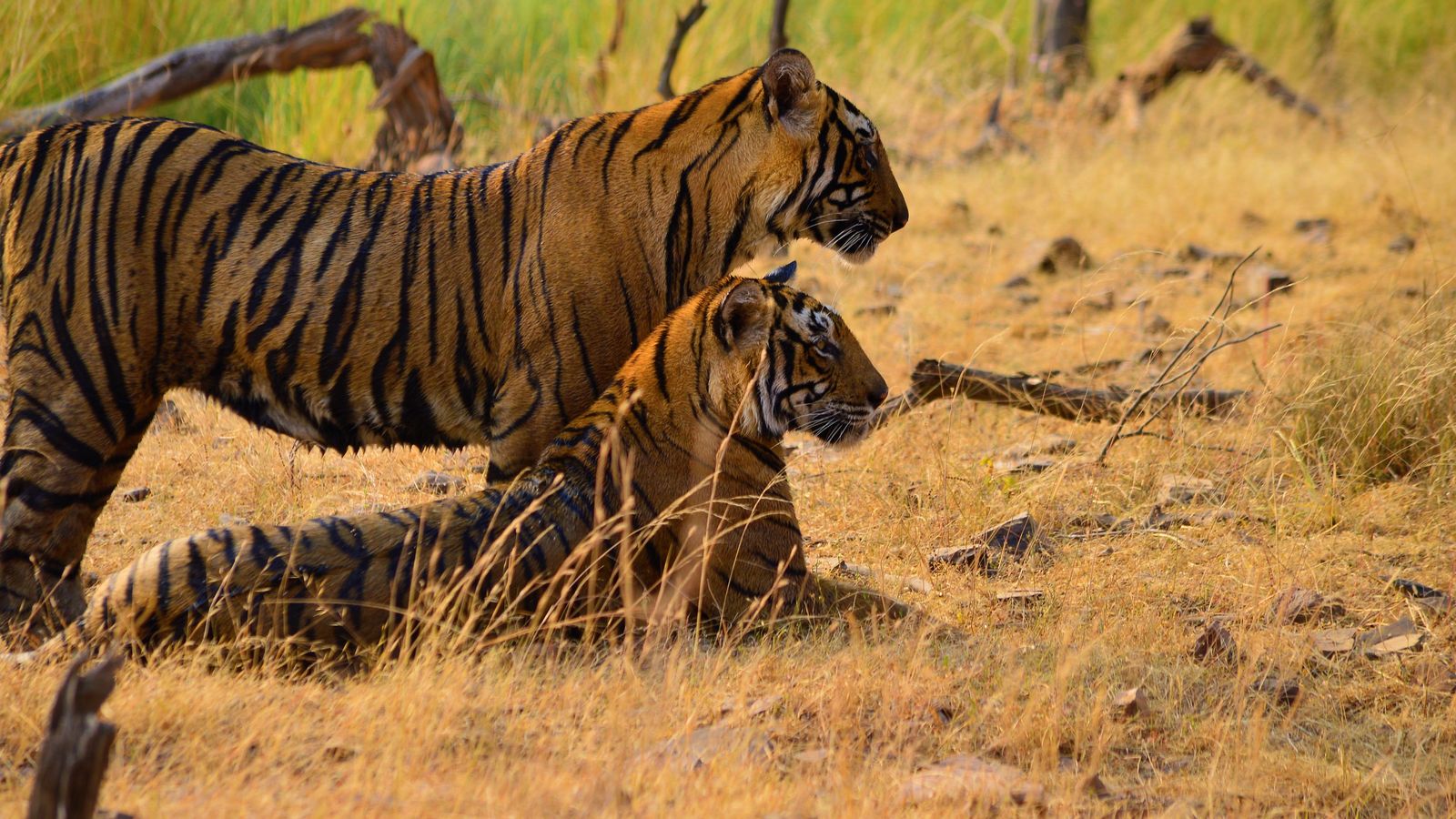
Ranthambore National Park and its buffer forests form one of Rajasthan's two best-known tiger reserves (Sariska is the other). The terrain is rocky and open, with dhok trees, banyans and three lakes near the old hunting lodge of Jogi Mahal, so sightings here are often clear and in daylight. Besides tigers you may see leopards on the ridges, sloth bears, sambar and chital deer, marsh crocodiles, nilgai and over 250 bird species. The Ranthambore National Park article on Wikipedia summarises the park's history, from royal hunting ground to Project Tiger reserve.
Ranthambore Fort
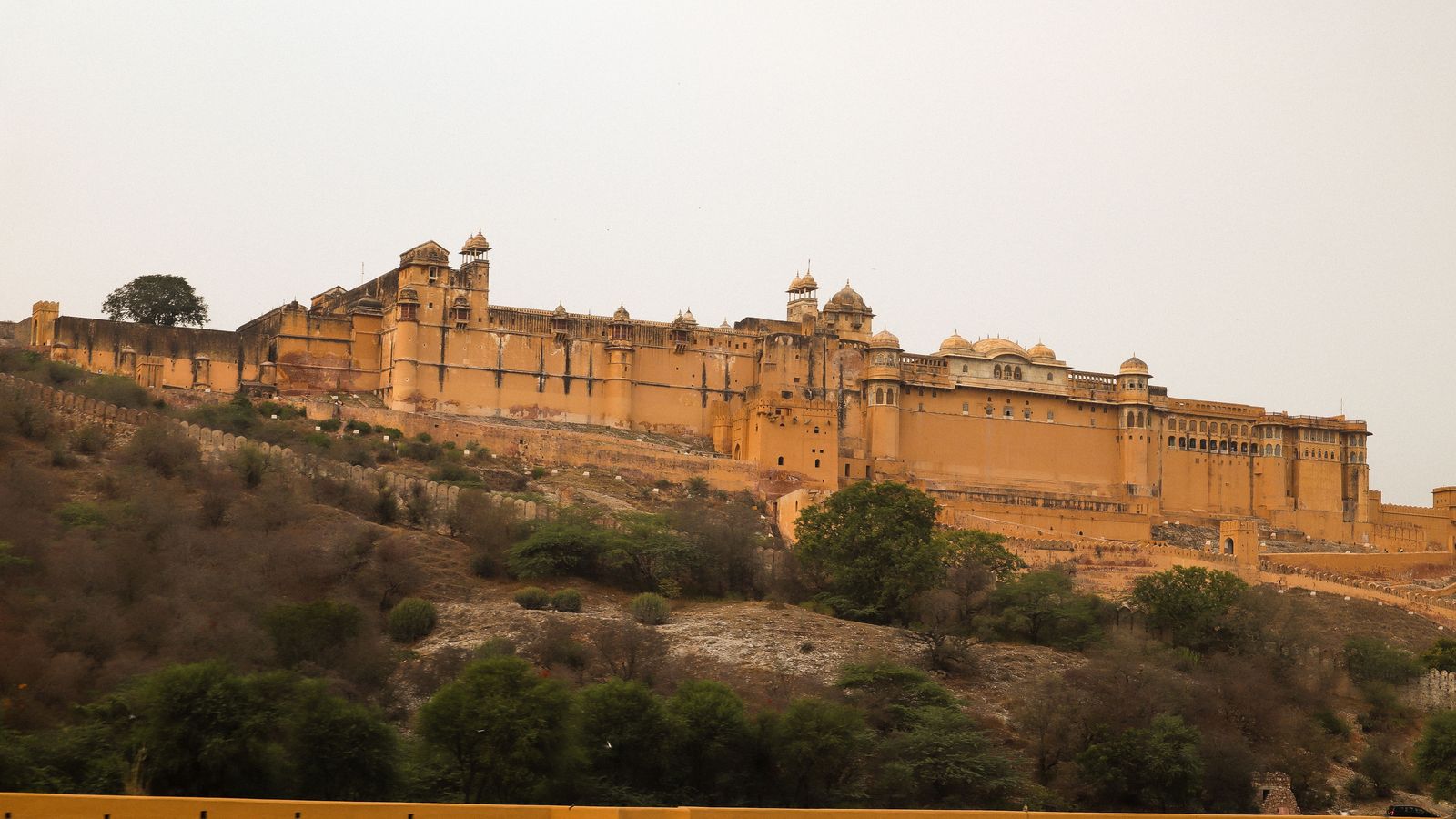
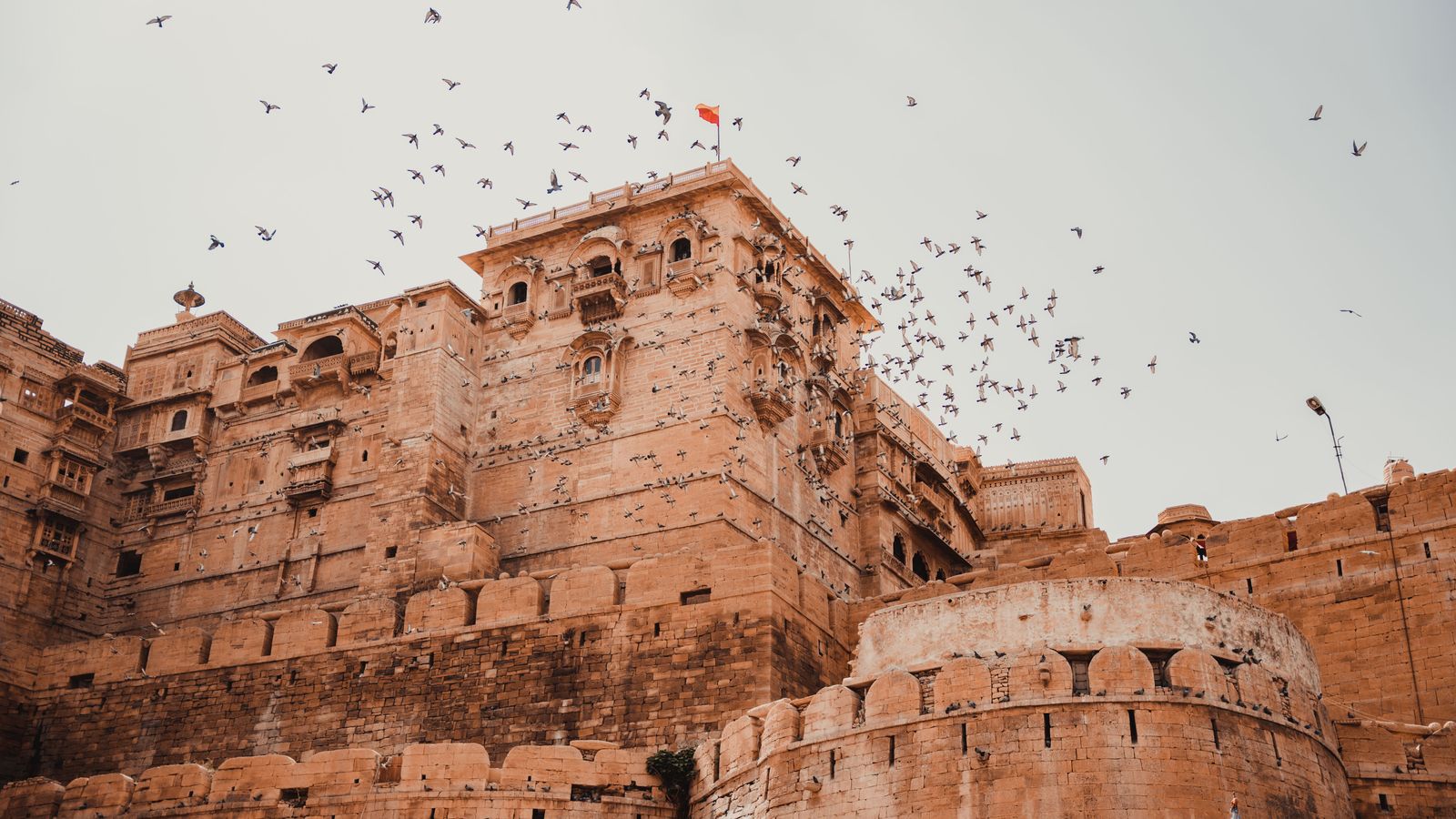
The fort rises straight out of the forest on a plateau above the park. It is part of the Hill Forts of Rajasthan group recognised by UNESCO, and its gates, stepwells and temple ruins take about two hours to explore. Monkeys are bold, so keep food out of sight.
Trinetra Ganesh temple
Inside the fort is the temple of the three-eyed Ganesh, one of the most visited Ganesh shrines in Rajasthan. Devotees mail wedding invitations to it, and on Ganesh Chaturthi the road to the fort is packed with pilgrims on foot. The fort and temple are reached by the same road that leads to the park gate, so you can combine them with a morning or afternoon safari.
Beyond the park
The Dastkar craft centre near the town sells block prints and textiles made by local women. Sawai Madhopur's railway station has a well-known painted wildlife mural hall, worth five minutes if you are passing.
Safari booking and park rules you should know
- Book safaris directly. Seats in the six-seat gypsies and twenty-seat canters are released on the official Rajasthan forest department FMDSS portal, usually well in advance. Weekends, Christmas, New Year and Diwali sell out first.
- Private cars do not enter the park. Your RutzIndia.com chauffeur drops you at the booking office or your resort, and the forest department vehicle collects you for the safari. Our car waits or returns you to the hotel afterwards.
- Zones. The park is divided into numbered zones; the core zones around the lakes are popular, the outer zones are quieter. Zone allotment is by the forest department, not the driver or hotel.
- Timings. There are morning and afternoon safaris of roughly three hours each. Times shift with the season, so confirm on your ticket.
- ID. Carry the same photo ID you used when booking; it is checked at the gate.
The road from Jaipur (and from Delhi)
From Jaipur the drive heads south out of the city on Tonk Road, passing the airport and Sitapura. After Chaksu the route crosses farmland and small market towns before reaching Sawai Madhopur. There are two common alignments, one through Lalsot and one through Tonk, and your driver chooses based on roadworks that week. Both are two-lane in places, with slow tractor traffic during the harvest months of March-April and October-November, so an honest estimate is 3.5 to 4 hours.
Good stops: tea at Chaksu or Lalsot, and clean highway restaurants near the Sawai Madhopur bypass. The last 10 km into Ranthambore Road, where most resorts sit, is a busy strip; watch for canters returning from safari around 10 am and 6 pm.
From Delhi, the Delhi-Mumbai Expressway has made Ranthambore a realistic single-day drive of about 5.5 to 6.5 hours, depending on the interchange your driver uses. We price that as a Delhi outstation trip; the best option for many families is to spend a night in Jaipur on our Delhi to Jaipur taxi route and continue next morning.
When to go: seasons, monsoon closure and festivals
- October to March. Cool mornings (safaris start chilly in December and January, so bring a jacket and gloves), green forest after the rains, excellent birding. This is peak season for family trips and Christmas breaks.
- April to June. Hot, 40 C and above, but many naturalists consider this the best tiger-spotting period because animals come to the lakes. Carry water, a scarf and sunscreen.
- July to September. The core zones usually close for the monsoon; some outer zones may stay open depending on forest department orders. Check the portal before planning.
- Festivals. Ganesh Chaturthi (August or September) brings the Trinetra Ganesh fair and very heavy crowds on the fort road. Diwali and New Year are fully booked months ahead.
Chauffeured options from RutzIndia.com for Ranthambore
- One-way drop from Jaipur city or Jaipur airport to your Ranthambore resort.
- Two or three day round trip with the car and chauffeur staying with you for safari transfers, fort visits and a final return to Jaipur, Agra or Delhi.
- Golden Triangle extension: our Rajasthan tour by car and Golden Triangle itineraries can add two Ranthambore nights between Jaipur and Agra.
- Airport pickup at Jaipur with flight tracking and a name board; 60 minutes of free waiting for international flights and 30 for domestic.
- Premium SUV for photographers with heavy gear: a Fortuner on rent has space for tripods and long lenses.
- Group travel in a Tempo Traveller for school groups and extended families.
| Vehicle | Jaipur to Ranthambore one way (180 km) | Two-day round trip (500 km billed) | Three-day round trip (750 km billed) |
|---|---|---|---|
| Dzire-class sedan | Rs 6,480 Pay Now to Reserve | Rs 18,000 Pay Now to Reserve | Rs 27,000 Pay Now to Reserve |
| Innova Crysta | Rs 10,260 Pay Now to Reserve | Rs 28,500 Pay Now to Reserve | Rs 42,750 Pay Now to Reserve |
| Toyota Fortuner | Rs 15,120 Pay Now to Reserve | Rs 42,000 Pay Now to Reserve | Rs 63,000 Pay Now to Reserve |
| Tempo Traveller | Rs 14,040 Pay Now to Reserve | Rs 39,000 Pay Now to Reserve | Rs 58,500 Pay Now to Reserve |
Prices above exclude 5% GST. Tolls, parking and any state charges are billed exactly as paid. On multi-day trips add the chauffeur's night allowance, Rs 1,500 per night depending on the town. Our cars are within four model years. Pay by card or UPI through the booker; corporate groups on an offsite receive a proper GST invoice.
If your safari dates change, remember our cancellation policy: free cancellation until 72 hours before pickup, 10% within 72 hours, 50% within 48 hours, and the whole fare within 24 hours or on a no-show.
A two-night Ranthambore plan by car
Day 1: Jaipur to Ranthambore (about 190 km). Leave Jaipur at 8 am after breakfast, reach the resort by noon, rest, then take the afternoon safari at about 2:30 pm. Dinner at the resort.
Day 2: Safari and fort (about 30 km local). Early morning safari (report around 6:30 am in winter, earlier in summer). Return for breakfast, then drive up to Ranthambore Fort and the Trinetra Ganesh temple late morning. Afternoon at leisure or a second safari.
Day 3: Return or continue (about 180 to 230 km). A final morning safari if you like, then drive back to Jaipur, or head east to Agra for the Taj, or continue south-west to Bundi, about 90 km away, which we cover in our Bundi by road guide.
Billing for this plan is the three-day minimum of 750 km, well above the actual distance, so there is room for extra runs to the town or railway station.
Practical tips
- Clothing. Earth tones, not white or red. Winter mornings in an open gypsy are genuinely cold.
- Dust. Carry a scarf or buff and a zip bag for your camera.
- Hotels. Most resorts are on Ranthambore Road, a short drive from the booking office. Ask your hotel whether it arranges safari pickup from the lobby.
- Cash and cards. UPI works at most resorts and shops; keep some cash for tips to naturalists and canter drivers.
- Official information. The Sawai Madhopur district portal posts local notices, including fair-day traffic arrangements.
- Kids and seniors. A canter is bumpier than a gypsy; for elderly travellers book a gypsy seat if possible.
- Binoculars and lenses. An 8x or 10x pair of binoculars makes a real difference for birds and distant leopards; photographers usually carry a 100-400 mm lens. Phones rarely do tigers justice at range.
- Safari etiquette. Keep voices low, stay seated, never ask the canter driver to leave the track and do not feed or call animals. Guides are strict about these rules, and rightly so.
- Rest days. If you have booked four safaris, consider leaving one afternoon free for the fort or a nap; early starts on consecutive days tire children quickly.
For more Rajasthan road trips from the same base, see our Jaipur by road guide, or plan a group outing with a Tempo Traveller from Jaipur.