Can you reach Badrinath by car, and what does it cost?
Yes, Badrinath is fully motorable. It lies about 295 km from Rishikesh up the Alaknanda valley via Rudraprayag and Jyotirmath, typically a 10 to 11 hour drive best split over two days. A chauffeur-driven sedan costs Rs 10,620 Pay Now to Reserve one way and an Innova Crysta Rs 16,810 Pay Now to Reserve, before 5% GST, tolls and parking.
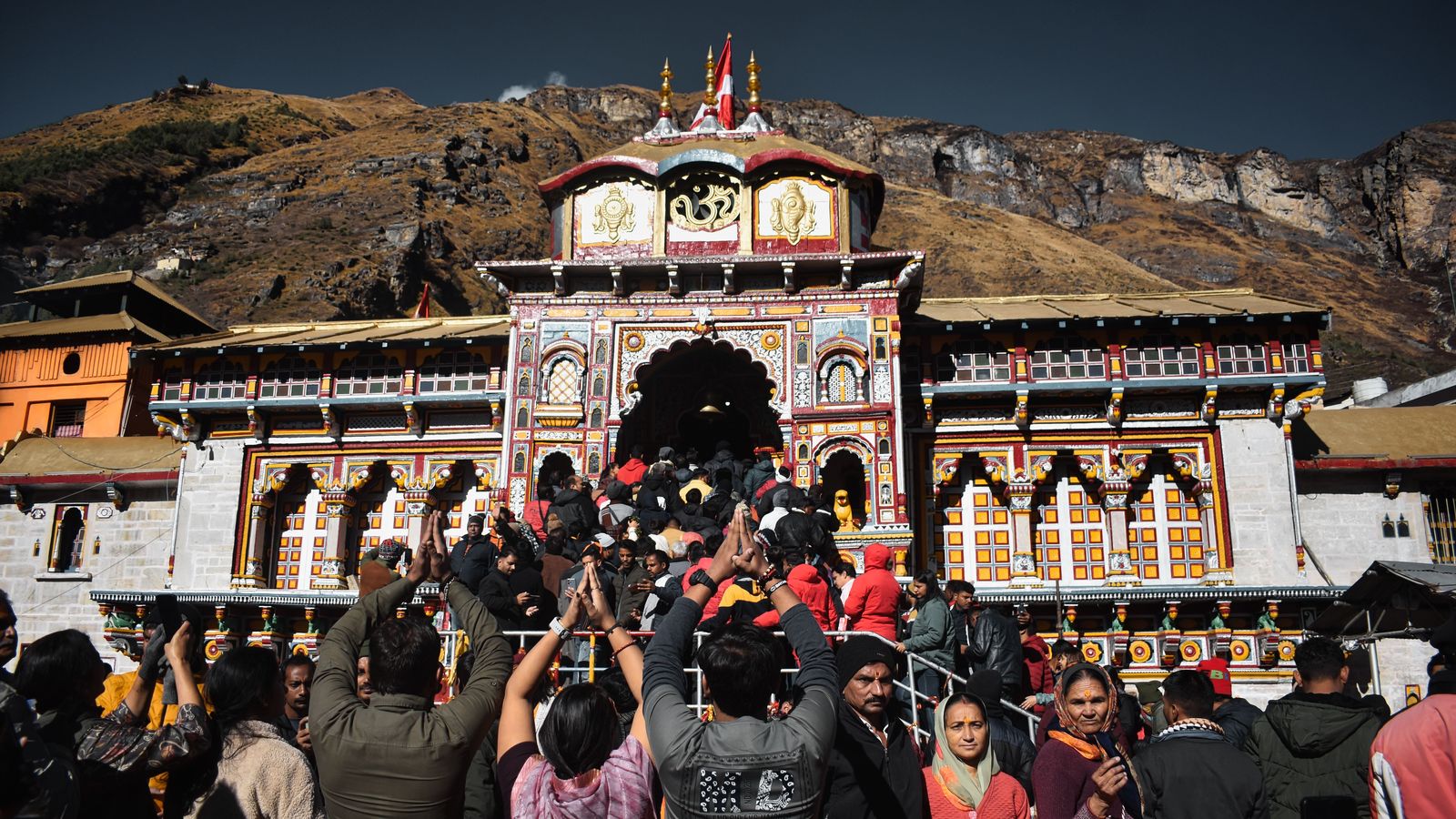
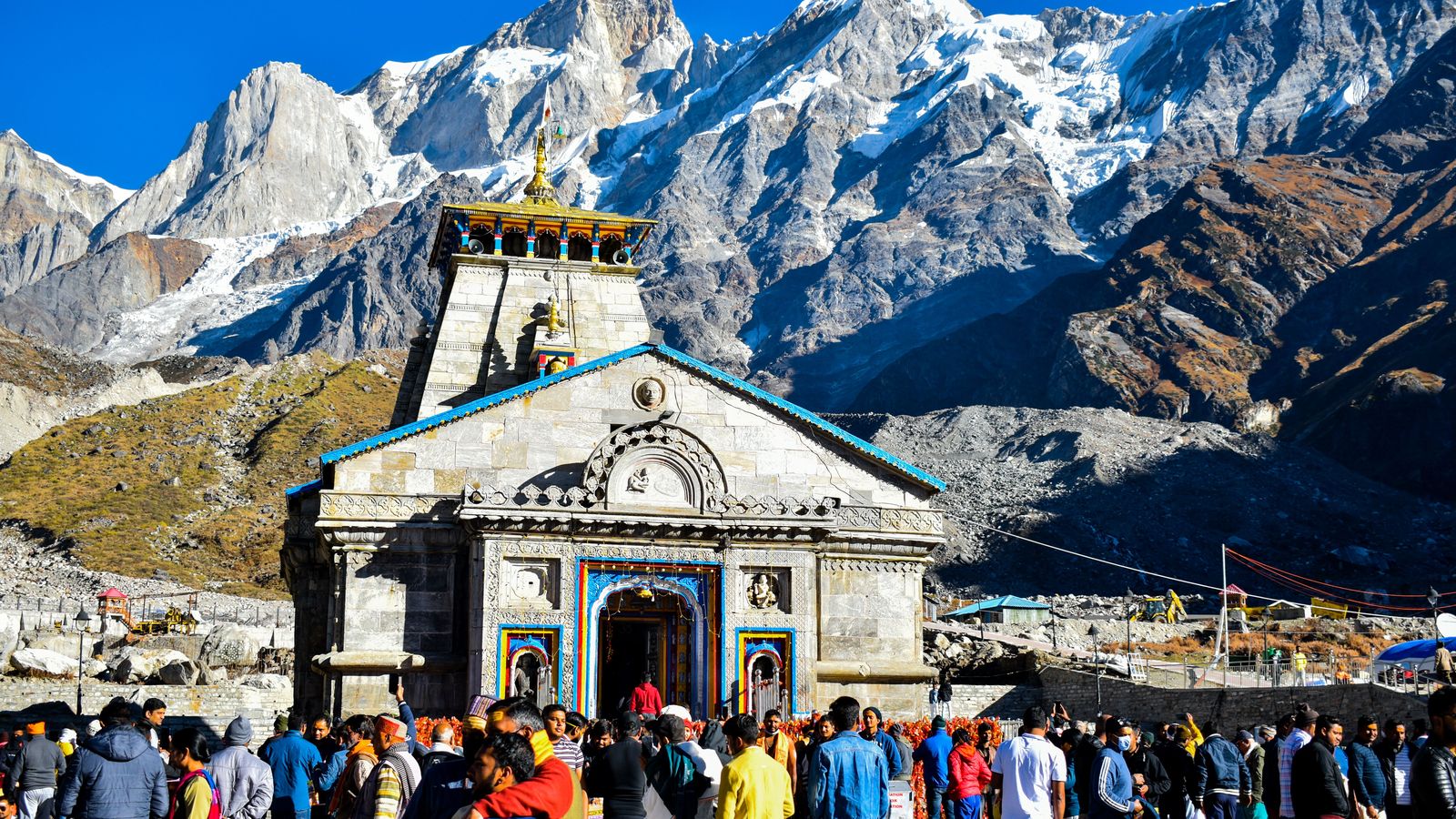
Badrinath is the northernmost of the Char Dham and, for many families, the most rewarding to reach by road, because the road goes all the way. The painted temple of Badri Narayan faces the Alaknanda at about 3,130 metres, framed by the Nar and Narayan ranges with the pyramid of Neelkanth peak rising behind. It is one of the 108 Divya Desams of the Vaishnava tradition and the seat Adi Shankaracharya is said to have re-established; the Rawal who leads the worship still comes from Kerala by custom.
Because there is no trek, Badrinath suits elders, young children and anyone who cannot manage the Kedarnath climb, provided they can handle the altitude. What they do need is a steady car and a driver who knows the Alaknanda road, its landslide zones and its traffic-control timings. RutzIndia.com offers one-way drops, round trips that stay with you, and linked itineraries through our Char Dham yatra by car and pilgrimage taxi services.
Sights at Badrinath and Mana
- Badrinath temple. The colourful gateway, the Singhdwar, opens onto the sanctum where the black stone image of Vishnu sits in meditation. The morning Maha Abhishek and evening Geet Govind are worth timing your visit around; book special pujas through the temple committee.
- Tapt Kund. Hot springs just below the temple where pilgrims bathe before darshan. The water is genuinely hot even when the air is near freezing.
- Brahma Kapal. A flat rock platform on the Alaknanda where families perform shraddh and pind daan for ancestors.
- Mana village. About 3 km beyond the temple and signposted as the first Indian village on this frontier. Walk to Vyas Gufa, where tradition says the Mahabharata was dictated, Ganesh Gufa, and Bheem Pul, a natural rock bridge over the roaring Saraswati just before it joins the Alaknanda.
- Vasudhara falls. A trail of about 5 km beyond Mana leads to a tall waterfall; plan half a day and go only in settled weather.
- Charan Paduka and Neelkanth views. A short uphill walk behind the town gives a clear look at Neelkanth at sunrise, when the peak turns gold.
Background on the shrine is on the Uttarakhand Tourism Badrinath page, and the Chamoli district website posts local advisories.
The road north: Rishikesh to Badrinath via the five prayags
The Badrinath highway is a string of river confluences, and it is worth knowing them because they are also your natural rest stops.
- Devprayag (about 70 km from Rishikesh). The Bhagirathi and Alaknanda meet; the Ganga begins. A viewpoint above the sangam is a good tea stop.
- Rudraprayag (about 140 km). The Mandakini joins; the Kedarnath road turns off here. Fuel, dhabas and ATMs.
- Karnaprayag (about 170 km). The Pindar comes in from the Kumaon side. Gauchar, just before it, has an airstrip and a broad valley.
- Nandprayag (about 190 km). The Nandakini meets the Alaknanda; a small temple town.
- Vishnuprayag (just past Jyotirmath). The Dhauliganga joins at a gorge; the road then drops to Govindghat and climbs to Badrinath.
Beyond Chamoli the valley narrows and the road climbs through Pipalkoti and Helang to Jyotirmath (still widely called Joshimath). The town was hit by land subsidence in 2023, so follow your driver's lead and any police diversions. After Govindghat, the base for the Valley of Flowers and Hemkund Sahib, the last 25 km past Pandukeshwar and Hanuman Chatti are the steepest, with a few tight bends and occasional one-way traffic control.
Distances are approximate and times vary with roadworks. Most families stop the first night at Srinagar, Rudraprayag or Karnaprayag and reach Badrinath by lunch on day two. If you begin in the capital, our Delhi to Rishikesh taxi or Rishikesh taxi service covers the approach.
When to go and what to check before you leave
The temple opens around late April or May, with the date fixed on Vasant Panchami, and closes in November. In winter the worship moves down to Jyotirmath and Pandukeshwar and the town above is snowbound.
- May and June: long days, pleasant 10 to 20 degree afternoons, heavy crowds and full hotels.
- July to mid-September: monsoon. The Alaknanda valley has several chronic slide zones and closures of a few hours to a couple of days are common. The Valley of Flowers blooms now, so some travellers accept the risk; build in spare days.
- Mid-September to closing: crisp and clear, the best light for photography and the easiest darshan outside festival weekends. Nights drop close to zero by October.
Before you go, complete the mandatory online Char Dham registration for every traveller and keep the QR slip handy; puja bookings and opening dates are on the temple committee website. Mana and Badrinath need no extra permit, but areas beyond Mana towards the border are restricted.
Chauffeured options and fares for a Badrinath trip
Every figure below is before 5% GST, with tolls, parking and state charges at actual cost. Add a driver night allowance of Rs 1,500 for each night away. Round trips are billed on actual distance or 250 km per calendar day, whichever is greater. Our full fare chart lists every vehicle class.
| Badrinath trip | Compact sedan | Innova Crysta | Fortuner | Tempo Traveller |
|---|---|---|---|---|
| Rishikesh to Badrinath one way (about 295 km) | Rs 10,620 Pay Now to Reserve | Rs 16,810 Pay Now to Reserve | Rs 24,780 Pay Now to Reserve | Rs 23,010 Pay Now to Reserve |
| Rishikesh to Govindghat one way (about 270 km) | Rs 9,720 Pay Now to Reserve | Rs 15,390 Pay Now to Reserve | Rs 22,680 Pay Now to Reserve | Rs 21,060 Pay Now to Reserve |
| 4-day round trip from Rishikesh with Mana (1,000 km billed) | Rs 36,000 Pay Now to Reserve | Rs 57,000 Pay Now to Reserve | Rs 84,000 Pay Now to Reserve | Rs 78,000 Pay Now to Reserve |
| Delhi to Badrinath one way (about 535 km) | Rs 19,260 Pay Now to Reserve | Rs 30,490 Pay Now to Reserve | Rs 44,940 Pay Now to Reserve | Rs 41,730 Pay Now to Reserve |
- For two to three pilgrims, a compact sedan is economical and comfortable on the widened highway.
- For families with elders, an Innova Crysta or a Fortuner on rent gives better seating and ground clearance for the final climb.
- For groups, a Tempo Traveller from Dehradun or Rishikesh carries 12 to 26 people; our Dehradun Tempo Traveller page shows layouts.
All cars are within four model years and carry the permits commercial vehicles need on the yatra route. Cancellation is free more than 72 hours before pickup; within 72 hours we charge 10%, within 48 hours 50%, and within 24 hours or on a no-show the full fare, as per our cancellation policy.
Suggested 3-day Badrinath itinerary
Day 1: Rishikesh to Karnaprayag or Nandprayag (about 170 to 190 km). Depart early, stop at the Devprayag sangam and Dhari Devi temple, lunch at Rudraprayag, reach a riverside hotel by late afternoon.
Day 2: On to Badrinath (about 105 to 125 km). Through Chamoli and Jyotirmath, with a short halt at the Narsingh temple. Reach Badrinath by lunch, bathe at Tapt Kund, evening darshan and aarti.
Day 3: Mana and the drive down (about 150 km). Dawn darshan, then Mana village, Vyas Gufa and Bheem Pul before 10 am. Drive back as far as Rudraprayag or Srinagar for the night and return to Rishikesh on day four.
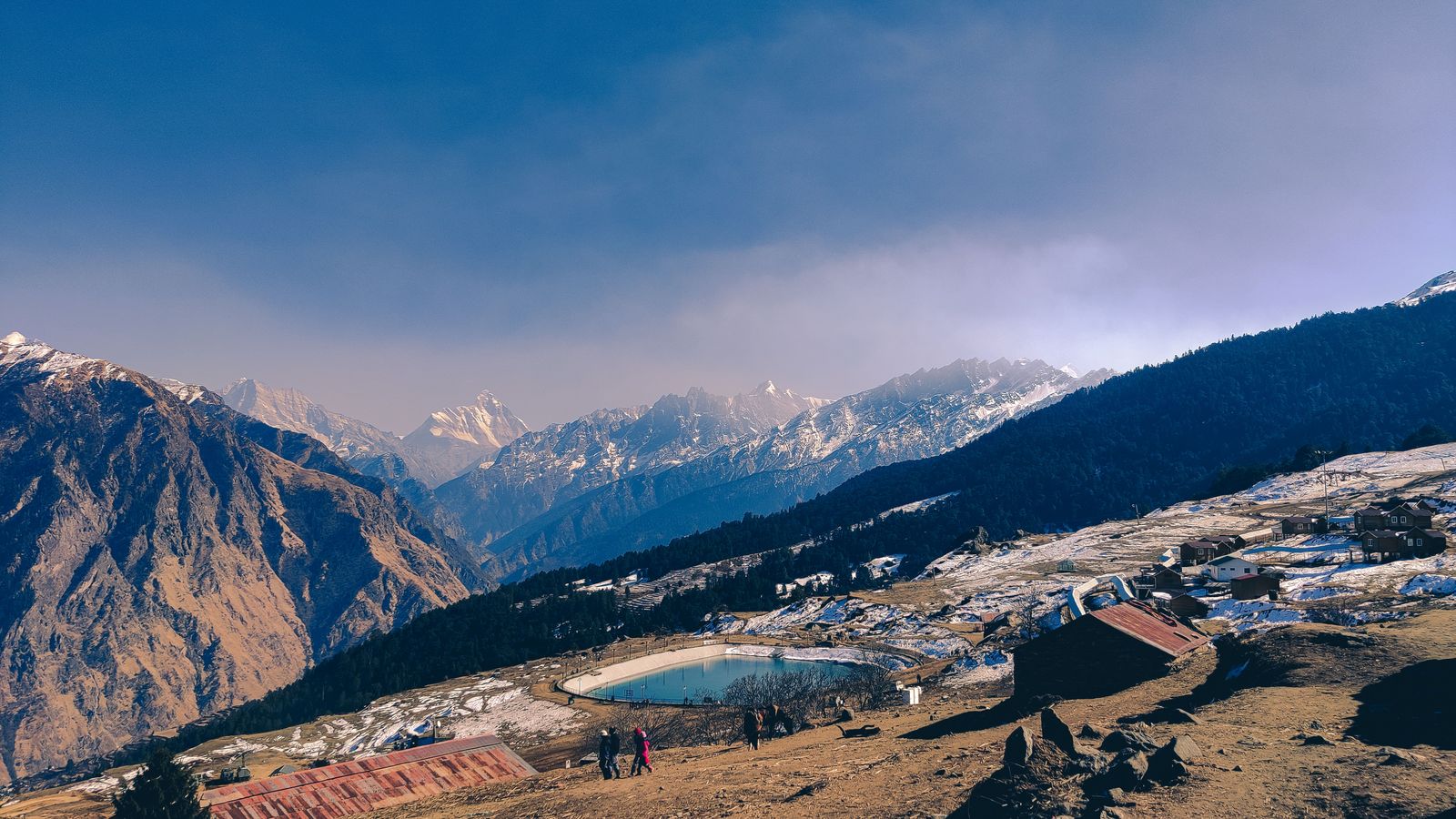
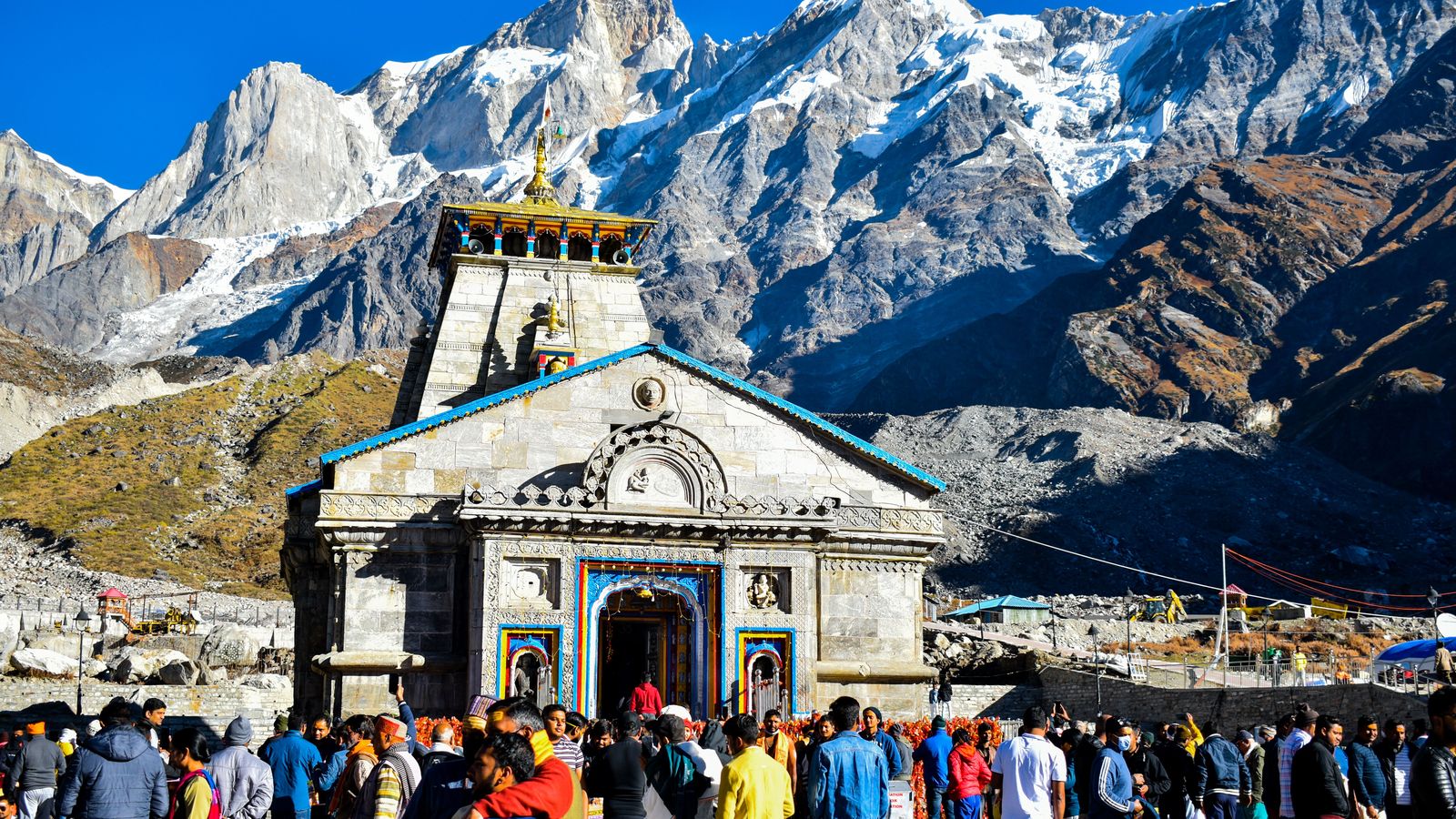
Want snow and meadows too? Auli sits just above Jyotirmath; see our Auli by road guide. Doing both Kedarnath and Badrinath? The Kedarnath by road guide explains how the two valleys connect at Rudraprayag, or via Chopta and Gopeshwar.
Where to stay and eat on the Badrinath route
Badrinath town itself is small: a bazaar of puja-samagri shops, dharamshalas, GMVN-style government lodges and mid-range hotels on both banks of the Alaknanda. Rooms fill quickly in May and June and around the closing ceremony, so fix your stay before you fix the car. Many families prefer to sleep lower down, at Jyotirmath or Pipalkoti, where it is warmer and the altitude is kinder, and drive up early for darshan.
On the way, the riverside towns each have a character. Srinagar is a busy university town with the widest choice of hotels. Rudraprayag and Karnaprayag have simple lodges overlooking their confluences. Nandprayag and Chamoli are quieter. Pipalkoti, set among terraced fields, is a pleasant final halt before the climb.
Food along the highway is vegetarian in most places and none the worse for it: rajma-chawal, kadhi, aloo-puri, mandua (finger-millet) rotis, and at Badrinath the temple's own prasad of mishri and dry fruit. Tea stalls at Devprayag and Rudraprayag stay open from dawn. Carry a thermos and a few packed snacks, because a landslide hold-up can leave you waiting between dhabas for an hour or two.
If your group includes elders who tire easily, tell us when you book. The driver will plan shorter days, stop every couple of hours and choose hotels with road-level access rather than long staircases down to the river.
Practical tips for Badrinath pilgrims
- Altitude. At over 3,000 metres some visitors get headaches. Arrive by afternoon, rest, drink water and avoid alcohol. Elders should carry their regular medicines and a doctor's advice.
- Warm clothing year-round. Even in June, early-morning darshan needs a jacket, cap and gloves.
- Parking. Vehicles park in designated lots at the town's edge and pilgrims walk the last stretch over the Alaknanda bridge. Your driver will drop you as close as the police allow.
- Fuel and cash. Fill up at Jyotirmath; there are ATMs at Badrinath but they can run dry in peak weeks.
- Photography. Photography is not allowed inside the sanctum; respect the signs.
- Night driving. Movement on this road after dark is often restricted. Our plans always finish the day before sunset.