Vrindavan by car from Delhi: the short answer
Vrindavan is about 165 km from central Delhi, typically three hours by road via NH19 or the Yamuna Expressway. RutzIndia.com charges Rs 5,940 Pay Now to Reserve one way in a compact sedan and Rs 9,410 Pay Now to Reserve in an Innova Crysta, before 5% GST, with tolls and parking at actual cost. A same-day darshan return of about 330 km is Rs 11,880 Pay Now to Reserve in a sedan.
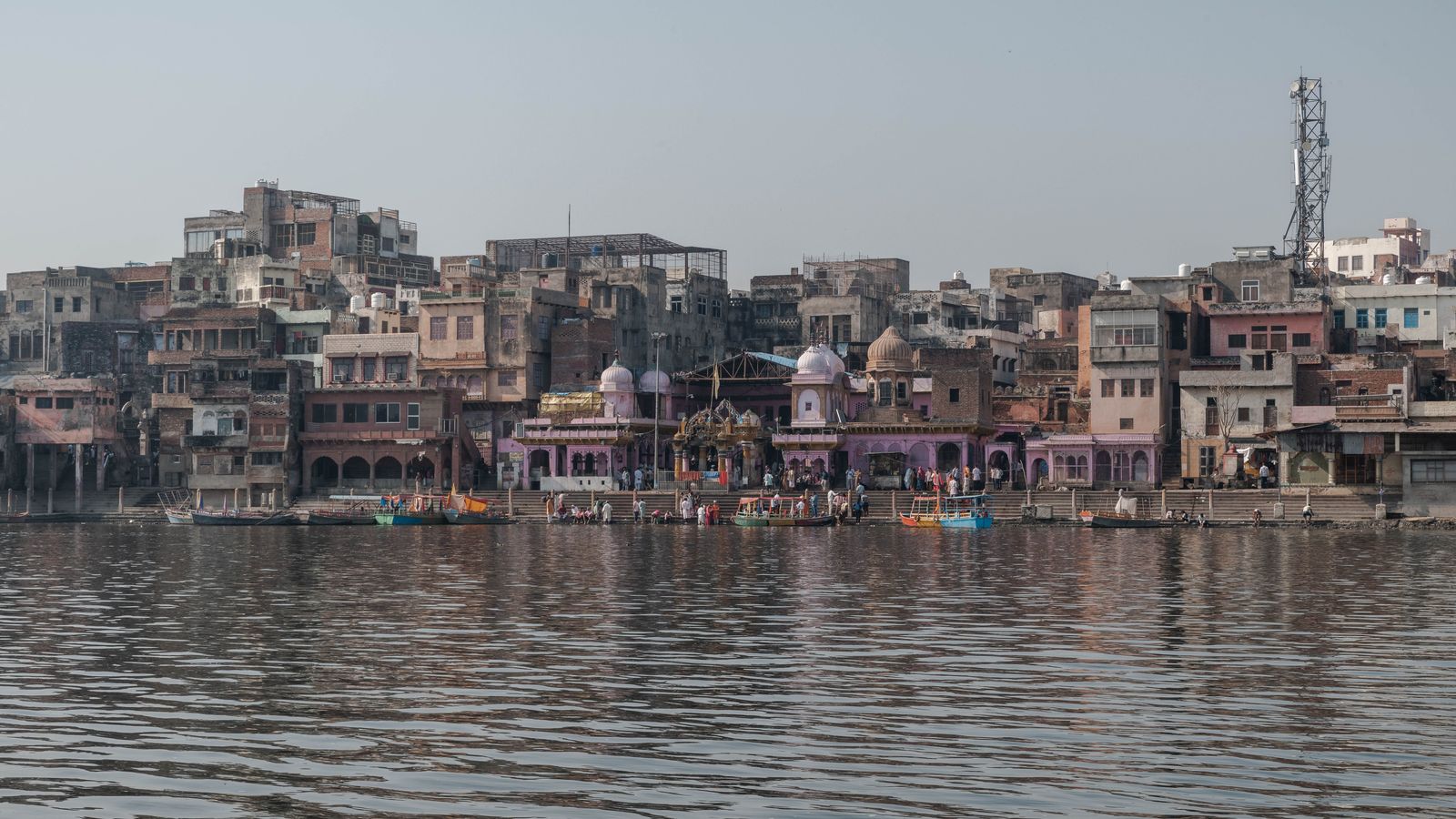
Vrindavan is the forest of Krishna's youth, the place where, in the Bhagavata tradition, he played the flute for the gopis and danced the rasa by moonlight. The forest is long gone, but the devotion has only grown. The small town on a bend of the Yamuna holds several thousand temples, from sixteenth-century sandstone shrines to the enormous white marble of Prem Mandir, and on a weekend morning the lanes around Banke Bihari are as packed as any place in India.
That is exactly why a chauffeur makes sense here. Vrindavan's charm is best felt on foot, but its traffic is not something you want to navigate yourself, and parking near the main temples is scarce. Your driver drops you at the nearest point, waits, and moves the car to meet you at the next temple while you walk. This guide explains how that works, with fares, routes and timings.
The temples you should not miss
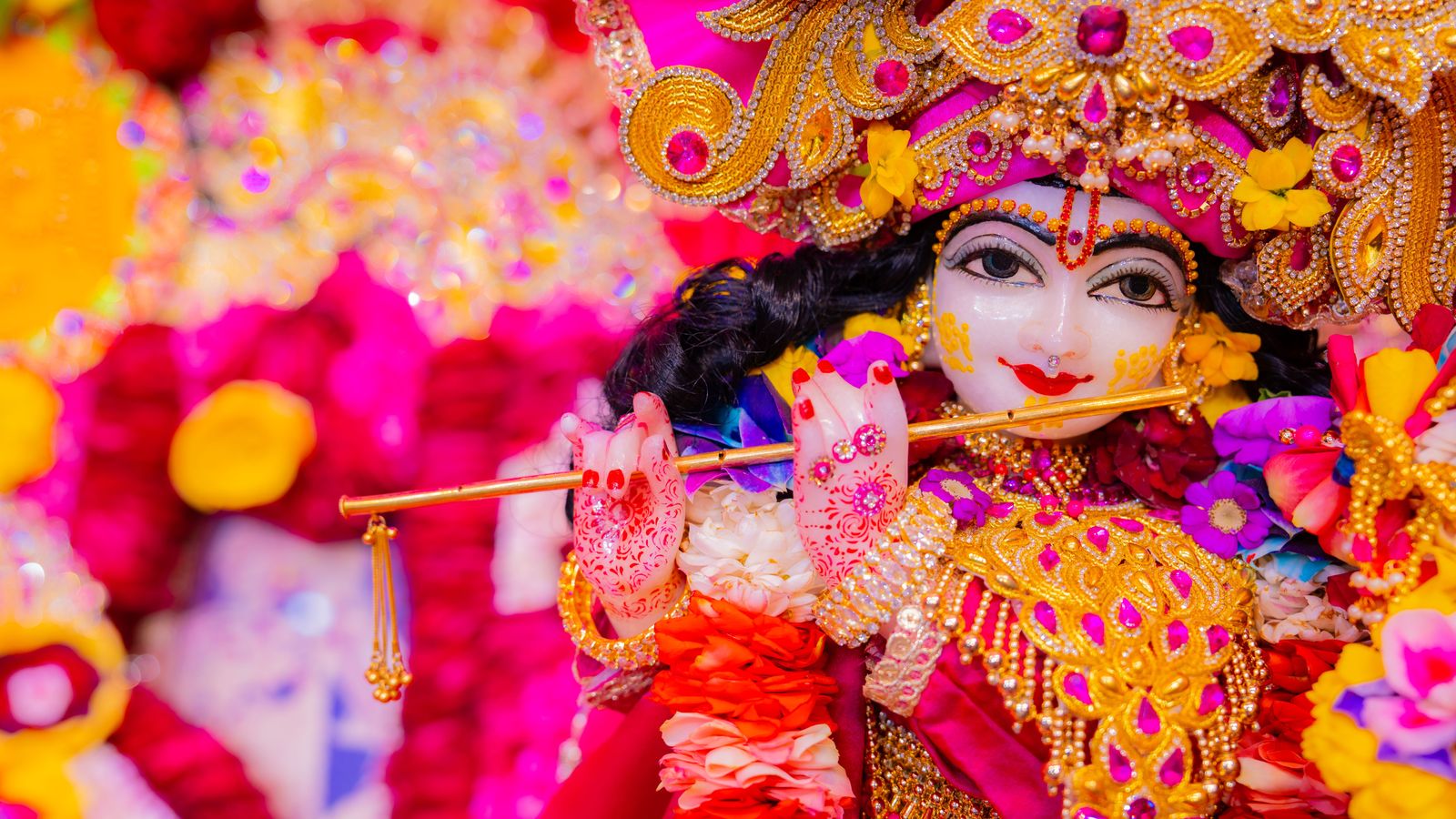
Banke Bihari Mandir is Vrindavan's most loved shrine. The image of Krishna here is considered so captivating that a curtain is drawn across it every few minutes during darshan, so that no devotee is overwhelmed. There is little formal aarti on most days, and the courtyard is small; weekends, ekadashi days and festivals bring crushing crowds. Timings shift between summer and winter, and the temple closes for several hours in the middle of the day.
Sri Krishna Balaram Mandir (ISKCON), founded in 1975 by A.C. Bhaktivedanta Swami Prabhupada, is where many overseas visitors begin. Kirtan fills the marble hall through the day, the guesthouse and Govinda's restaurant are reliable, and the samadhi of Srila Prabhupada is next door. The ISKCON Vrindavan website posts darshan and aarti timings.
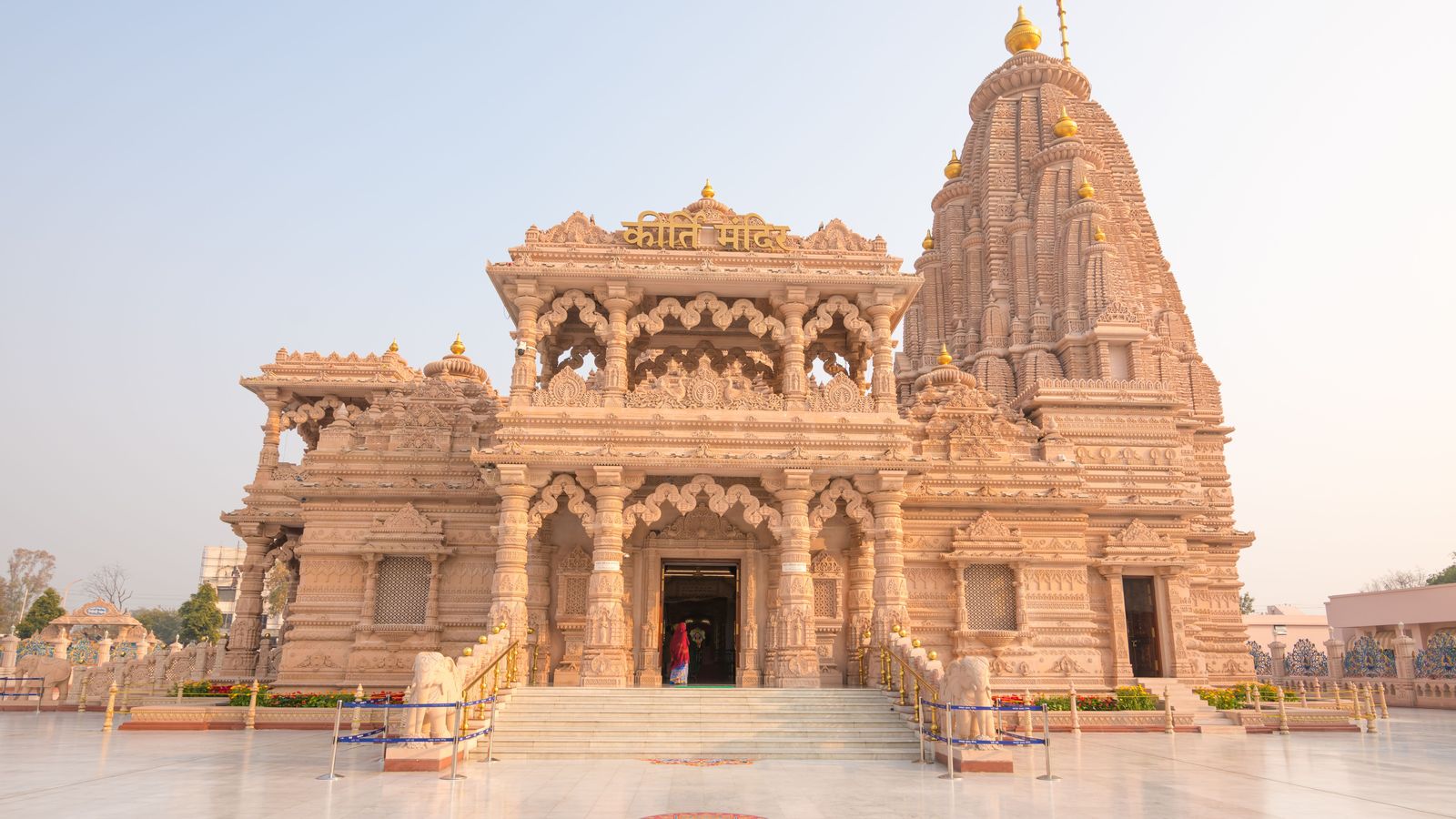
Prem Mandir, built by Jagadguru Kripalu Parishat and opened in 2012, is a vast white-marble temple set in gardens with illuminated tableaux of Krishna's pastimes. Come in the evening, when the building is lit in slowly changing colours. Timings and visitor information are on the JKP website.
Radha Raman Temple, established in the sixteenth century, is one of the seven principal temples of the Gaudiya tradition and famous for its small, self-manifested deity and exquisite daily dressing.
Govind Dev Temple, a red-sandstone giant commissioned by Raja Man Singh of Amber in 1590, is architecturally the most impressive old temple in town, even though its upper storeys were lost centuries ago.
Rangaji Temple brings South Indian architecture to the Braj plain, with a tall gopuram and a golden flagstaff. Its annual chariot festival is spectacular.
Nidhivan and Seva Kunj are small enclosed groves of twisted tulsi trees. Local belief holds that Krishna and Radha still perform the rasa here at night, and the gardens are closed after dark.
Keshi Ghat on the Yamuna has a lovely evening aarti and small boats for a short trip along the river.
If you have time, walk part of the Vrindavan parikrama, a circuit of roughly 10 km around the town that many pilgrims complete barefoot at dawn.
The drive: which road, and where the car stops
NH19, the classic route
From South Delhi your chauffeur takes NH19 through Faridabad, Ballabhgarh and Palwal, crossing into Uttar Pradesh near Kosi Kalan. About 3 hours in, at Chhatikara, a turning leads the last few kilometres into Vrindavan past Prem Mandir and the Vaishno Devi temple. It is the most direct way to reach the Prem Mandir end of town.
Yamuna Expressway
From Noida, East Delhi or the airport, the expressway is often quicker: join at Greater Noida, exit at the Mathura interchange and cross the river. The Delhi to Vrindavan taxi page shows both routes with fares, and your driver decides on the morning based on traffic.
Inside Vrindavan
The old centre around Banke Bihari and Radha Raman is a tangle of narrow lanes that cars simply cannot enter. The local administration sets up parking areas and, on crowded days, diversions along the Parikrama Marg. Your driver will drop you at the closest permitted point and tell you where he will wait. Battery e-rickshaws cover short hops between temples for a small fare.
Combining with Mathura
Mathura is only 12 km away. Many families do the Janmasthan in the morning and Vrindavan in the afternoon and evening. Our Mathura by road guide has the details for that half.
When to visit Vrindavan
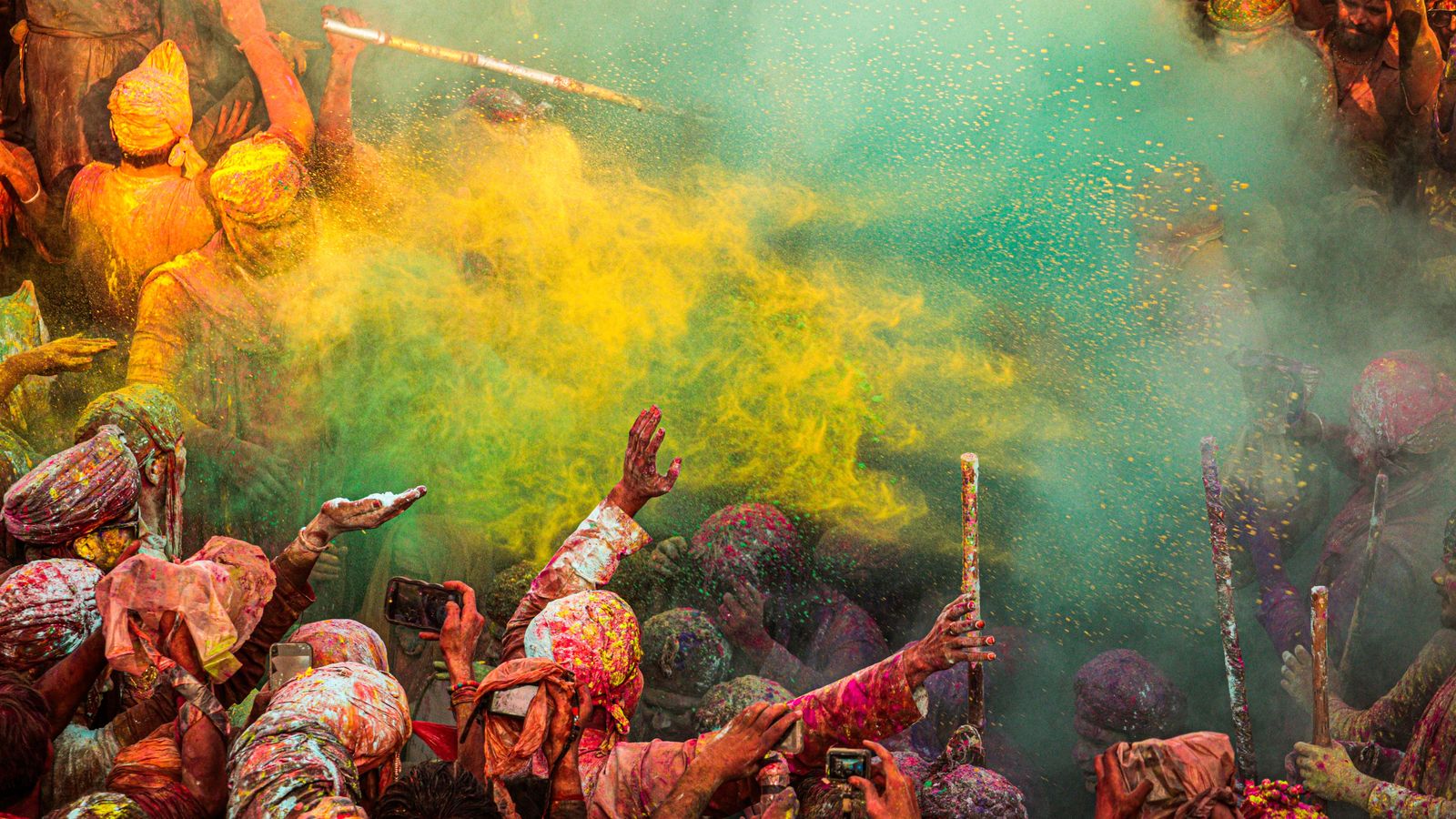
October to March is the pleasant season for temple-hopping on foot. December and January mornings are foggy and cold, but the evening aartis are magical. April to June is hot, and midday closures mean most darshan happens early and late. July to September brings the monsoon and Jhulan Yatra, when deities in many temples are placed on decorated swings during the month of Shravan.
Festival dates to note, all of which call for booking early and expecting road diversions:
- Holi, and especially the Phoolon wali Holi at Banke Bihari on Rangbhari Ekadashi, when petals rather than colour are showered on devotees. The Braj Holi season runs for weeks.
- Janmashtami, with midnight celebrations and the year's biggest crowds. The administration usually advises the elderly and small children to avoid the main temple at peak hours.
- Radhashtami, Radha's birthday, celebrated most famously in nearby Barsana.
- Sharad Purnima and the month of Kartik, when parikrama pilgrims fill the town.
- Weekends and ekadashi, which feel like festivals in their own right at Banke Bihari.
The Mathura district website is where traffic and crowd-management advisories appear before major festivals.
RutzIndia.com services and fares for a Vrindavan trip
You can book Vrindavan as a straight drop, a same-day darshan, a weekend or a longer Braj yatra. All prices are before 5% GST, with tolls, state permits where applicable and parking charged at actual cost. Round trips are billed on at least 250 km per calendar day, and the driver's night allowance of Rs 1,500 applies to each overnight stay.
| Trip | Compact sedan | Ertiga | Innova Crysta | Tempo Traveller |
|---|---|---|---|---|
| Delhi to Vrindavan one way (165 km) | Rs 5,940 Pay Now to Reserve | Rs 6,930 Pay Now to Reserve | Rs 9,410 Pay Now to Reserve | Rs 12,870 Pay Now to Reserve |
| Same-day darshan return (330 km) | Rs 11,880 Pay Now to Reserve | Rs 13,860 Pay Now to Reserve | Rs 18,810 Pay Now to Reserve | Rs 25,740 Pay Now to Reserve |
| Weekend, 2 days (500 km billed) | Rs 18,000 Pay Now to Reserve | Rs 21,000 Pay Now to Reserve | Rs 28,500 Pay Now to Reserve | Rs 39,000 Pay Now to Reserve |
Groups wanting a smoother ride than the Tempo Traveller can take a Force Urbania at Rs 102 per km, which makes the one-way run to Vrindavan Rs 16,830 Pay Now to Reserve.
Popular bookings:
- Early-morning darshan from Delhi, Noida or Gurgaon, returning the same night.
- Delhi airport to Vrindavan for NRI families heading straight to an ashram.
- Weekend stays at ISKCON or an ashram, with the car available for Mathura, Gokul and Govardhan on day two.
- Bhajan mandali and satsang groups in a Tempo Traveller or Urbania; see Tempo Traveller in Delhi for sizes.
- Longer yatras that add Haridwar, Rishikesh or Ayodhya, arranged through our pilgrimage taxi service.
Cars are within four model years and come with a professional chauffeur. Pay by card or UPI through the booking page, and ask for a GST invoice if a trust or company is paying.
Sample plans by car
Same-day darshan (about 330 km)
5:30 am pickup in South Delhi. ISKCON's morning programme or Banke Bihari's first darshan by 9 am. Radha Raman and Govind Dev before the midday closure. Lunch at Govinda's or a Brijwasi thali. A rest in the car or at a dharamshala, then Keshi Ghat aarti and Prem Mandir's illuminations. Depart 8 pm, Delhi by about 11 pm.
Two days, Vrindavan and Braj (about 500 km)
Day 1: morning drive, afternoon Banke Bihari and Nidhivan, evening Prem Mandir; night at an ashram or hotel (about 190 km with local driving). Day 2: dawn parikrama, drive to Govardhan and Barsana (about 60 km), then Mathura's Janmasthan and home (about 250 km). Extra kilometres over the 500 km minimum are billed at the per-km rate.
Three days: Vrindavan, Mathura and Agra
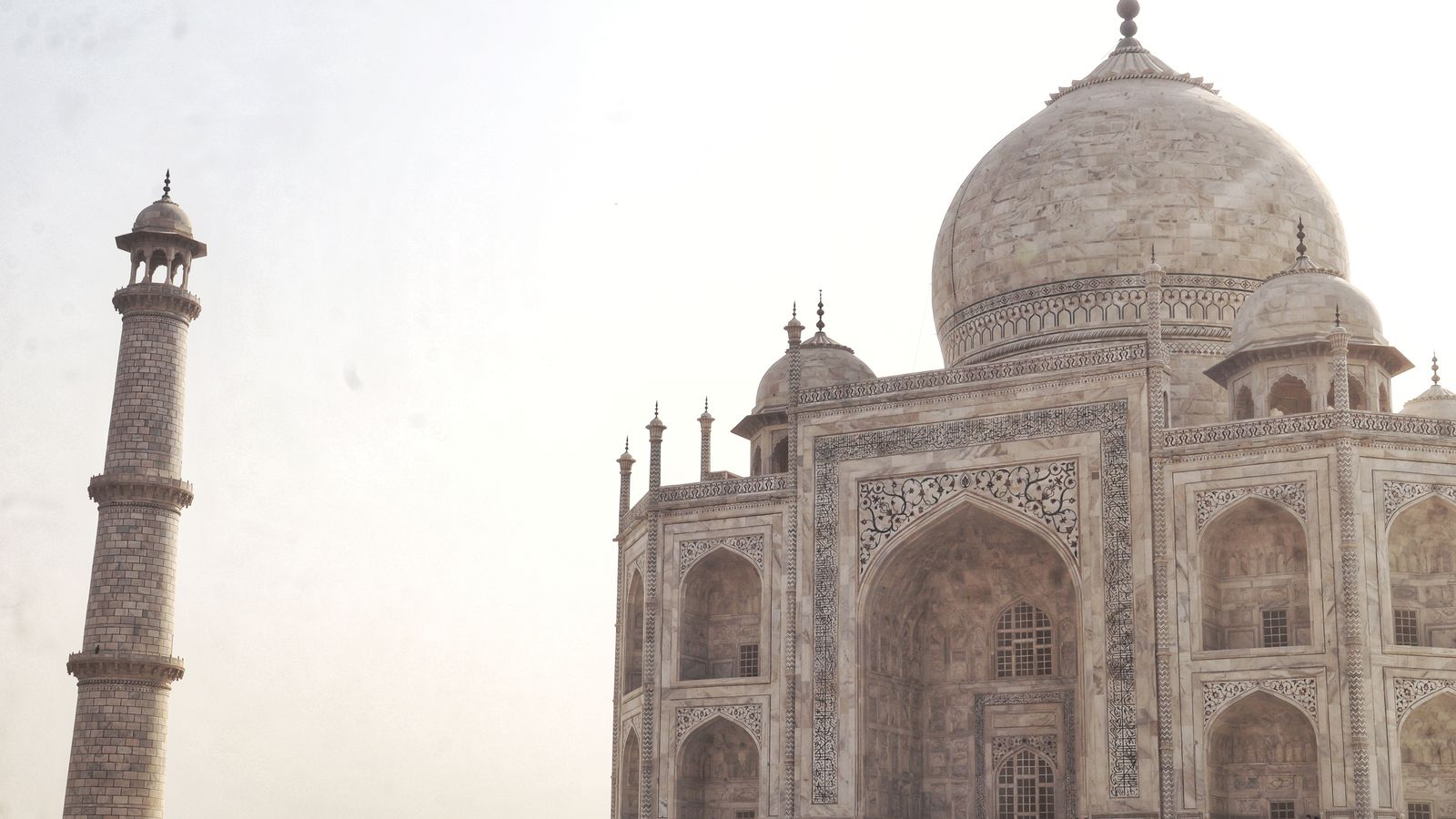
Add a third day for the Taj Mahal, 70 km down the expressway. Our Agra by road guide explains parking at the Taj and the Friday closure.
Practical tips from drivers who do this every week
- Mind the monkeys. Vrindavan's monkeys are notorious for grabbing spectacles, phones and even footwear. Keep glasses in a case and bags zipped.
- Travel light. Leave laptops, cameras and extra bags locked in the car; the driver stays with it.
- Shoes off, and quickly. Most temples have shoe stands; slip-ons save time.
- Crowd sense. At Banke Bihari, keep children and elderly relatives close and avoid the peak minutes when the curtain opens after a closure.
- Food. Almost all of Vrindavan is vegetarian and much of it avoids onion and garlic. Street food is good but choose busy stalls.
- Donations. Give only inside temples or to registered trusts; decline anyone who insists on a donation at the gate.
For a family function or a bhandara, we can run two or three cars together from different parts of NCR and bring everyone to the same temple at the same time. Ask the travel desk.
Booking, payment and cancellation
Book online with your pickup point and preferred darshan time, and we will suggest a departure hour. Driver details arrive the evening before. Free cancellation applies until 72 hours before pickup; after that 10% is retained within 72 hours, 50% within 48 hours, and the whole fare within 24 hours or for a no-show. See the cancellation policy and the full fares for every vehicle class.