How far is Ujjain from Indore, and what does a cab to Mahakaleshwar cost?
Ujjain is about 55 km north-west of Indore, typically 1 hour to 1 hour 15 minutes by the four-lane Indore-Ujjain road. At RutzIndia.com this short run is charged the Indore minimum fare: Rs 3,570 Pay Now to Reserve by sedan, Rs 6,240 Pay Now to Reserve by Innova Crysta, before 5% GST. A same-day return with waiting is Rs 9,000 by sedan on the 250 km daily minimum.
Ujjain is one of the seven sacred cities of Hindu tradition and, for most visitors, one address: the Mahakaleshwar Jyotirlinga, where Shiva is worshipped as the lord of time. But it is also an old university town where Kalidasa is believed to have written, where Krishna is said to have studied at Sandipani's ashram, and where Indian astronomers once drew their prime meridian. A car with a driver makes the city far easier than it looks: the temples are spread across the old town, parking near the core is controlled, and the most famous ritual begins before four in the morning.
This page is for the pilgrim family flying into Indore for a darshan, the group of friends combining Ujjain and Omkareshwar in one long day, the NRI bringing parents for the bhasma aarti, and the traveller who simply wants to understand a city that has been continuously sacred for more than two thousand years. For the base city, see our Indore taxi service page.
Mahakaleshwar and the other temples worth your time
Mahakaleshwar Jyotirlinga. The lingam here faces south, which is unusual and is part of why the temple holds a special place among the twelve Jyotirlingas. The daily bhasma aarti, performed in the small hours with sacred ash, is the most sought-after ritual in central India. Entry to it is by advance booking, with dress rules for those who sit in the sanctum area; the rules, slots and online booking are published on the official Shri Mahakaleshwar temple website, and we strongly suggest you book there before you book the car.
Shri Mahakal Mahalok. The long corridor opened in 2022 leads to the temple past sandstone murals, statues and water bodies telling Shiva's stories. It is lit beautifully after dark and is worth an evening walk even if you have already had darshan.
Harsiddhi Mata temple. A short walk from Mahakal, this shrine is known for its two tall deepstambhs, lamp towers studded with hundreds of oil lamps that are lit in the evening. If you can time your visit to see them blazing, do.
Kal Bhairav. About 6 km north of the centre, the guardian deity of Ujjain is famously offered liquor by devotees, a ritual unusual enough that visitors of every background come to watch. The road is narrow near the temple; your chauffeur will park at the approach.
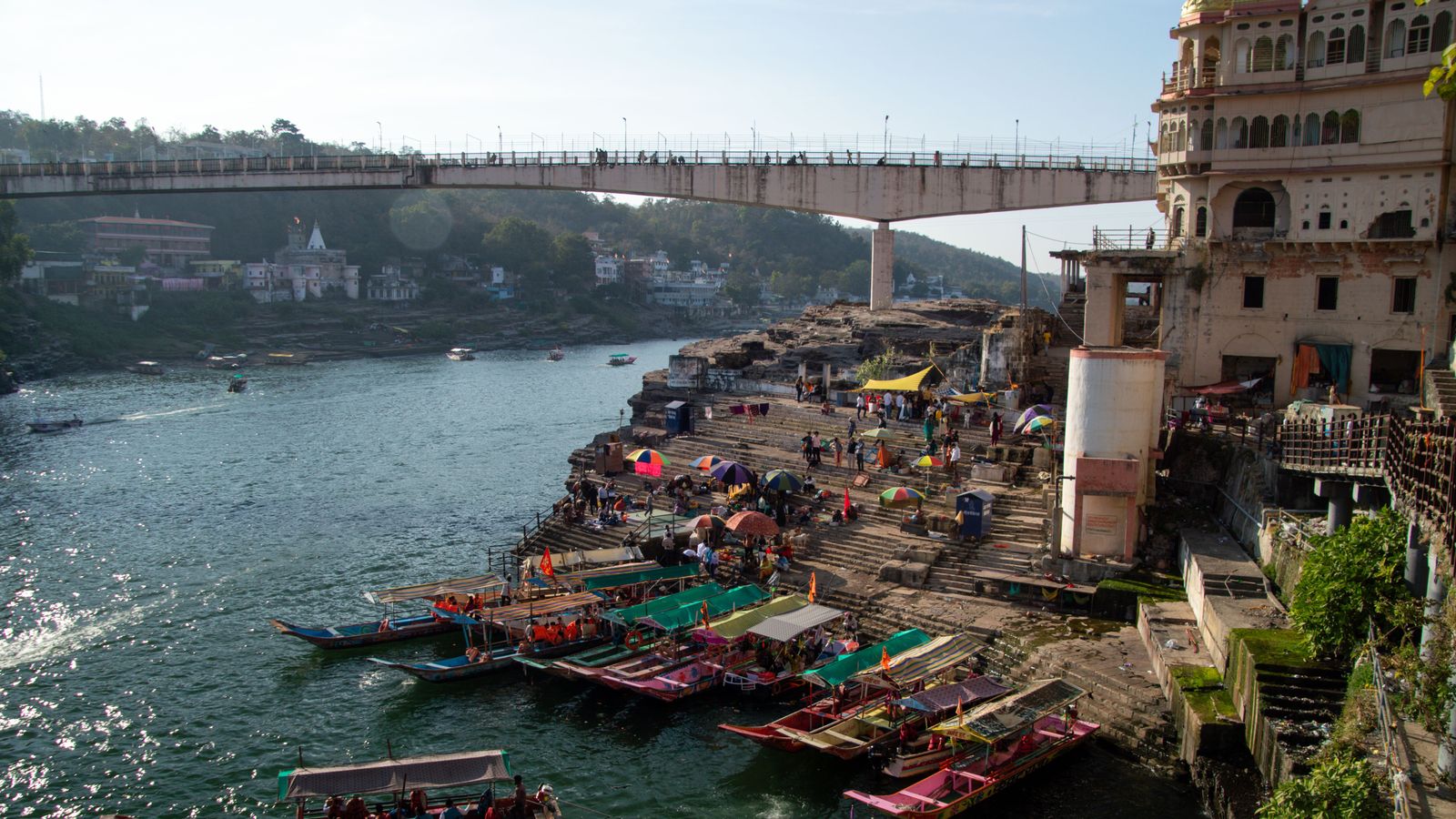
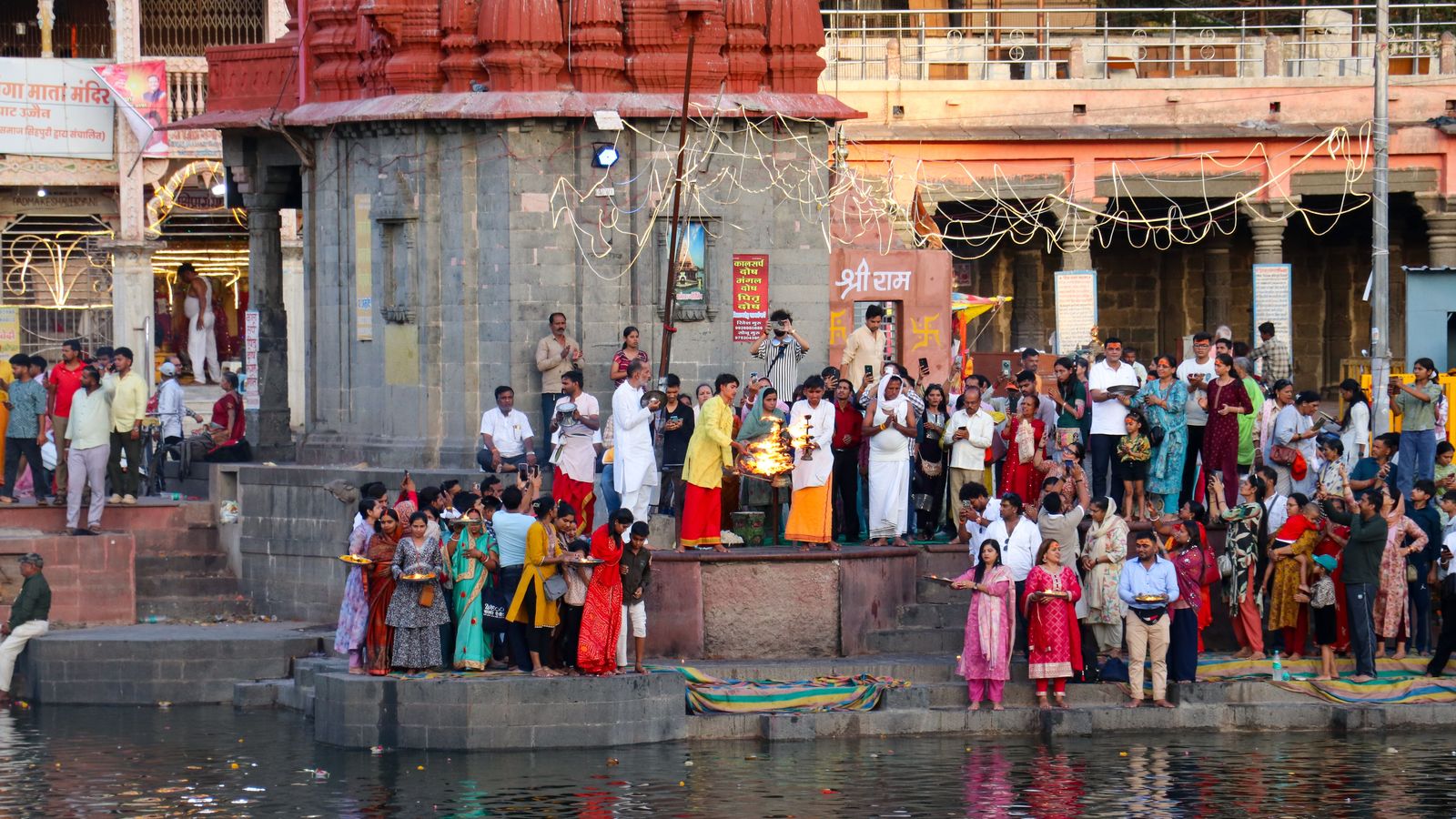
Ram Ghat and the Kshipra. The main bathing ghat hosts an evening aarti and, every twelve years, the Simhastha Kumbh; the next one is due in 2028. Rows of small shrines, flower sellers and boatmen make it the best place to feel the city's rhythm.
Sandipani Ashram, Mangalnath and Gadkalika. Sandipani Ashram is where tradition places the schooling of Krishna, Balarama and Sudama. Mangalnath is believed to mark the birthplace of Mars and draws people performing Mangal dosha pujas. Gadkalika is associated with the poet Kalidasa.
Vedh Shala observatory. Built by Maharaja Jai Singh II of Jaipur in the eighteenth century, this small Jantar Mantar has sundials and masonry instruments that still work on a sunny day. Nearby Bhartrihari's caves and the ancient banyan at Siddhavat round off a heritage loop.
Food. Ujjain's everyday meal is dal bafla, a Malwa cousin of Rajasthani dal baati, dripping in ghee. Breakfast is poha and jalebi, sprinkled with sev and a little jeeravan masala, much as in Indore. The Madhya Pradesh Tourism page on Ujjain lists the sights and fair dates in detail.
The Indore-Ujjain road, and when it gets busy
The main road runs almost straight north-west from Indore past Sanwer, a four-lane divided highway that is being upgraded ahead of the 2028 Simhastha, so expect stretches of construction and diversions. Out of Indore, traffic thins once you are past the ring road junctions; the slow part is the last few kilometres inside Ujjain, where the old town lanes around Mahakal are narrow and parking is steered into designated lots.
An alternative is the Indore-Dewas road and then Dewas-Ujjain, useful if you want to climb the Dewas tekri to the twin Chamunda and Tulja Bhavani shrines on the way; it adds 25-30 minutes. There is no ghat section on either route and no state border to cross, so there are no permit charges, only the highway toll where it applies.
Traffic swings with the religious calendar more than the clock. Mondays in Shravan (July-August) bring huge crowds and the Mahakal sawari procession through the streets; Mahashivratri, and Nag Panchami, when the Nagchandreshwar shrine on the temple's upper level opens for its single day of the year, are the busiest days of all. On these days the police close roads around the temple, and your chauffeur will drop you as close as permitted and meet you at a pre-agreed parking point.
Best time to visit Ujjain
Winter, from October to March, is the most comfortable: warm afternoons, cool mornings for the early aarti and the evening ghat. Diwali and Kartik Purnima bring a lamp-lit river and a small fair. Summers are hot, with afternoon highs well into the forties from late April, so a summer visit works best as an early-morning darshan followed by an afternoon indoors. The monsoon, July to September, is warm and humid but green, and it coincides with Shravan, the most auspicious and most crowded month at Mahakal.
If you are planning around the 2028 Simhastha, reserve rooms and cars early; the city fills for weeks and the district administration publishes traffic plans closer to the dates on the Ujjain district website.
Chauffeured services RutzIndia.com offers for Ujjain
There are three common ways guests use us. The first is a simple one-way drop from Indore (city, hotel or railway station) to your Ujjain hotel. The second is a same-day return: the car waits while you do darshan and the temple circuit, then brings you back to Indore. The third, and the favourite of first-time pilgrims, is a full-day loop of Ujjain and Omkareshwar together, about 275 km. For groups of ten or more, a Tempo Traveller or Force Urbania keeps everyone together; see Tempo Traveller on rent.
Airport pickups at Indore's Devi Ahilyabai Holkar airport come with a name board and flight tracking, and 30 minutes of free waiting after a domestic landing (60 minutes for international flights). The Airports Authority of India page for Indore has terminal details.
| Trip | Sedan (Dzire class) | Innova Crysta | Tempo Traveller |
|---|---|---|---|
| One way Indore to Ujjain, about 55 km (minimum fare applies) | Rs 3,570 Pay Now to Reserve | Rs 6,240 Pay Now to Reserve | Rs 9,660 Pay Now to Reserve |
| Same-day return with waiting (250 km minimum) | Rs 9,000 | Rs 14,250 Pay Now to Reserve | Rs 19,500 Pay Now to Reserve |
| Ujjain + Omkareshwar loop from Indore, about 275 km | Rs 9,900 Pay Now to Reserve | Rs 15,670 Pay Now to Reserve | Rs 21,450 Pay Now to Reserve |
| Indore airport transfer within 40 km | Rs 3,570 Pay Now to Reserve | Rs 6,240 Pay Now to Reserve | Rs 9,660 Pay Now to Reserve |
| Indore local 8 hr / 80 km | Rs 6,480 Pay Now to Reserve | Rs 11,340 Pay Now to Reserve | Rs 17,550 Pay Now to Reserve |
All fares are before 5% GST; tolls and parking are charged at actual cost. On an overnight stay with the car retained, the day minimum is 250 km and a driver night allowance of Rs 1,500 applies. For pilgrims staying overnight for the bhasma aarti it is often cheaper to book two one-way transfers (Rs 3,570 each by sedan, the minimum fare) than to keep the car for two days; we will tell you which works out better when you book online.
Payment is by card or UPI through the booker, with GST invoices for corporate travellers. Cancellations are free up to 72 hours before pickup; after that we keep 10% (within 72 hours), 50% (within 48 hours) or 100% (within 24 hours or on a no-show), as set out in our cancellation policy. The wider pilgrimage taxi page covers other temple circuits.

A one-day and a two-day Ujjain plan by car
One day from Indore (about 110-130 km). Leave Indore at 5.30 am for a morning general darshan (or around 2.30 am if you hold a bhasma aarti booking). After darshan, walk the Mahakal Mahalok, then drive to Harsiddhi, Ram Ghat and Kal Bhairav before the midday heat. Lunch on dal bafla, then Sandipani Ashram, Mangalnath and the Vedh Shala in the afternoon, and back to Indore by 6 pm.
Two days (about 140 km plus local). Day one is a relaxed drive from Indore, checking into a hotel near the temple, and an evening at Ram Ghat and the lit corridor. Day two starts with the bhasma aarti, followed by breakfast and the outer temples, and a return in the afternoon. Many families then add a day for Omkareshwar on the Narmada, the second Jyotirlinga of Malwa, before flying home.
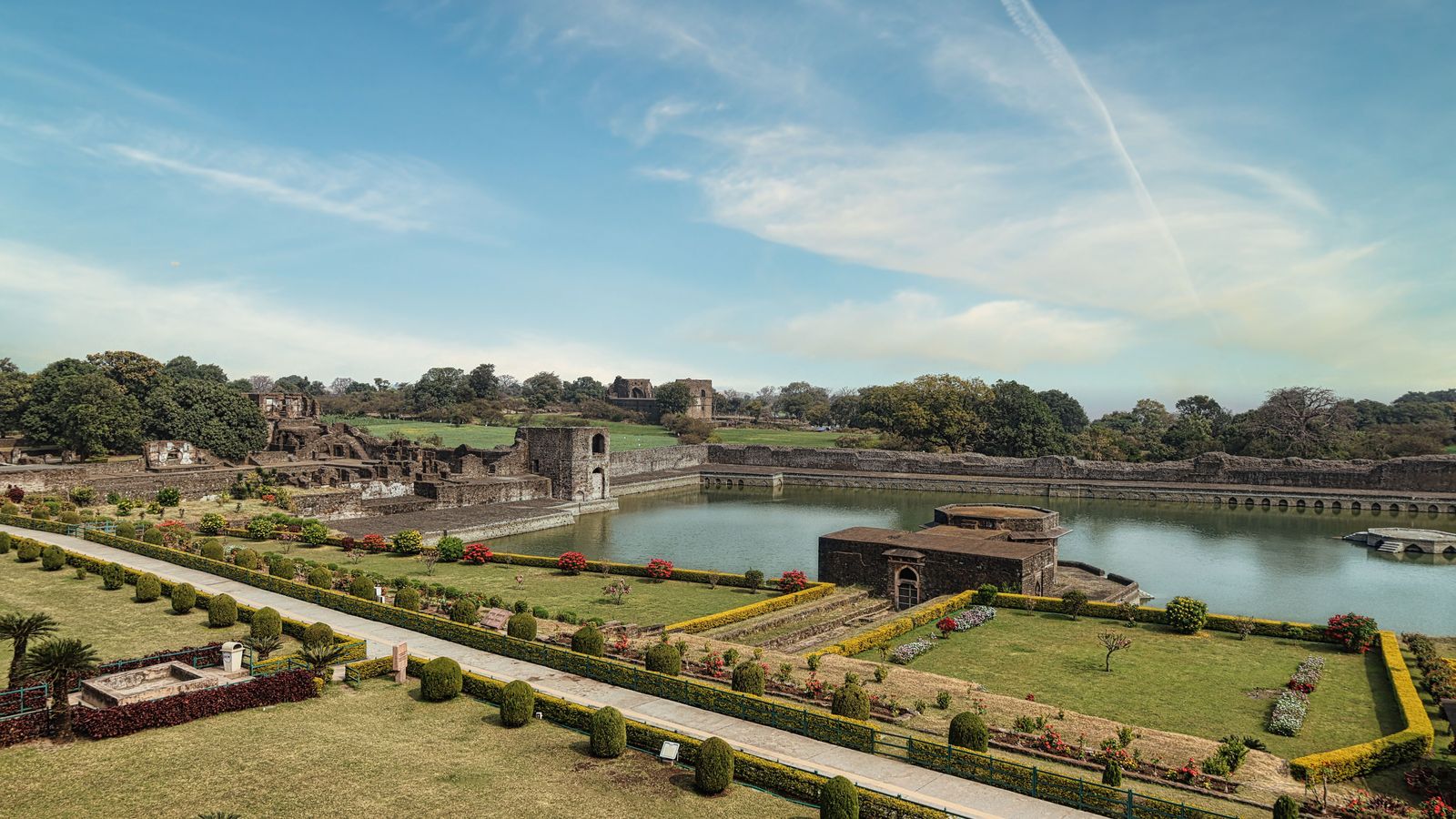
Three days, the Malwa pilgrim circuit. Ujjain, Omkareshwar and the Holkar river town of Maheshwar, with the hill fort of Mandu for those who want history with their darshan. It comes to roughly 500-550 km over three days, well within the 750 km minimum that applies to a retained car.
Practical tips for Ujjain
- Book the aarti first. Bhasma aarti places are limited and allocated online; there is also a dress code for those who enter the inner area. Check the rules before you travel.
- Mobile phones and bags. Phones, leather items and large bags are restricted inside the main shrine; use the cloakroom or leave them in the car with the chauffeur.
- Parking. Private cars are directed to designated parking near the temple complex; charges are passed on at actual cost.
- Local taxis. E-rickshaws are the practical way through the tightest lanes near Kal Bhairav and the ghats; your chauffeur will point you to them and wait at the lot.
- Footwear. Wear slip-on shoes; you will take them off many times.
- Crowds. Shravan Mondays, Mahashivratri and Nag Panchami bring very long queues; if your dates are flexible, choose a weekday outside these.
Ujjain is small enough to drive across in twenty minutes and deep enough to take a lifetime. With the car handled, you can give the city the early mornings and late evenings it deserves.