How do you get to Shantiniketan by road from Kolkata?
Shantiniketan, beside Bolpur town in Birbhum, is about 165 km north-west of Kolkata, typically a 3.5 to 4-hour drive on NH 19 to Bardhaman and then the state road via Guskara. A RutzIndia.com sedan costs Rs 5,940 Pay Now to Reserve one way and an Innova Crysta Rs 9,410 Pay Now to Reserve, before 5% GST. A two-day weekend by sedan is Rs 18,000 Pay Now to Reserve.
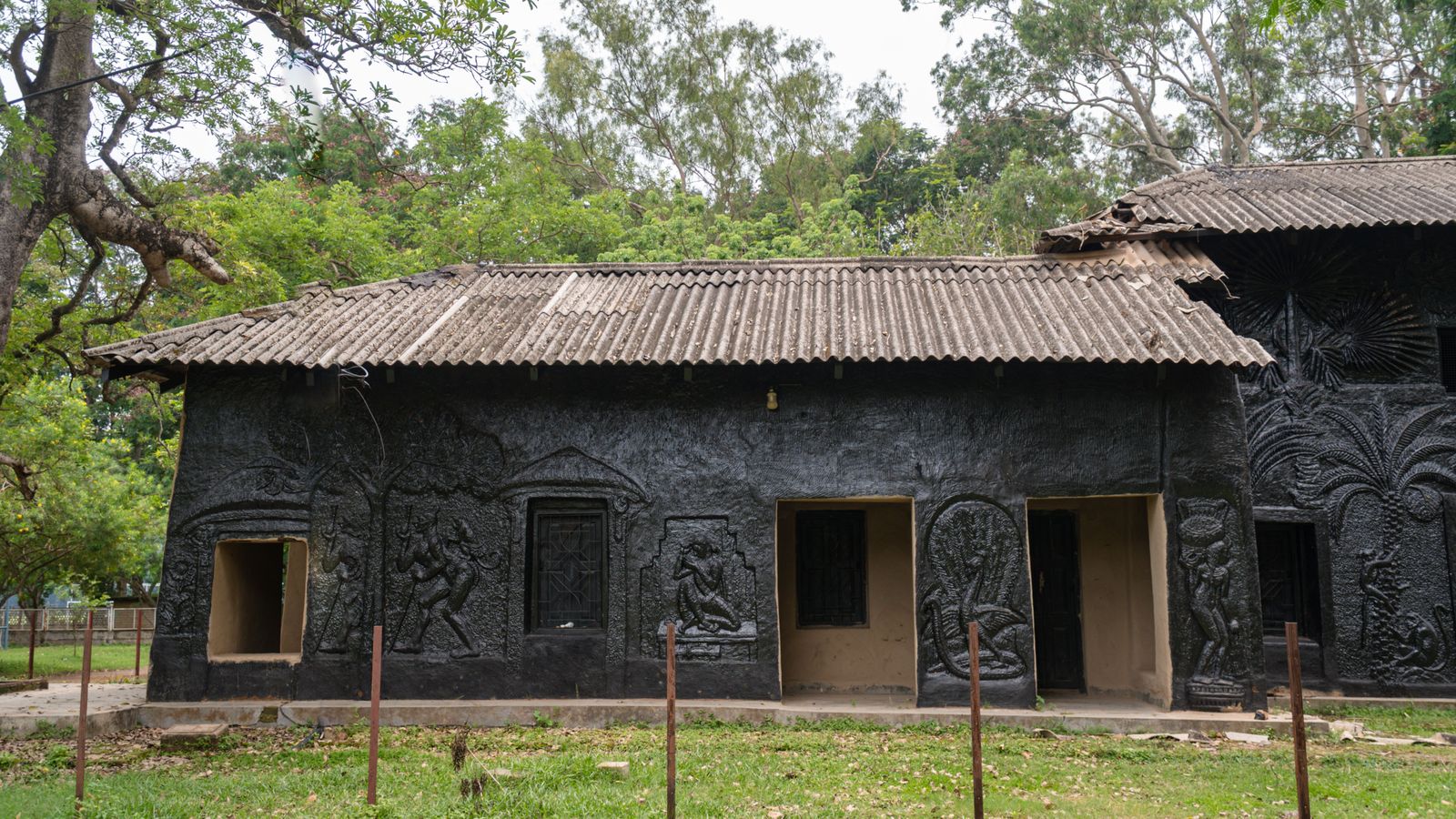
Shantiniketan was imagined as the opposite of a city. Debendranath Tagore set up an ashram here on a stretch of open, red laterite land, and his son Rabindranath built on it a school under the trees and then, in 1921, Visva-Bharati, a university meant to bring the world's cultures into conversation. Classes were held outdoors, painters and musicians lived among students, and the buildings were deliberately modest, experimental and earth-toned. In 2023 UNESCO inscribed Santiniketan on its World Heritage List, recognising exactly that vision.
Today the campus is still a working university, and the surrounding countryside of sal and akashmoni trees, earthen villages, weekly craft markets and wandering Baul singers makes it one of the loveliest weekends from Kolkata. It is also spread out: the heritage buildings, Kala Bhavana, the Sonajhuri forest market, Amar Kutir and the temples around Bolpur are several kilometres apart on unshaded roads. A car with a driver keeps the weekend gentle, and this guide shows how RutzIndia.com organises it.
What to see in and around Shantiniketan
- The Uttarayan complex and Rabindra Bhavana: the cluster of houses Tagore lived in, each different, Udayan, Konark, Shyamali (the mud house), Punascha and Udichi, with the museum of his manuscripts, paintings and personal objects. Visva-Bharati sets the opening days and hours, and the campus keeps its own weekly holiday, so check the Visva-Bharati website before you plan the day.
- Upasana Griha: the glass-and-iron prayer hall of the old ashram, where Wednesday prayers are still held, and the Chhatimtala meditation spot under the chhatim trees.
- Kala Bhavana: the art school, whose buildings and grounds carry murals and open-air sculptures by artists such as Nandalal Bose, Benode Behari Mukherjee and Ramkinkar Baij.
- Sonajhuri and the Khoai: the eroded red-earth ravines and forest by the Kopai river, where the Sonajhurir Haat, a weekly craft market under the trees, sells kantha stitch, leather work, dokra metal and terracotta, with Baul and folk singers performing.
- Amar Kutir: a cooperative crafts centre by the river, with a history linked to the freedom movement.
- Ballavpur Wildlife Sanctuary (deer park): spotted deer and birdlife in a fenced forest patch near town.
- Kankalitala: a revered Shakti temple about 10 km away, beside the Kopai.
- Further afield: Tarapith, the famous temple town, and Kenduli, home of the January Joydev fair and its gathering of Bauls.
Bolpur's sweet shops, the fish and posto at small hotels, and roadside tea in clay cups are all part of the pleasure.
The drive: NH 19, Bardhaman and the Birbhum roads
From Kolkata your chauffeur takes the Dankuni approach onto NH 19, the Durgapur Expressway, a fast divided highway through the rice country of Hooghly and Purba Bardhaman. There are two ways to leave it:
- Via Bardhaman and Guskara (about 165 km): exit near Bardhaman (Burdwan), pass the town, and take the state highway north through Guskara to Bolpur. This is the common line, with Bardhaman's sitabhog and mihidana sweets as the obvious stop.
- Via Panagarh and Ilambazar (about 175 km): continue further on NH 19 to Panagarh, then turn north on the highway through Ilambazar, crossing the Ajay river and entering Birbhum's forests. Slightly longer but often quicker on weekends when Bardhaman town is congested, and prettier.
Both routes include two-lane stretches through villages and market towns with slow tractors, cycles and toto e-rickshaws, and some sections are prone to fog in December and January mornings. Tolls on NH 19 are paid as you go and passed on at cost.
Birbhum district's notices, including festival traffic arrangements, appear on the Birbhum district website.
When to go, and the festival question
- November to March is the classic season: cool mornings, warm afternoons and dry red roads. December and January evenings are genuinely cold.
- Poush Mela, traditionally held in the Bengali month of Poush around late December, and Basanta Utsav, the spring festival around Holi that Tagore introduced, made Shantiniketan famous for their crowds of students, artists and visitors. In recent years both have been reorganised, scaled back or held in modified forms, so treat them as possibilities rather than certainties and check the latest announcements before building a trip around them.
- April to June is hot, often above 40 degrees on the laterite, and the landscape is harsh; early mornings only.
- July to September turns the country green with the monsoon; roads are fine but muddy, and the Khoai is lovely after rain.
RutzIndia.com car options for Shantiniketan
- One-way drop from Kolkata, the airport or Howrah to your hotel or guest house in Shantiniketan or Bolpur.
- Weekend round trip: the chauffeur stays with you, drives between the campus, Sonajhuri, Kankalitala and the villages, and brings you home on Sunday.
- Day trip from Kolkata for the determined, starting at dawn.
- Onward drops: Shantiniketan to Tarapith, Durgapur or Deoghar, and back to Kolkata from any of them.
- Tempo Traveller for art-school batches, alumni reunions and family groups; see Tempo Traveller in Kolkata.
- Premium sedan if you want a quieter, roomier car for the long NH 19 stretch.
| Vehicle | Kolkata to Shantiniketan one way (165 km) | Day trip (330 km) | Weekend, 2 days (500 km floor) |
|---|---|---|---|
| Swift Dzire or similar sedan | Rs 5,940 Pay Now to Reserve | Rs 11,880 Pay Now to Reserve | Rs 18,000 Pay Now to Reserve |
| Honda City or similar premium sedan | Rs 7,920 Pay Now to Reserve | Rs 15,840 Pay Now to Reserve | Rs 24,000 Pay Now to Reserve |
| Innova Crysta / Hycross | Rs 9,410 Pay Now to Reserve | Rs 18,810 Pay Now to Reserve | Rs 28,500 Pay Now to Reserve |
| Tempo Traveller (12 to 17 seats) | Rs 12,870 Pay Now to Reserve | Rs 25,740 Pay Now to Reserve | Rs 39,000 Pay Now to Reserve |
The rules behind the table, in brief. Prices exclude 5% GST; tolls and parking are reimbursed at whatever the receipts say. When the chauffeur sleeps over, a night allowance of Rs 1,500 is added. Each touring day counts as at least 250 km, which is why the weekend is quoted on 500 km even though the return drive itself is 330. Every car we assign is four model years old or newer. Cancel at least 72 hours before departure and nothing is owed; inside that window we charge 10%, rising to 50% inside 48 hours and the full fare inside 24 hours or if you do not show. Our cancellation policy has the details.
Book a Kolkata to Shantiniketan car

Beyond the campus: villages, music and the Kopai
The Shantiniketan most visitors remember is not only the university. Tagore's rural reconstruction work at Sriniketan, a few kilometres east, set out to revive village crafts and farming, and its institute and craft units still carry that purpose; weaving, leather and pottery can be seen being made there on working days. A car makes Sriniketan an easy half-hour detour on the way to or from the heritage campus.
Around the Kopai river, Santhal villages with neatly plastered mud walls, painted in earth colours and swept courtyards, dot the landscape. Visitors are welcome to walk respectfully along the village lanes, but these are homes, not attractions: ask before taking photographs, and buy crafts directly where they are offered rather than handing out money. Your chauffeur, who works these roads regularly, can suggest where a short walk is appropriate.
Music is everywhere. Baul singers, wandering minstrels with their ektara and dotara, perform at the haat, at guest houses in the evenings and at small gatherings along the river. Rabindrasangeet, Tagore's own songs, drift out of practice rooms on campus. If you are lucky enough to be in the area for the Joydev fair at Kenduli in mid-January, you will hear Bauls from across Bengal singing through the night; it is a long, dusty drive on crowded roads, so go with a driver who knows where to park and when to leave.
Late afternoon is the time for the Khoai: the ravines glow orange in the low sun, children play in the gullies, and the forest fills with birdsong. Ask the chauffeur to wait at the edge while you walk.
A two-day weekend by car
Saturday (about 165 km plus 20 km local). Leave Kolkata at 7 am, a sweet stop in Bardhaman, and reach Shantiniketan before noon. Afternoon at Sonajhurir Haat if it is market day, then sunset over the Khoai ravines and the Kopai. Dinner at a guest house with Rabindrasangeet drifting from a neighbour's window.
Sunday (about 30 km local plus 165 km). Morning at the Uttarayan complex and Rabindra Bhavana museum as they open, a walk past Upasana Griha, Chhatimtala and the Kala Bhavana sculptures, lunch in Bolpur, a stop at Amar Kutir on the way out, and back in Kolkata by evening.
Add a third day for Kankalitala and Tarapith, or for Kenduli during the Joydev fair in mid-January. If you are coming in from the Durgapur side instead, our Kolkata road guide explains the NH 19 corridor in the other direction.
Practical tips for Shantiniketan
- Respect the campus: Visva-Bharati is a working university; follow the signage, avoid classes and keep drones and loud music away.
- Weekly holiday: the university's museum and some campus areas close on its weekly holiday; plan the heritage visit for another day.
- Heat and dust: carry hats, water and scarves; the laterite reflects heat from March onwards.
- Shopping: kantha stitch saris and stoles, leather bags and dokra are the local crafts; buy from the artisans at the haat or Amar Kutir.
- Stay: guest houses and small hotels fill quickly on festival weekends; book early.
- Getting around Kolkata before or after: our Kolkata taxi service and car rental with driver in Kolkata cover city packages. Pay for any booking by card or UPI when you book online.
For college groups, film crews or a family reunion at the ashram, the travel desk will price vehicles and timings together. If the Sundarbans or the sea are next, see Sundarbans by road and Digha by road.