How do you get to Tsomgo Lake by road from Gangtok?
Tsomgo (Changu) Lake is about 40 km from Gangtok on Jawaharlal Nehru Marg, typically a 2 to 2.5-hour climb to roughly 3,750 metres. Visitors need a Protected Area Permit and travel in a Sikkim-registered vehicle. Short transfers are billed at the airport-transfer fare: from Rs 3,960 Pay Now to Reserve sedan-class and Rs 6,930 Pay Now to Reserve Innova-class one way, before 5% GST; a full-day return is Rs 7,200 Pay Now to Reserve.
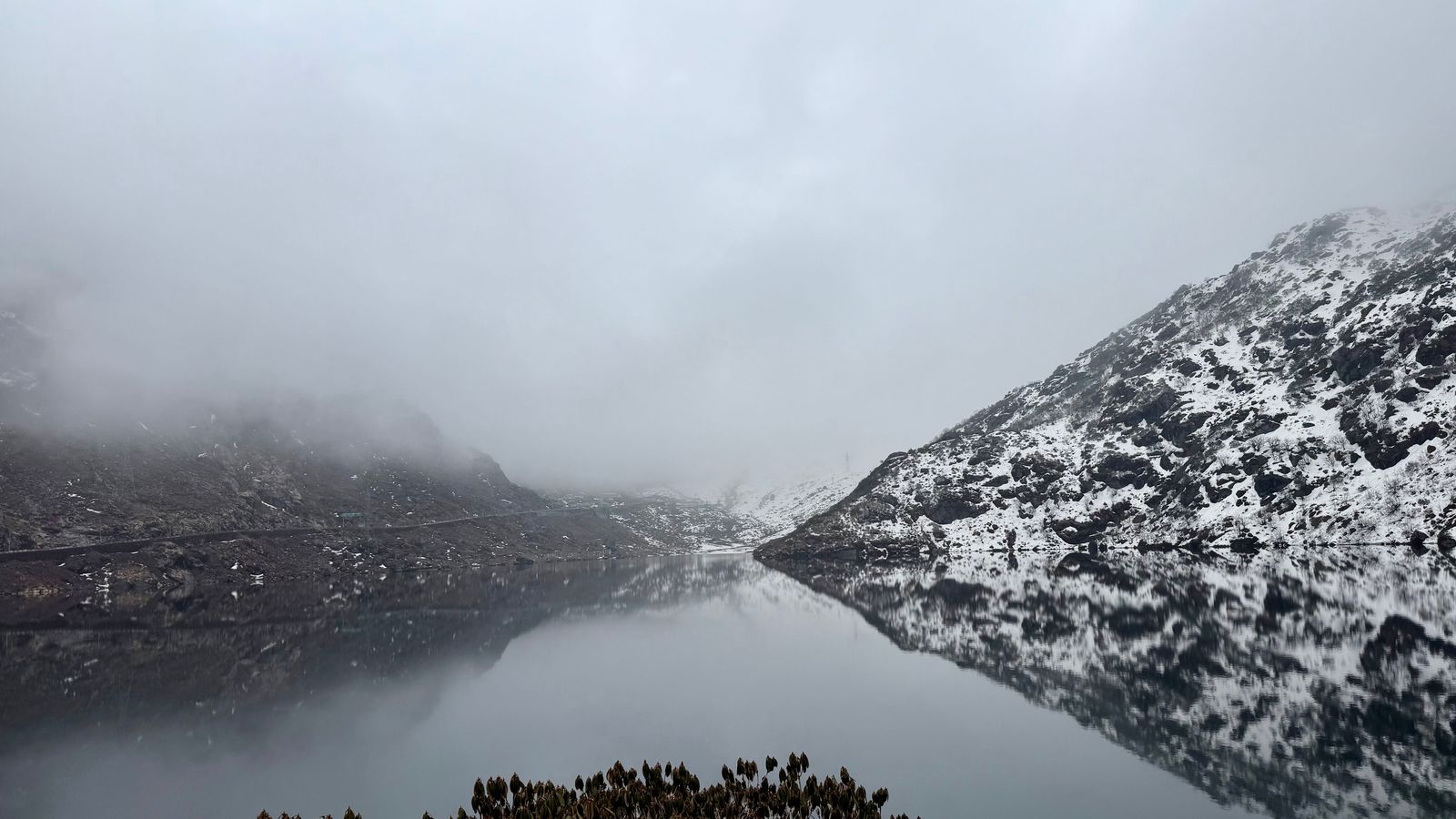
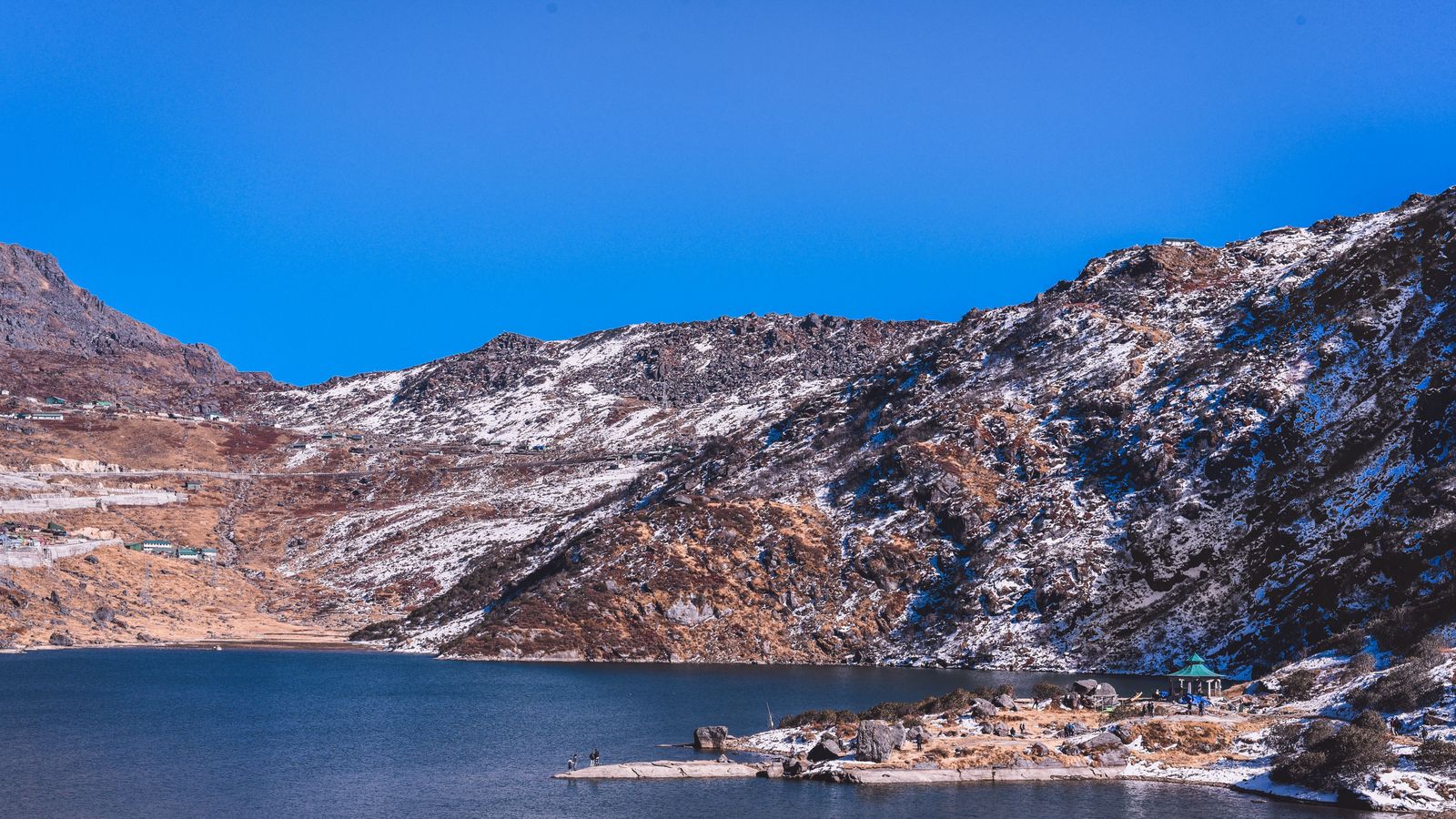
The Tsomgo drive is the most dramatic half day you can spend from Gangtok. In less than two and a half hours the road climbs more than two kilometres in altitude, leaving behind the orchids and bamboo of the town for fir forests, then dwarf rhododendron, then bare rock streaked with snow. At the top, in a bowl of mountains, lies a glacial lake, oval and still, held sacred by the Sikkimese and frozen solid for part of the winter. Yaks with bright saddles wait on the shore for riders; prayer flags snap in the wind; and a few kilometres further on, the road reaches the border pass of Nathu La, open to Indian visitors with the right permit.
It is also a place where altitude, weather and security rules matter far more than distance. This guide explains how the trip is organised, what you see, when to go and how RutzIndia.com fits in.
Permits and how the day is organised
Tsomgo Lake, the Nathu La road and the surrounding area lie in a Protected Area close to the international border, and the Indian Army maintains the road. The rules below are the general pattern; confirm them on Sikkim Tourism or through the desk before you go.
- Indian citizens need a Protected Area Permit for Tsomgo, and a separate endorsement for Nathu La. Permits are applied for through registered Sikkim tour operators with photo ID and passport photographs, normally a day ahead, and are issued against a specific vehicle and date.
- Foreign nationals, after obtaining the Restricted Area Permit to enter Sikkim, can generally visit Tsomgo Lake through a registered operator, usually in a group, but Nathu La is closed to foreigners.
- Vehicles: permits are tied to Sikkim-registered tourist vehicles with drivers licensed for the route. RutzIndia.com brings you to Gangtok in our own car and books the permit and a permitted vehicle for this excursion.
- Timings: vehicles leave Gangtok early in the morning, pass a police and army checkpost on the way up, and must come back down by afternoon. Nathu La opens to tourists only on certain days of the week and closes at short notice for weather or security.
- Weather closures: heavy snow or landslides close the road entirely, sometimes for several days in winter and early spring.
Official information on the state's rules and departments is also published on the Government of Sikkim portal.
The road up: JN Marg, checkposts and the tree line
The road leaves Gangtok from the north-east of town and immediately begins to climb along the ridge. Within half an hour you pass the checkpost where permits are inspected, and the forest thickens into oak, magnolia and then fir. Around the halfway mark the road passes through the Kyongnosla Alpine Sanctuary, known for rhododendrons, primulas and, if you are very lucky, red pandas; there are small shops along the route renting knee-high boots, coats and gloves for the snow, which most visitors from the plains are glad of.
Above the tree line, around 15th Mile and beyond, the landscape turns alpine: scree slopes, snowfields that linger well into spring, and waterfalls that freeze into icicles in January. The lake appears suddenly around a bend, with a row of tea stalls and momo shops at its southern end.
Beyond Tsomgo, the road continues for about 15 to 20 km to Nathu La, one of the historic passes between Sikkim and Tibet, now a border post, where visitors can see the fence and, on some days, soldiers of both sides. On the way, the Baba Harbhajan Singh Mandir, a shrine to a soldier revered by the army, is a customary stop. A separate road runs from the Kupup side along the Old Silk Route towards Zuluk, with its own permits.
What to do at the lake
- Walk the shore: gently. You are at about 3,750 metres, and even a short walk uphill will leave you breathless.
- Yak rides: short rides along the lakeshore are offered by local herders; agree on the price first and let the handler lead.
- Photograph the reflections: early in the day, before the wind rises, the lake mirrors the ridges around it.
- Snow: from late winter into spring the slopes around the lake hold snow, and children love it. Rental boots help.
- Warm up: hot tea, Maggi noodles and momos at the lakeside stalls are part of the experience.
- Respect the lake: it is sacred; do not throw anything in, and keep noise low.
When to go
- March to May: spring, with snow still around the lake in March and April and rhododendrons blooming lower down in May. Popular and busy.
- October to December: clear skies, sharp mountain views and very cold air; the lake begins to freeze by late December.
- January and February: the lake is often frozen and the landscape completely white; roads close frequently after snowfall.
- June to September: monsoon, with cloud, rain and landslide risk; views are rare, though the greenery lower down is lush.
What RutzIndia.com arranges
- Bagdogra or Siliguri to Gangtok in our car with flight tracking and a name board; after an international flight the first hour of waiting is free, after a domestic flight the first half hour. Our Gangtok road guide has those fares.
- Tsomgo permit and permitted vehicle booked by our desk for the day trip, with optional Baba Mandir and, for Indian citizens, Nathu La.
- Group vehicles for families and friends; larger groups travel in two vehicles under the same permit application.
- North Sikkim as the next step, see Lachung and Yumthang by road, or West Sikkim with Pelling by road.
| Vehicle class | One way Gangtok to Tsomgo (40 km, transfer fare) | Tsomgo day return (8 hr / 80 km) | Tsomgo, Baba Mandir and Nathu La (250 km floor) |
|---|---|---|---|
| Sedan class (4 seats) | Rs 3,960 Pay Now to Reserve | Rs 7,200 Pay Now to Reserve | Rs 9,000 Pay Now to Reserve |
| Ertiga class (6 seats) | Rs 4,950 Pay Now to Reserve | Rs 9,000 Pay Now to Reserve | Rs 10,500 Pay Now to Reserve |
| Innova class (6 seats) | Rs 6,930 Pay Now to Reserve | Rs 12,600 Pay Now to Reserve | Rs 14,250 Pay Now to Reserve |
| Fortuner class SUV (6 seats) | Rs 12,360 Pay Now to Reserve | Rs 22,500 Pay Now to Reserve | Rs 21,000 Pay Now to Reserve |
| Tempo Traveller class (12 to 17 seats) | Rs 10,740 Pay Now to Reserve | Rs 19,500 Pay Now to Reserve | Rs 19,500 Pay Now to Reserve |
Some explanation, because the arithmetic looks odd. Anything up to 40 km is charged as a transfer rather than by the kilometre, so the one-way column uses the transfer fare. The simple lake-and-back day fits our 8 hr / 80 km package. Adding Baba Mandir and Nathu La stretches the day beyond 80 km, so it moves onto the outstation basis with its 250 km floor; for most vehicles that costs a little more, while for the SUV the per-km basis happens to come out cheaper. Since this excursion runs in permitted local vehicles, these rate-card figures are indicative and the firm price arrives with your permit. Permit fees, parking and any boot or coat rental are extra, and 5% GST applies. Cancelling 72 hours or more before the trip is free; inside that, 10% is kept, inside 48 hours 50%, and inside 24 hours or on a no-show the full fare, per our cancellation policy. If the army or district closes the road, we reschedule or refund the unused permit leg.
A sample day, and how it fits a longer trip
Tsomgo and Baba Mandir day (about 100 to 120 km round trip). Permits collected the evening before. Leave Gangtok around 7 am, checkpost by 7.30, boot rental at Kyongnosla, Tsomgo by 9.30. An hour at the lake, then on to Baba Mandir and, where permitted, Nathu La before midday, when the weather usually turns. Back down to Tsomgo for tea and to Gangtok by mid-afternoon, with time for a rest before an evening on MG Marg.
As part of a week in the eastern hills. Arrive at Bagdogra, spend two nights in Darjeeling, continue to Gangtok, do Tsomgo on your second day in Sikkim (never on the day you arrive from the plains), then head north to Lachung or west to Pelling. For groups, see Tempo Traveller on rent; all our vehicle rates are on the fares page.
Altitude and safety at Tsomgo
- Do not go on arrival day. Spend at least one night in Gangtok first.
- Warning signs: severe headache, nausea, dizziness, breathlessness at rest or confusion mean you should descend at once. The drivers on this route are used to turning around.
- Children, elderly travellers and anyone with heart or lung conditions should consult a doctor beforehand; many families visit Tsomgo and skip Nathu La, which is higher.
- Pregnant travellers are generally advised against such rapid ascents; take medical advice.
- Stay warm: thermals, a down jacket, gloves, a warm cap, sunglasses and sunscreen; the sun at altitude burns quickly even in the cold.
- Hydrate, skip alcohol the night before, and eat a light breakfast.
- Carry documents: originals and copies of ID for every traveller, kept on you at the checkposts.
Practical tips
- Book early: permits and permitted vehicles are limited in peak weeks, especially in May, October and around Diwali and Christmas.
- Start early: the clearest skies are in the morning; by early afternoon cloud and wind usually roll in.
- Cash: carry cash for yak rides, rentals and lakeside food; there are no ATMs on the road.
- Plastic: Sikkim is strict about waste; bring a refillable bottle and take all rubbish back.
- Pay and plan: pay for your road transfers by card or UPI when you book online, and ask the travel desk to align the Tsomgo date with your permits and the rest of your Sikkim itinerary.