How do you get to Tiruvannamalai by road from Chennai?
Tiruvannamalai is about 190 km from Chennai, typically 4 hours by car via Chengalpattu, Tindivanam and Gingee. A chauffeur-driven sedan costs Rs 6,840 Pay Now to Reserve one way and an Innova Crysta Rs 10,830 Pay Now to Reserve, before 5% GST. A same-day return runs about 400 km, Rs 14,400 Pay Now to Reserve in a sedan, with tolls and parking billed at actual cost.
Tiruvannamalai is a temple town built at the foot of a mountain that is itself worshipped as Shiva. The hill of Arunachala rises abruptly from the plain, and at its base sprawls the Arunachaleswarar temple, one of the largest temple complexes in India. For centuries pilgrims have come to walk the 14 km path around the hill, and in the twentieth century the sage Ramana Maharshi made it a destination for seekers from across the world. Today the town draws devout families from Chennai and Bangalore, overseas visitors staying for weeks at a time, and vast crowds on every full-moon night.
That mix makes transport planning more important than it looks. On ordinary days the drive is easy and the town is calm; on Pournami (full moon) and during the Karthigai Deepam festival, roads close, parking moves to the edge of town and a good driver who knows the diversions is worth every rupee. RutzIndia.com runs Tiruvannamalai trips as one-way drops, same-day returns, overnight Girivalam trips and group pilgrimages. Here is what to expect, and you can book online when you are ready.
What to see and experience
Arunachaleswarar temple
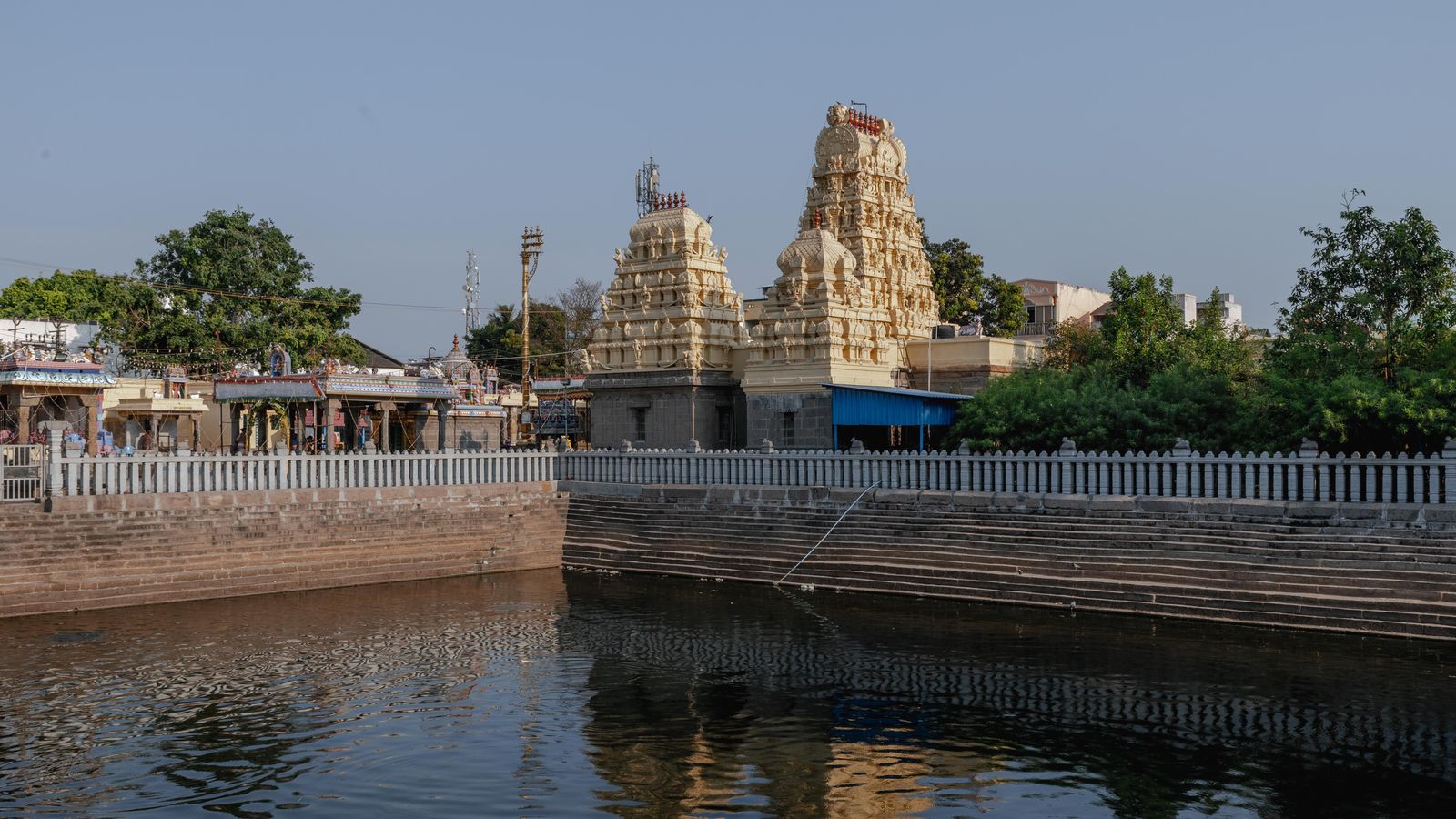
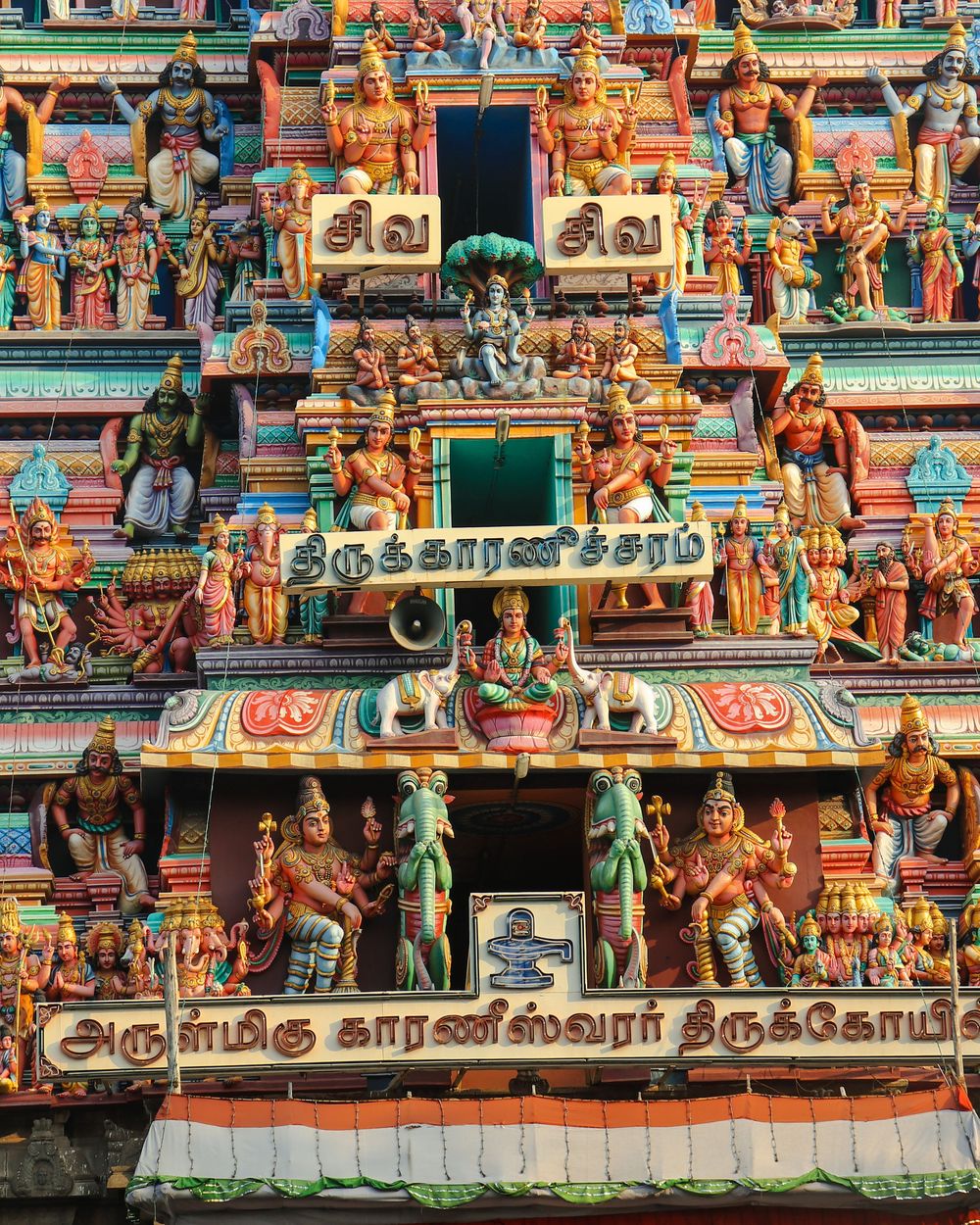
The temple, also called Annamalaiyar Kovil, spreads over roughly 25 acres, enclosed by high walls and entered through towering gopurams; the eastern Rajagopuram is among the tallest in south India. It is one of the five Pancha Bhoota Sthalams, the temples that represent the five elements, and here Shiva is worshipped as fire. Inside you move through concentric courtyards, pillared halls, a thousand-pillared mandapam and sacred tanks, with separate shrines to Shiva as Arunachaleswarar and the goddess as Unnamulai Amman. Mornings and evenings bring the most atmospheric rituals, with drums and nadaswaram echoing through the corridors.
Girivalam, the walk around the hill
Girivalam is the circumambulation of Arunachala on foot, traditionally barefoot, along a paved road of about 14 km that passes eight small lingam shrines, the Ashta Lingams, each associated with a direction. Pilgrims walk it at any time, but on Pournami nights the road fills with hundreds of thousands of people walking through the night. Allow three to four hours at an easy pace. Your driver can drop you at the start and meet you near the end point, which saves a long walk back.
Ashrams and the hill
- Sri Ramanasramam, the ashram of Ramana Maharshi at the foot of the hill, open to visitors for meditation in the old hall and his samadhi shrine. Visitor guidelines are on the Ramanasramam website.
- Virupaksha Cave and Skandashram, where Ramana lived for years on the slopes above the temple, reached by a steady walk of about half an hour through rocks and trees, with wonderful views over the temple.
- Other ashrams, including those of Seshadri Swamigal and Yogi Ramsuratkumar, lie along or near the Girivalam path.
Outside the religious sites, Tiruvannamalai has a relaxed cafe culture around the ashram area, bookshops, yoga studios and simple, excellent South Indian vegetarian food.
The road from Chennai, and from Bangalore
Chennai via Tindivanam and Gingee
The most common route leaves Chennai on GST Road through Tambaram and Chengalpattu to Tindivanam, then turns west on the state highway through Gingee. It is about 190 km and roughly four hours. Gingee Fort, spread across three rocky hills, is one of the great forts of south India and a superb one to two hour stop on the way; the climb to Rajagiri, the highest citadel, is steep, so go early in the day.
Chennai via Vandavasi
An alternative runs south-west through Kanchipuram district and Vandavasi. It is similar in distance and quieter, and pairs well with a morning at the temples of Kanchipuram.
From Bangalore
From Bangalore the drive is roughly 200 km through Hosur, Krishnagiri and Chengam, about four and a half hours. A sedan one way costs about Rs 7,200 Pay Now to Reserve at our per-km rate. Pilgrims from Bangalore often travel on Pournami, so we recommend booking early.
The roads are two-lane or four-lane highways in decent condition, with the usual village speed breakers. Fuel and snacks are easy to find in Tindivanam and Gingee.
When to go: seasons, Pournami and Karthigai Deepam
- November to February is the most comfortable period, with mild days and cool evenings ideal for Girivalam.
- March to June is hot; walk Girivalam at night or in the early morning.
- The north-east monsoon (October to December) brings heavy rain; the hill turns green and the tanks fill.
- Pournami, the full moon, occurs every month. Traffic and crowds build from the afternoon, police close roads near the Girivalam path, and parking shifts to temporary lots at the edge of town.
- Karthigai Deepam, in the Tamil month of Karthigai (November or December), is the biggest event of the year. A huge flame is lit on the summit of Arunachala at dusk and can be seen for miles. Crowds run into lakhs, the town's roads are regulated for days, and hotels fill months ahead.
For festival traffic arrangements and dates, the Tiruvannamalai district website publishes official notices.
RutzIndia.com cab services and fares for Tiruvannamalai
We plan every Tiruvannamalai trip around temple and festival timings:
- One-way drop from Chennai, the airport or Bangalore to your ashram or hotel.
- Same-day return for darshan and a daytime visit to the ashram, leaving early and returning by night.
- Overnight Pournami trip: arrive in the afternoon, walk Girivalam through the night, sleep and return the next day. Multi-day trips carry the minimum of 250 km per calendar day and a driver night allowance of Rs 1,500.
- Long stays: many overseas guests stay for weeks. We do the airport run from Chennai and come back for the return; see our Chennai airport taxi service. We wait 60 minutes free after international arrivals and 30 after domestic ones, and bill the hourly rate beyond that.
- Group pilgrimages in a Tempo Traveller; see Tempo Traveller in Chennai and our pilgrimage taxi page.
| Vehicle | Chennai to Tiruvannamalai one way (190 km) | Same-day return (about 400 km) | Overnight Pournami trip (500 km billed) |
|---|---|---|---|
| Sedan (Rs 36/km) | Rs 6,840 Pay Now to Reserve | Rs 14,400 Pay Now to Reserve | Rs 18,000 Pay Now to Reserve |
| Ertiga MUV (Rs 42/km) | Rs 7,980 Pay Now to Reserve | Rs 16,800 Pay Now to Reserve | Rs 21,000 Pay Now to Reserve |
| Innova Crysta (Rs 57.6/km) | Rs 10,830 Pay Now to Reserve | Rs 22,800 Pay Now to Reserve | Rs 28,500 Pay Now to Reserve |
| Tempo Traveller (Rs 78/km) | Rs 14,820 Pay Now to Reserve | Rs 31,200 Pay Now to Reserve | Rs 39,000 Pay Now to Reserve |
These fares are before 5% GST. Tolls, parking (including temporary festival lots) and the night allowance are billed at the amount actually paid. Pay by card or UPI through our booker; trusts, companies and satsang groups can ask for a GST invoice.
Our cancellation policy is straightforward: cancel more than 72 hours before pickup and pay nothing; cancel within 72 hours and 10% is retained, within 48 hours 50%, and within 24 hours or on a no-show the full fare. Given Pournami demand, we recommend confirming only once your dates are firm. Cars are within four model years.
Where to stay, and how the car fits in
Accommodation in Tiruvannamalai falls into three clusters. Around the temple are simple lodges and pilgrim guesthouses, convenient for early darshan but noisy on festival nights. Along the Girivalam road, especially near Ramanasramam, are guesthouses, homestays and small hotels favoured by longer-staying visitors, with cafes and bookshops close by. On the outskirts are a handful of larger hotels with parking, better suited to families arriving by car.
If you stay near the ashram, you may not need the car at all for a day or two, since most places are within walking distance or a short auto-rickshaw ride. That is when a one-way drop and a separate return booking make more sense than keeping a car idle. For a short Pournami visit, though, keeping the same driver is simpler: he knows where you are staying, where the festival parking is, and exactly where to meet you after the walk.
A two-day plan for a full-moon visit
Day 1: Chennai to Tiruvannamalai (about 200 km). Leave Chennai at 7 am, stop at Gingee Fort by 10 am for a climb before the heat, and reach Tiruvannamalai for lunch. Check in, rest, and visit Sri Ramanasramam in the late afternoon. Begin Girivalam after dusk, with the driver meeting you at the agreed point after three or four hours.
Day 2: Temple, hill and return (about 200 km). Sleep in, then darshan at the Arunachaleswarar temple mid-morning when the Pournami crowds have eased. Walk up to Skandashram and Virupaksha Cave, lunch in the ashram area, and drive back to Chennai by evening.
Extend the trip with a night in Pondicherry, about two and a half hours east, or combine Tiruvannamalai with Tirupati and Kanchipuram on a longer temple circuit.
Practical tips
- Footwear: most pilgrims walk Girivalam barefoot. If you are not used to it, go at night when the road is cool, or wear thin socks.
- Water and snacks: stalls line the Girivalam path, but carry water and a small torch.
- Temple dress: modest clothing; shoes and phones are left outside the inner shrines.
- Parking: on Pournami the car cannot reach the temple; the driver will drop you at the nearest permitted point and wait in the designated lot, charged at cost.
- Entry fees: temple darshan is free, with optional paid queues. Check current rates at the counters.
- Monkeys on the hill trail snatch food and bags; keep them closed.
Who this trip is for
Tiruvannamalai suits families fulfilling a vow at the temple, first-time Girivalam walkers who want someone reliable waiting at the end, meditators heading to the ashram for a quiet week, and groups from Chennai or Bangalore travelling together on a full-moon night. A car with driver gives each of them what they need most: flexibility, a safe place to rest, and someone who knows the way around the town's festival closures.