How far is Cherrapunji by road, and what does a cab cost?
Cherrapunji (Sohra) is about 55 km from Shillong, typically 1.5 to 2 hours by car, and about 155 km from Guwahati. A RutzIndia.com sedan drop from Shillong is Rs 3,960 Pay Now to Reserve and an Innova Rs 6,930 Pay Now to Reserve (minimum fare applies), but most visitors book a same-day return, billed at the 250 km daily minimum: Rs 9,000 Pay Now to Reserve by sedan, before 5% GST.
Cherrapunji is a name every Indian child learns in geography class as the wettest place on earth. The town, officially Sohra, and nearby Mawsynram have long traded the world rainfall records between them, and the reason is visible from the car: the plateau ends abruptly in a wall of cliffs, and below it lie the flat green plains of Bangladesh. Moisture-laden monsoon winds rush across those plains and slam into the escarpment, dumping rain on Sohra in quantities that feed dozens of waterfalls.
What that means for a road trip is a day of astonishing viewpoints, limestone caves, living bridges woven from the roots of rubber fig trees, and, in the right season, water pouring off almost every rock face. This guide explains the road from Shillong and Guwahati, what to see and in what order, how the seasons change the experience, the chauffeured options from RutzIndia.com and a plan for one or two days. You can reserve a car on our booking page in a few minutes.

What to see in Cherrapunji
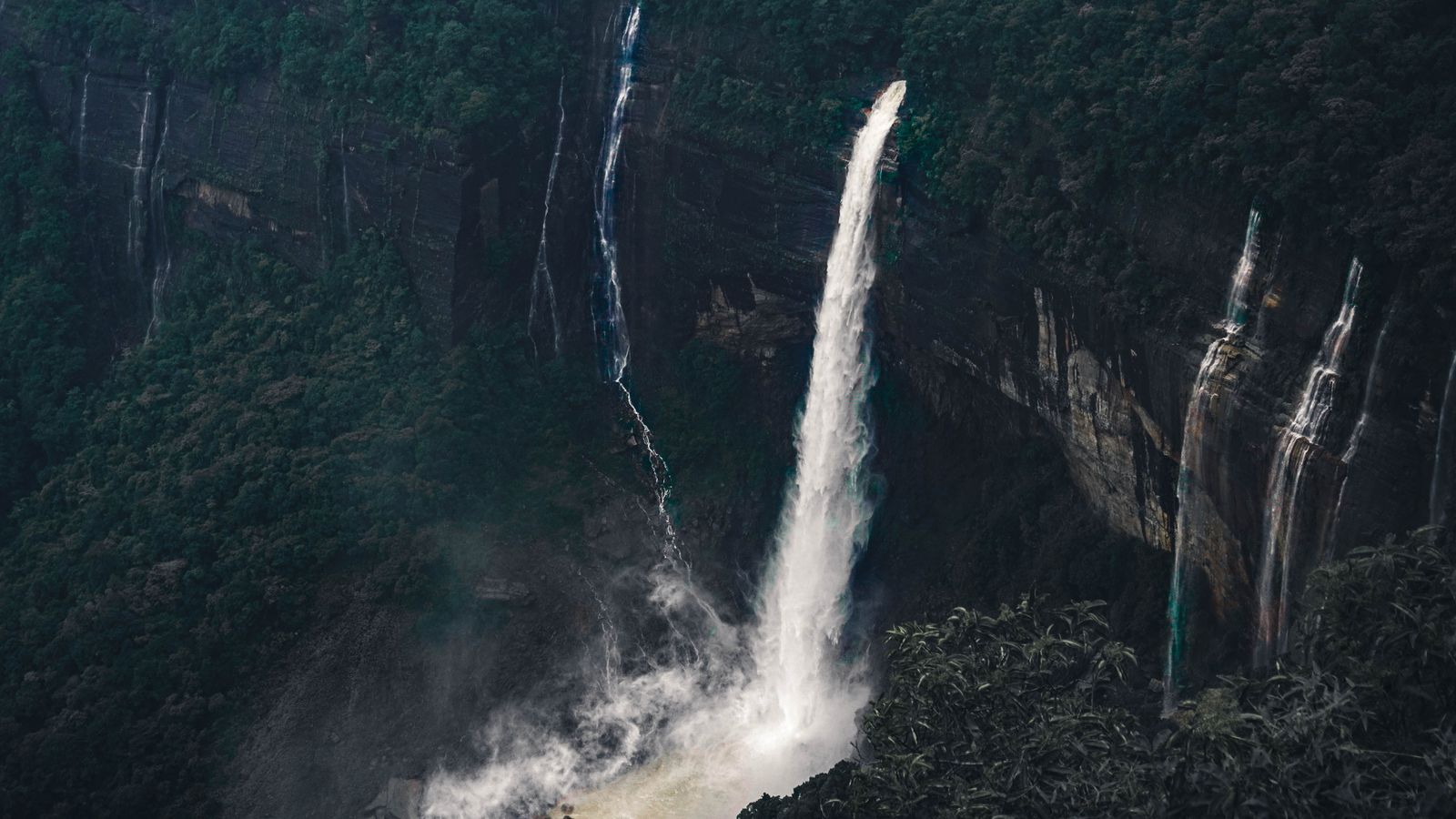
The headline sight is Nohkalikai Falls, among the tallest plunge waterfalls in India, a single ribbon of water dropping into a turquoise pool in a horseshoe gorge. The viewing gallery is a short walk from the car park, with tea stalls selling Sohra's famous oranges in winter. Close by on the plateau edge, the Seven Sisters Falls (Nohsngithiang) streams off the cliff in several separate channels; they are fullest from July to October and often reduced to threads by March.
Mawsmai Cave is a short, lit limestone cave where you squeeze through narrow passages past stalactites; it takes about 20 minutes and is fine for children who do not mind getting a little wet. Arwah Cave, reached by a paved path along a cliff, is longer and known for fossils embedded in its walls. On clear days the Eco Park and the Thangkharang Park viewpoints look straight down onto the Bangladesh floodplain, a view that explains the rainfall better than any textbook.
Other stops worth time: Dainthlen Falls, with rock carvings tied to a Khasi legend about a serpent; Wei Sawdong, a three-tiered fall reached by a steep path and bamboo ladders; and the Ramakrishna Mission at Sohra, a school campus with a small museum on the cultures of the North East. The Mawkdok Dympep valley viewpoint on the approach road offers ziplining over a deep gorge.
The living root bridges
The Khasi people have trained the aerial roots of rubber fig trees across streams for generations, creating bridges that strengthen as they grow. The most famous is the double-decker root bridge at Nongriat, reached from Tyrna village. The trail descends roughly 3,000 steps each way, which takes most fit adults about 2 to 3 hours down and longer back up, so it deserves a full day or an overnight stay in Nongriat's simple guesthouses. Your car waits at Tyrna. If knees or time do not allow it, the single-deck root bridge at Riwai near Mawlynnong is a gentle walk from the road.
The road from Shillong: over the plateau to the edge
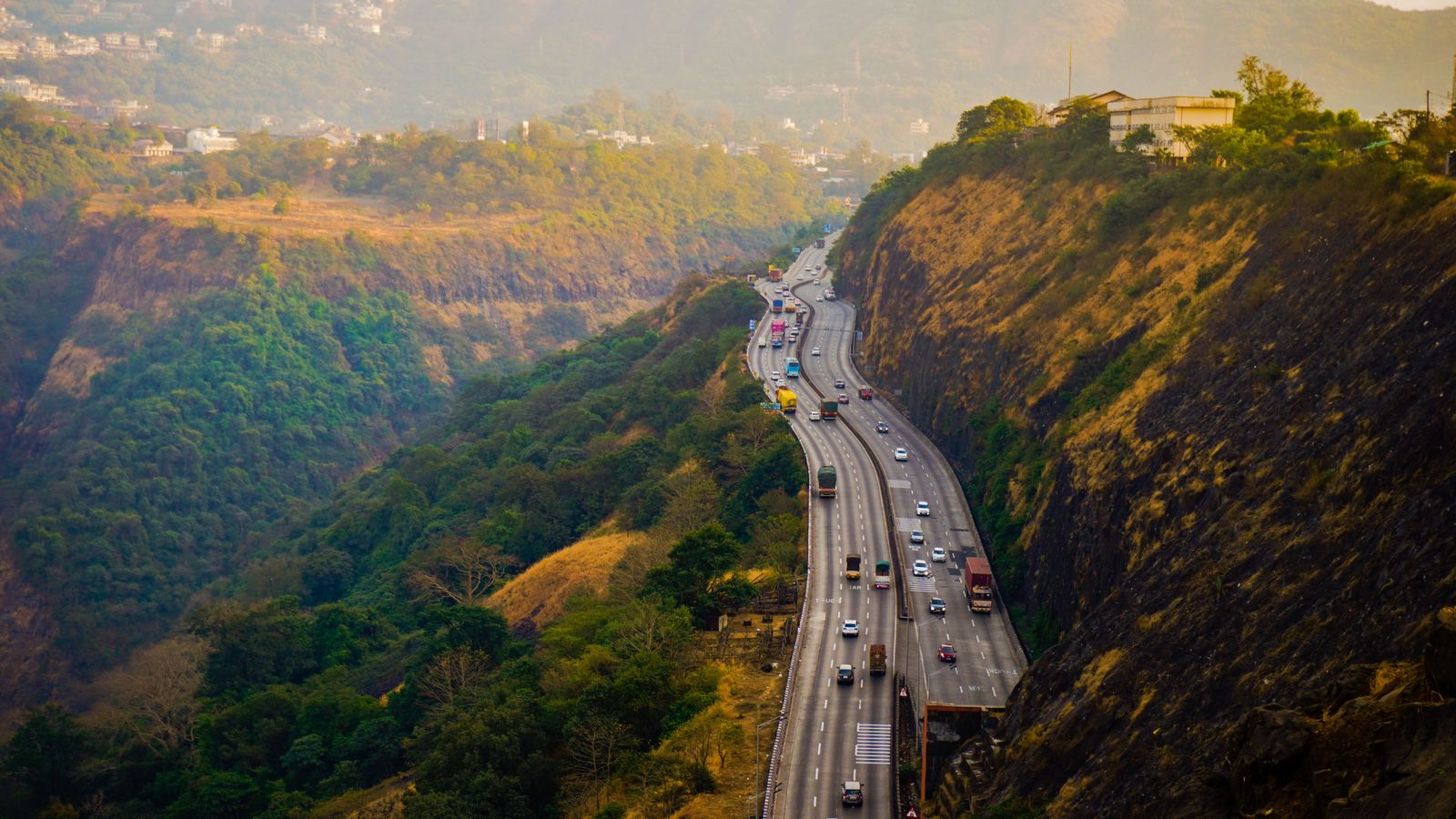
The Shillong to Sohra road leaves the city through Upper Shillong's pine forests and runs south-west across rolling grassland via Laitlyngkot and Mawkdok. It is a two-lane state road, generally well surfaced, with gentle gradients for most of the way and sharper bends as it approaches Sohra. Traffic is light on weekdays but tourist cars bunch up at Mawkdok and the Nohkalikai car park at weekends, especially in the Puja and Christmas holidays.
Fog is the main hazard. On many afternoons, and almost daily in the monsoon, cloud rolls up the cliffs and visibility can fall to a few metres. A local chauffeur drives this slowly with fog lamps on, and there is no point in rushing: if the view at Nohkalikai is hidden, waiting 20 minutes at the tea stall often clears it. Leave Shillong by 7.30 or 8 am to see the falls before the afternoon cloud.
From Guwahati you can drive straight to Sohra in about 4.5 to 5 hours by joining the Shillong road at Jorabat, climbing past Umiam Lake and taking the Sohra turn at Shillong's edge. Many travellers prefer to break the journey with a night in Shillong; our Shillong by road guide covers that first leg.
Best time to go to Cherrapunji
October to December is the sweet spot: waterfalls are still full after the rains, the skies clear, and the orange harvest brings roadside stalls to life. January to March is dry, sunny and cool, excellent for the Nongriat trek, though several falls shrink. April and May bring pre-monsoon storms and warmer days.
June to September is the true monsoon, when rain can fall for days without a break. The waterfalls are at their most powerful and the landscape is intensely green, but views are hidden for long spells, trails become slippery and landslips occasionally block the road for a few hours. If you go in the monsoon, keep the day flexible and let the driver judge conditions.
There is no permit for Cherrapunji. Most sites charge a modest entry, camera or parking fee collected by the local community or the district; check current charges and any trail advisories on the Meghalaya Tourism website or at the site gate.
Chauffeured options and fares for Cherrapunji
RutzIndia.com offers:
- Same-day return from Shillong, the most popular booking, with the car waiting at each stop.
- Shillong to Sohra drop if you are staying overnight near Nongriat or at a Sohra resort, with a pickup on another day.
- Guwahati or Guwahati airport direct to Cherrapunji, useful for travellers who want to reach the plateau on day one.
- Multi-day Meghalaya hire, combining Sohra with Dawki, Mawlynnong and Shillong.
- Tempo Traveller for groups; the Sohra road suits a 12- or 17-seater driven by a hill-trained chauffeur, see Tempo Traveller on rent.
| Trip | Sedan | Innova Crysta | Tempo Traveller |
|---|---|---|---|
| Shillong to Cherrapunji one way (about 55 km, minimum fare applies) | Rs 3,960 Pay Now to Reserve | Rs 6,930 Pay Now to Reserve | Rs 10,740 Pay Now to Reserve |
| Guwahati to Cherrapunji one way (about 155 km) | Rs 5,580 Pay Now to Reserve | Rs 8,830 Pay Now to Reserve | Rs 12,090 Pay Now to Reserve |
| Shillong day return (250 km minimum) | Rs 9,000 Pay Now to Reserve | Rs 14,250 Pay Now to Reserve | Rs 19,500 Pay Now to Reserve |
| Two days with a Sohra overnight (500 km billed) | Rs 18,000 Pay Now to Reserve | Rs 28,500 Pay Now to Reserve | Rs 39,000 Pay Now to Reserve |
Rates are Rs 36, Rs 57.6 and Rs 78 per km respectively and exclude 5% GST. Village entry fees, parking and any tolls are paid at actual cost, and an overnight stay adds a driver night allowance of Rs 1,500. A Fortuner (Rs 84/km) is a good choice in the monsoon for extra clearance on wet, narrow village roads. Every quote is itemised, with no surprise add-ons at the end of the day; see the full rate card on our fares page.
We keep cars within four model years, and drivers on the Khasi hills routes are used to fog and hairpins. Free cancellation applies up to 72 hours before pickup; inside that window charges are 10% (72 to 48 hours), 50% (48 to 24 hours) and 100% within 24 hours or on a no-show, as per the cancellation policy.
Book a Shillong to Cherrapunji day trip
Suggested plans by car
One day from Shillong (about 130 to 150 km driven). Leave at 7.30 am; Mawkdok Dympep viewpoint by 8.30; Nohkalikai Falls; Mawsmai Cave; Seven Sisters and the Eco Park; lunch in Sohra (Khasi rice and pork, or simple thalis); Arwah Cave or Dainthlen Falls if time allows; back in Shillong around 6 pm.
Two days with the double-decker trek. Day 1: drive from Shillong to Tyrna by 9 am, descend to Nongriat, swim at the natural pools beyond the bridge and stay overnight in the village. Day 2: climb out early, meet the car at Tyrna, and either drive to Mawlynnong and Dawki (about 90 km via Laitlyngkot and Pynursla) or return to Shillong via Nohkalikai for the morning view.
From Guwahati without a Shillong night. Airport pickup by 10 am, Umiam Lake viewpoint, Sohra by mid-afternoon for Nohkalikai at golden hour, overnight at a Sohra resort, then Mawsmai and the Eco Park the next morning before heading to Shillong.
Practical tips
- Shoes matter: the paths to Arwah Cave, Wei Sawdong and Nongriat are wet stone steps; wear shoes with real grip, not sandals.
- Rain gear is needed year round; an umbrella is more useful than a raincoat in the car parks, a poncho on the trails.
- Cash for entry and parking fees; mobile signal and UPI can drop out near the cliffs.
- Food: Sohra has a few restaurants and dhabas; carry snacks and water for the trek.
- Leave no litter: the Khasi villages work hard to keep trails clean and many ban plastic.
- Timing the view: mornings are clearer; if cloud rolls in, a good driver will reshuffle stops so you see the gorges when they open.
- Mawsynram detour: rain enthusiasts sometimes ask to see Mawsynram, the other contender for the wettest-place title, which lies west of Sohra and is reached by a separate road from Shillong. It is a long extra loop with few sights beyond the Mawjymbuin cave and its stalagmite, so treat it as a second day rather than an add-on.
- Winter oranges and honey: from November to January, Sohra's roadside stalls sell local oranges, wild honey and cinnamon bark; buy directly from the growers, and ask your driver to stop where the produce is picked that week.
If you are planning a longer North East holiday, pair Cherrapunji with the rhino country of Kaziranga, or ask the travel desk to build a single itinerary. The national tourism portal Incredible India also has background on Meghalaya's landscapes and culture.