Jaipur to Bikaner by car at a glance
Bikaner is about 330 km north-west of Jaipur, usually around six hours by car via Chomu, Sikar and the Shekhawati town of Fatehpur. With RutzIndia.com, a sedan and chauffeur costs Rs 11,880 Pay Now to Reserve one way and an Innova Crysta Rs 18,810 Pay Now to Reserve. GST of 5% is extra; tolls and parking are billed exactly as paid.
Rao Bika, a son of Jodhpur's founder Rao Jodha, set out into the northern desert in the fifteenth century and founded a kingdom of his own. Bikaner grew rich on caravan trade, and its rulers later became notable modernisers: Maharaja Ganga Singh brought a canal to the desert and served in the British War Cabinet during the First World War. The city's great fort was never taken by force, its merchants built red-sandstone havelis as fine as any in Rajasthan, and its snack makers turned Bikaneri bhujia into a household name across India.
Bikaner sees far fewer visitors than Jaipur or Jodhpur, which is exactly its charm. The drive from Jaipur passes through Shekhawati, the region of painted havelis, and a chauffeur-driven car lets you stop in Mandawa or Fatehpur, visit the Karni Mata temple and the camel farm, and continue west to Jaisalmer if you wish. This guide covers the route, the sights, the season and our fares.
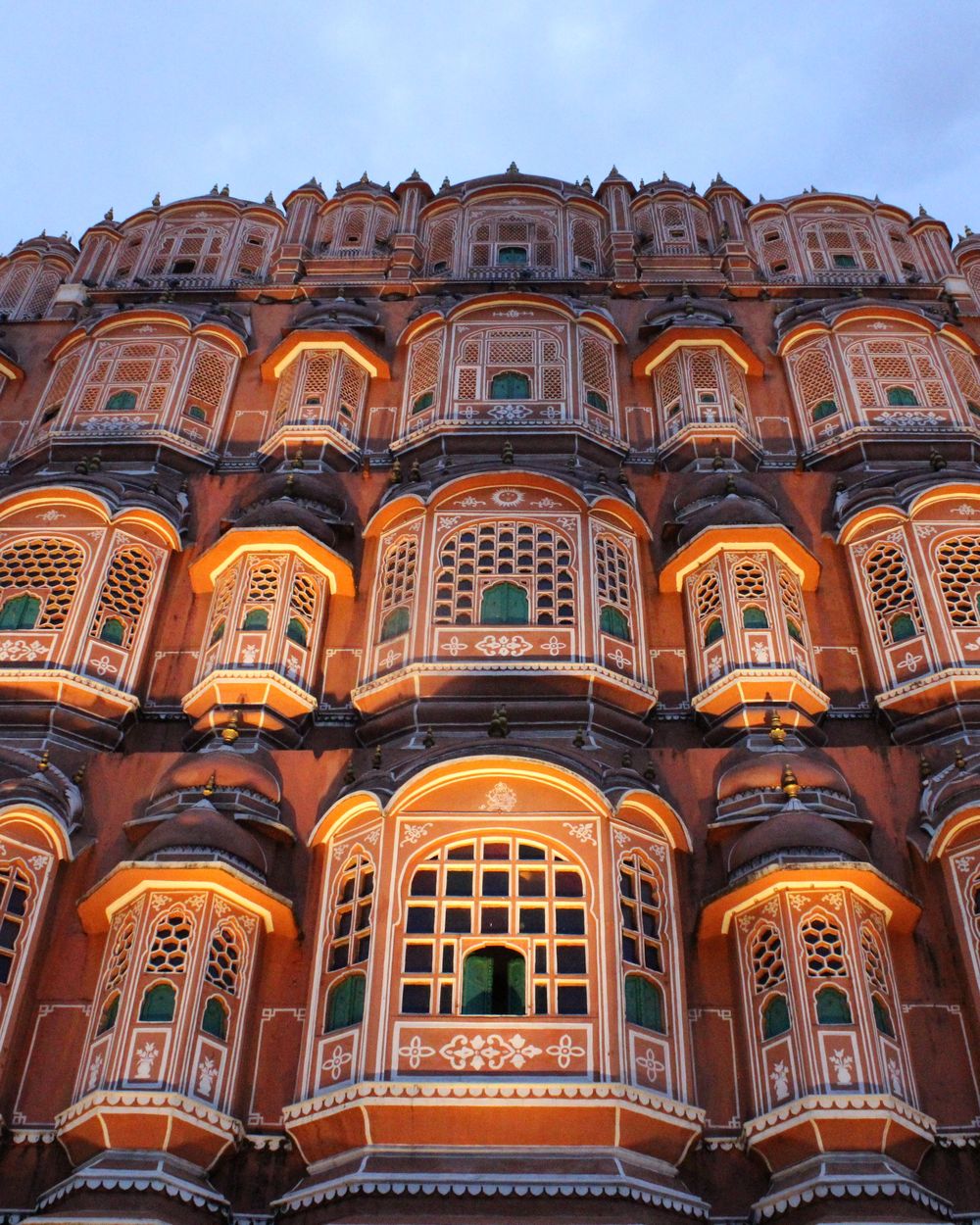
Bikaner's highlights
Junagarh Fort
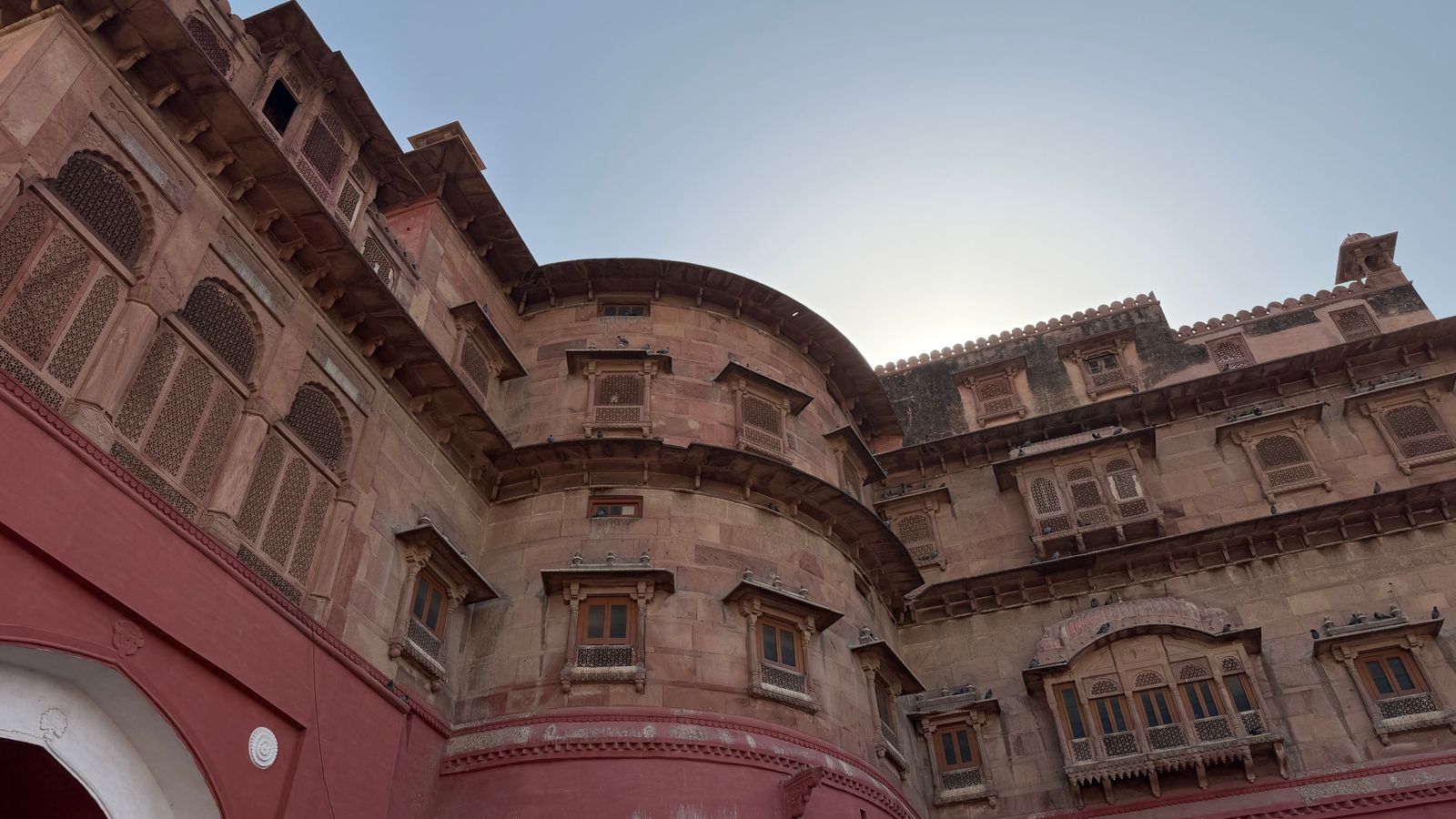
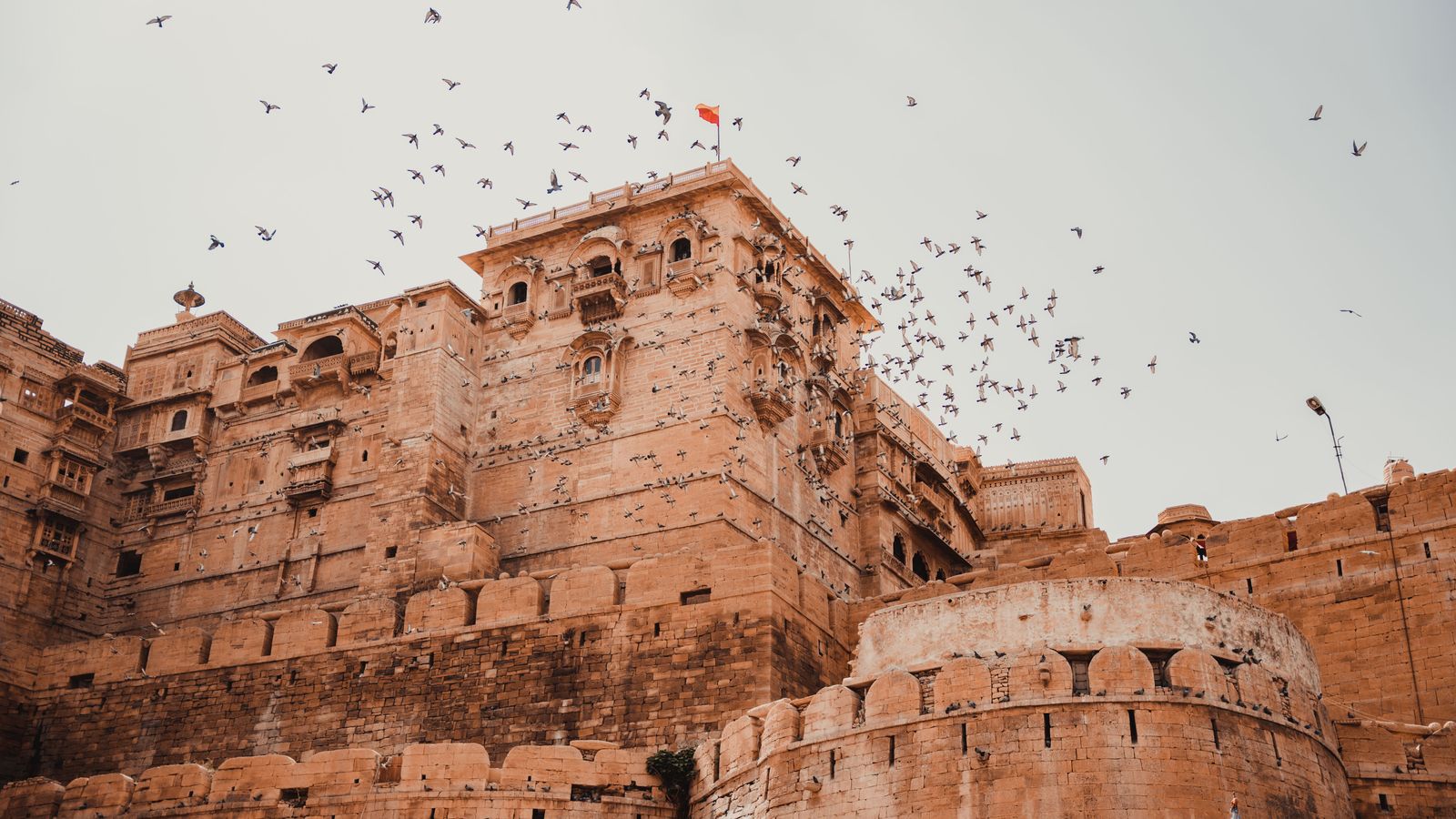
Unlike most Rajasthani forts, Junagarh stands on the plain rather than a hilltop, protected by a moat and massive walls. Built in the late sixteenth century by Raja Rai Singh, a general in Akbar's army, and extended by later rulers, it contains a sequence of exquisitely decorated palaces: the gold-leaf and lacquer work of Anup Mahal, the mirrors of Phool Mahal, the durbar hall of Karan Mahal and the blue-and-white clouds painted in the Badal Mahal. The museum also displays a First World War-era biplane gifted to Maharaja Ganga Singh. Guided visits run through the day.
Lalgarh Palace
Built in the early twentieth century for Maharaja Ganga Singh, Lalgarh is a vast Indo-Saracenic palace of carved red sandstone with courtyards, pavilions and lawns. Part is a heritage hotel, and a museum wing displays royal photographs, hunting trophies and memorabilia.
The old city and its havelis
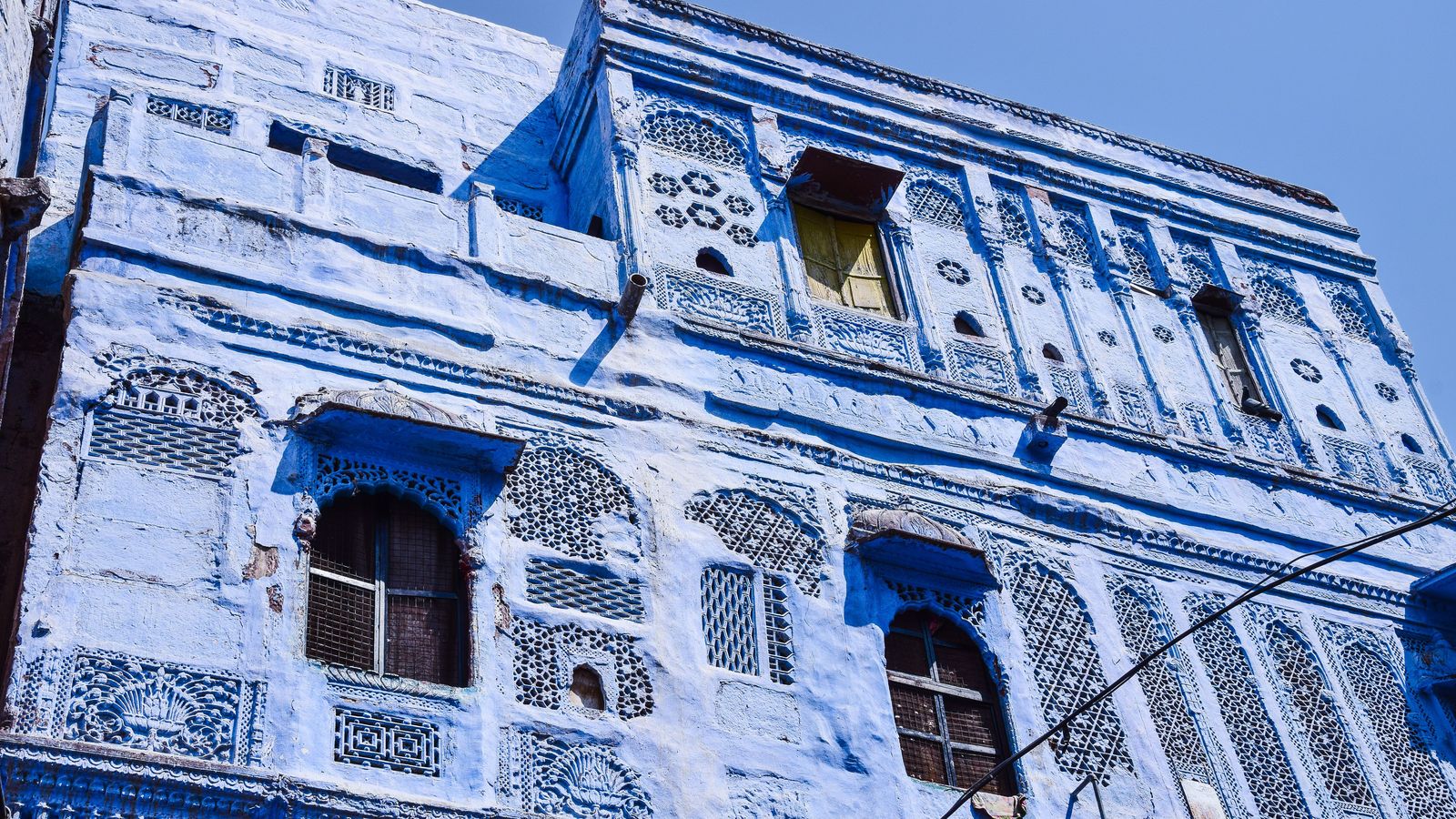
In the lanes of the walled city, the Rampuria havelis are the star: a group of merchants' mansions in deep red sandstone with carved façades and balconies. Nearby, the fifteenth-century Bhandasar Jain Temple is famous for its painted interior and for a local legend that ghee rather than water was mixed into its mortar. A guided walk through the old city is the best way to find them.
Camel country
The National Research Centre on Camel, a few kilometres outside the city, breeds and studies camels of several Indian breeds. Visitors can see the herds, a small museum and, at the parlour, taste camel-milk products. Afternoons, when the herds return, are the best time to go; check visiting hours locally.
Karni Mata Temple, Deshnoke
About 30 km south of Bikaner, this temple to the folk goddess Karni Mata is famous for the thousands of rats, called kabbas, that live in it and are revered as the goddess's descendants. Devotees consider it lucky to spot one of the rare white rats. The temple's silver doors and marble carving are beautiful, and shoes must be removed at the entrance.
Also nearby
- Gajner Palace, about 30 km west, a lakeside hunting lodge of the Bikaner rulers, now a hotel beside a wildlife reserve.
- Kolayat, about 50 km south-west, a lake-side pilgrimage town with a fair during the month of Kartik.
The Bikaner district portal lists the district's tourist places and events.
Food
Bikaneri bhujia is made fresh in countless shops, along with papad, kachori and rasgulla. The breakfast of champions here is a hot kachori with spicy potato curry and a glass of chai.
The road: Jaipur to Bikaner, and on to Jaisalmer
Via Sikar and Shekhawati (about 330 km)
The main route leaves Jaipur northwards on NH52 through Chomu and Reengus to Sikar, then continues into Shekhawati past Fatehpur, where several painted havelis are open to visitors. From Fatehpur, Mandawa, with its fort-hotel and fresco-covered mansions, is a short detour; our Mandawa by road guide describes it. Beyond Shekhawati the land flattens into scrub and sand, and the road runs on through Sri Dungargarh to Bikaner. The highway is mostly two to four lanes, with dhabas at Sikar, Fatehpur and Sri Dungargarh; tolls are passed through at cost.
Via Nagaur and Deshnoke
A southern alternative runs through Nagaur, with its fort and cattle fair, and reaches Bikaner from the south past the Karni Mata temple at Deshnoke. It is a useful option if the temple is a priority and you want to see it on arrival day.
Jaipur's traffic
Getting out of north Jaipur towards Chomu can be slow on weekday mornings. Leaving at 6:30 am makes a real difference. For the return, plan to reach the Jaipur outskirts before the evening peak.
Onward to Jaisalmer
Bikaner to Jaisalmer is roughly 330 km of open desert, typically six hours. Many guests follow a desert loop of Jaipur, Bikaner, Jaisalmer, Jodhpur and back, described in our Jaisalmer by road guide and on the Rajasthan tour by car page.
When to visit Bikaner
October to March is the time to go. Days are warm and dry, evenings cool, and nights in December and January can drop close to freezing, so bring warm clothes. The Bikaner Camel Festival, usually held in January, brings decorated camels, folk performers, races and a lively atmosphere to the city; the dates are published by the state tourism department on tourism.rajasthan.gov.in.
April to June is extremely hot, with dust storms in the afternoons. If you travel then, do the fort at opening time and rest through the middle of the day. July to September brings sparse monsoon rain; the desert briefly greens and the heat eases slightly.
Religious fairs add colour too. The Karni Mata fairs at Deshnoke take place twice a year during the Navratri periods, and the Kolayat fair falls in Kartik, around November. Expect crowds and diversions near the temples on those days.
Cars, services and fares for Bikaner
RutzIndia.com can drop you in Bikaner, keep the car for a Shekhawati and Bikaner weekend, or run the whole desert circuit. The fares in the grid do not include 5% GST. We add toll and parking charges at face value, keep the receipts and share them with your invoice. On overnight trips your chauffeur's allowance is Rs 1,500 a night, and a return journey is charged for at least 250 km on each day it covers.
| Route or package | Economy sedan | Ertiga | Innova Crysta | Tempo Traveller |
|---|---|---|---|---|
| Jaipur to Bikaner, one way (330 km) | Rs 11,880 Pay Now to Reserve | Rs 13,860 Pay Now to Reserve | Rs 18,810 Pay Now to Reserve | Rs 25,740 Pay Now to Reserve |
| Jaipur–Bikaner–Jaipur, 2 days (660 km) | Rs 23,760 Pay Now to Reserve | Rs 27,720 Pay Now to Reserve | Rs 37,620 Pay Now to Reserve | Rs 51,480 Pay Now to Reserve |
| Bikaner local 8 hr / 80 km (incl. Deshnoke) | Rs 7,200 Pay Now to Reserve | Rs 9,000 Pay Now to Reserve | Rs 12,600 Pay Now to Reserve | Rs 19,500 Pay Now to Reserve |
| Bikaner to Jaisalmer, one way (about 330 km) | Rs 11,880 Pay Now to Reserve | Rs 13,860 Pay Now to Reserve | Rs 18,810 Pay Now to Reserve | Rs 25,740 Pay Now to Reserve |
The Bikaner local package follows the standard national rate; a half day of 4 hr / 40 km is Rs 4,320 Pay Now to Reserve in a sedan. A Toyota Fortuner or MG Gloster for the desert stretches is available at Rs 84 per km, or Rs 27,720 for the one-way run from Jaipur.
What we offer:
- Jaipur to Bikaner transfers, picked up from any Jaipur hotel or the airport through our Jaipur taxi service.
- Shekhawati and Bikaner weekends, with nights in Mandawa and Bikaner and the same driver throughout.
- Groups and families in a Tempo Traveller from Jaipur, useful for Karni Mata pilgrimages and wedding guests.
- Desert circuits to Jaisalmer, Jodhpur and back, with one car and chauffeur; see Jodhpur by road for the southern leg.
Every car is four model years old or newer. Payment by card or UPI goes through the online booker, and companies receive a GST invoice.

A two or three day plan by car
Day 1: Jaipur to Bikaner via Shekhawati (about 350 km)
Leave Jaipur at 6:30 am. Breakfast at Sikar, then an hour among the painted havelis of Fatehpur or Mandawa. Lunch on the highway and reach Bikaner by mid-afternoon; the camel farm for the evening herd, then dinner in the old city.
Day 2: Bikaner's sights (about 80 km)
Junagarh Fort at opening. The Rampuria havelis and Bhandasar temple on a walk through the old city, lunch, then Lalgarh Palace. Late afternoon drive to Deshnoke for Karni Mata. The Bikaner 8 hr / 80 km package covers it.
Day 3: onward or return
Drive back to Jaipur, or continue west across the desert to Jaisalmer (about 330 km), perhaps stopping at Gajner Palace for breakfast by the lake.
Tips for Bikaner by road
- Fort first. Junagarh is best early, before tour groups and the midday heat.
- Karni Mata etiquette. Shoes come off; socks are allowed. Walk carefully and do not disturb the rats.
- Camel farm hours. The herds return in the afternoon; confirm timings before you go.
- Buy bhujia fresh from busy shops in the old city, and let your driver know if you want to stock up for home; the boot has room.
- Winter nights are cold in the desert. Pack a jacket even if the day is warm.
- Entry fees at Junagarh and Lalgarh change from time to time; check the official portals or ask at the gate.
Bikaner and Shekhawati are popular for small heritage weddings. If you are planning one, our desk can arrange cars for the family, a luxury car for the couple and transport for guests from Jaipur. Talk to the travel desk.
Booking and cancellations
Book online with your pickup point, dates and any Shekhawati stops you want, or WhatsApp the desk. We send the chauffeur's name and car number the evening before you travel. Cancel with more than three days to go and there is nothing to pay. Once you are within 72 hours we charge 10 per cent; within 48 hours, 50 per cent; within 24 hours or on a no-show, the whole fare. The cancellation policy sets this out in full, and the fares page lists every vehicle class.