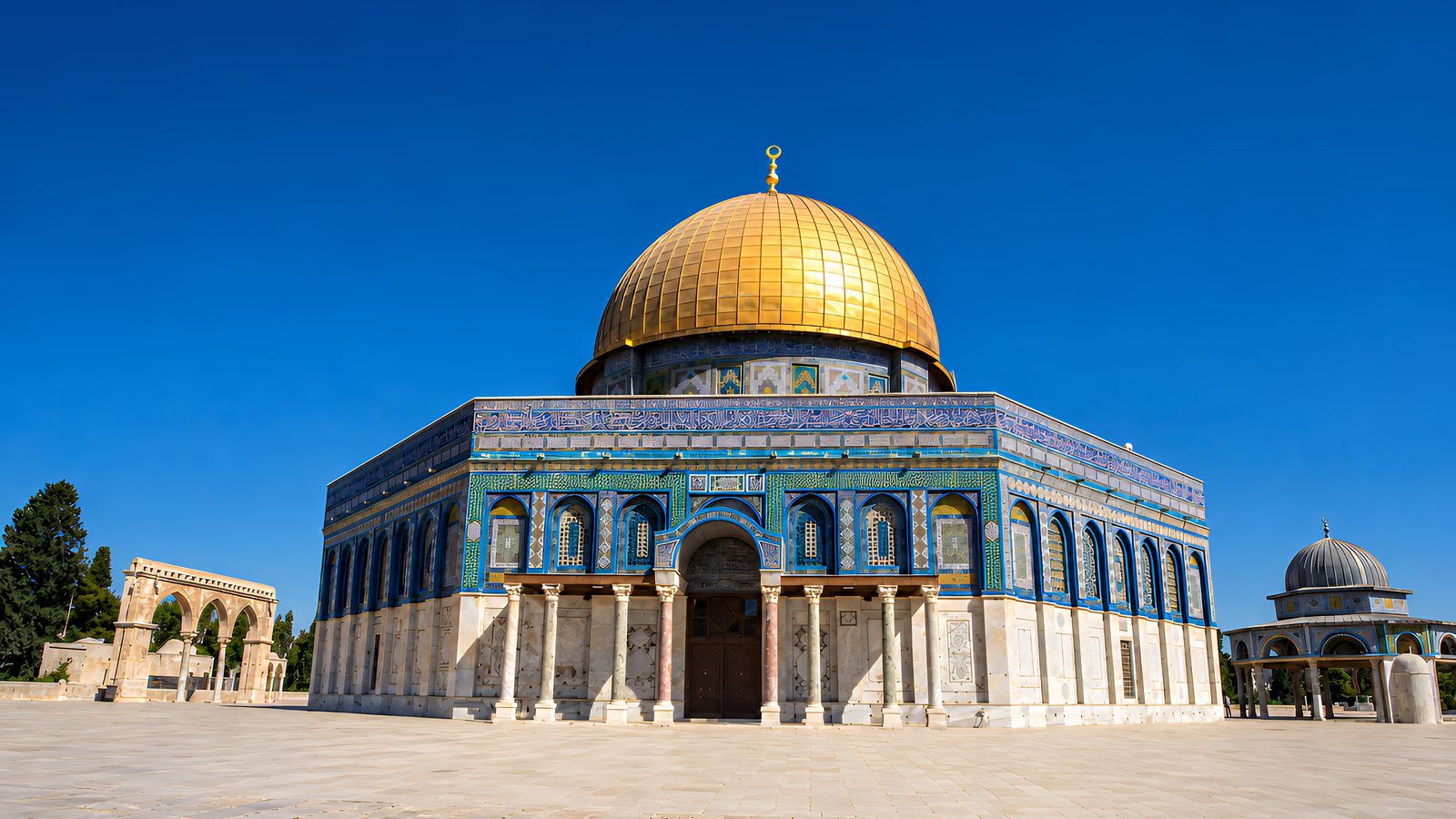
Ajmer draws travellers of every faith to the shrine of Khwaja Moinuddin Chishti, the Sufi saint whose dargah has been a place of prayer for about eight centuries. It is also a lively lake city with Mughal pavilions, a hill fort and one of the finest Jain temple halls in Rajasthan. Reaching Ajmer by road from Jaipur takes roughly two and a half hours on a modern six-lane highway, which makes it the simplest pilgrimage drive in the state. This page sets out the route, the 2026 cab fares from RutzIndia.com, the Urs calendar, parking realities near the Dargah Bazaar and a sensible day plan that folds in Pushkar next door.
Ajmer by road from Jaipur: distance, time and taxi fare
Ajmer lies about 135 km south-west of Jaipur on NH-48, usually a 2.5-hour drive with one tea stop. A one-way Dzire-class sedan is Rs 4,860 Pay Now to Reserve and an Innova Crysta Rs 7,690 Pay Now to Reserve. A same-day sedan round trip of 270 km costs Rs 9,720 Pay Now to Reserve. Prices exclude 5% GST; tolls and parking are at actual cost.
We calculate every outstation fare the same transparent way: kilometres multiplied by the per-km rate of the car you choose. Jaipur to Ajmer is 135 km, so a sedan at Rs 36/km is Rs 4,860 Pay Now to Reserve and an Innova at Rs 57.6/km is Rs 7,690 Pay Now to Reserve. When you come back the same day, the car is billed on the higher of the actual distance or 250 km per calendar day; 270 km is the figure for a plain there-and-back. If you add Pushkar, the distance rises to about 300 km, still a single-day bill. For city sightseeing in Jaipur the day before or after, see our Jaipur taxi service, where the local 8 hr/80 km sedan package is Rs 6,840 Pay Now to Reserve.
What to see in Ajmer
Dargah Sharif
The Dargah of Khwaja Gharib Nawaz sits at the end of a crowded bazaar lane below Taragarh hill. You enter through the Nizam Gate and the Buland Darwaza, pass the two giant degs (cauldrons) in which food is cooked for the faithful, and reach the marble tomb chamber with its silver-plated railings. Visitors of all religions are welcome. Heads must be covered, so carry a scarf or buy a cap outside; shoes are left at stalls near the gate. Thursday evenings and Fridays are the busiest, and the qawwali sessions in the courtyard after Maghrib prayers are unforgettable. The Wikipedia entry on Ajmer Sharif Dargah is a useful primer on its history and architecture.
Adhai Din Ka Jhonpra
A few minutes' walk uphill from the Dargah stands one of India's oldest surviving mosques, a twelfth-century structure built with columns from earlier temples. Its screen of seven arches carries intricate calligraphy. It is a protected monument; the Archaeological Survey of India maintains it, and entry has usually been free.
Ana Sagar and the Daulat Bagh baradaris
Ana Sagar is the artificial lake created in the twelfth century by Arnoraja. Emperor Shah Jahan added the marble pavilions (baradaris) on its embankment, and the adjoining Daulat Bagh garden is a pleasant spot for an evening walk. Boating is sometimes available depending on water levels.
Soniji ki Nasiyan
Known as the Red Temple, this Digambar Jain shrine has a hall filled with a gilded wooden model of the Jain universe: flying ships, elephants and palaces. It is one of the most surprising interiors in Rajasthan.
Taragarh Fort
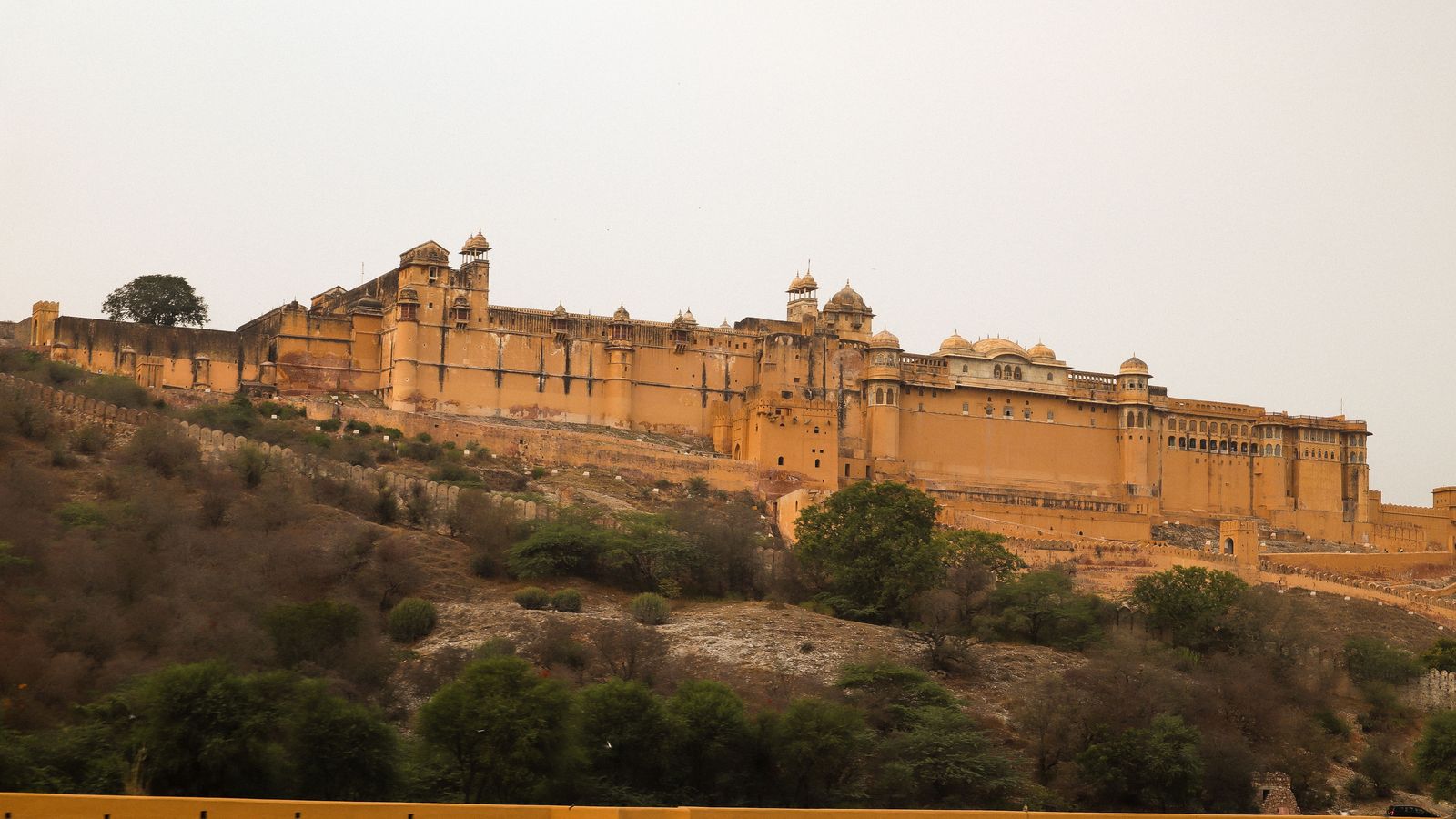
Perched on the ridge above the city, Taragarh is partly ruined but offers a sweeping view of Ajmer. The road is steep and narrow; a sedan manages it in dry weather, and the drive takes about 20 minutes from the city.
The road from Jaipur and other approaches
The Jaipur to Ajmer drive is almost entirely on NH-48, the Golden Quadrilateral corridor that links Delhi and Mumbai.
- Leaving Jaipur. Exit by Ajmer Road past Bhankrota. Before 8 am the city section flows well; after 9:30 am it slows around the Mahindra SEZ junction.
- Highway section. A divided six-lane road with regular tolls, clear signage and plenty of dhabas. Speeds are steady but trucks are heavy after dark.
- Kishangarh. Roughly 100 km from Jaipur, the marble town is the logical break. The Kishangarh airport is on the outskirts, about 27 km from Ajmer.
- Entering Ajmer. Traffic funnels into narrow lanes near the railway station and Dargah Bazaar. Cars cannot reach the shrine gate; drivers drop you near the Delhi Gate or Kaiser Ganj area and wait at a paid lot, or use the multi-level parking where available.
Other approaches: from Delhi, Ajmer is about 415 km on NH-48 via Jaipur, a full day's drive that many pilgrims split with a night in Jaipur using our Delhi to Jaipur taxi. From Udaipur the distance is about 265 km via Bhilwara, and from Jodhpur about 200 km.
When to visit: Urs, Ramzan and weather
The Urs of Khwaja Moinuddin Chishti is the anniversary of the saint's passing, observed over six days in the Islamic month of Rajab. Because the Islamic calendar is lunar, the Urs moves about eleven days earlier every year. During Urs, several lakh zaireen (pilgrims) arrive, the flag-hoisting and the opening of the Jannati Darwaza draw huge crowds, and the city administration sets up traffic diversions and remote parking. If you are travelling for Urs, book your car weeks ahead and expect to walk further from the drop point.
Ramzan evenings are atmospheric, with iftar stalls lining the bazaar. Eid brings special prayers and heavier footfall.
Weather-wise, October to March is best, with pleasant days and cool nights. April to June is harsh, with 40 C afternoons: visit the Dargah early, retreat to your hotel at midday and return for evening qawwali. The monsoon (July to September) brings brief, heavy showers and fills Ana Sagar.
RutzIndia.com services for your Ajmer journey
Whether you are a family on ziyarat, a group of friends pairing Ajmer with Pushkar, or a corporate team visiting the industrial belt near Beawar, the chauffeured options are the same:
- One-way drop from Jaipur, Kishangarh airport or Jaipur airport to Ajmer.
- Same-day return from Jaipur, including waiting time while you pray and eat.
- Pilgrimage packages combining Ajmer with other shrines; our pilgrimage taxi page explains how multi-shrine circuits are billed.
- Airport and railway pickups: flights are tracked, the chauffeur waits with a name board, and waiting is free for 60 minutes after an international landing or 30 minutes after a domestic one; after that it is charged at the hourly rate.
- Group cars: a Jaipur Tempo Traveller for 12 to 17 people is the usual choice for extended families travelling together for Urs.
| Vehicle | Jaipur to Ajmer one way (135 km) | Return same day (270 km) | Ajmer + Pushkar day (about 300 km) |
|---|---|---|---|
| Dzire-class sedan | Rs 4,860 Pay Now to Reserve | Rs 9,720 Pay Now to Reserve | Rs 10,800 Pay Now to Reserve |
| Premium sedan (City, Verna) | Rs 6,480 Pay Now to Reserve | Rs 12,960 Pay Now to Reserve | Rs 14,400 Pay Now to Reserve |
| Innova Crysta | Rs 7,690 Pay Now to Reserve | Rs 15,390 Pay Now to Reserve | Rs 17,100 Pay Now to Reserve |
| Tempo Traveller | Rs 10,530 Pay Now to Reserve | Rs 21,060 Pay Now to Reserve | Rs 23,400 Pay Now to Reserve |
Every figure above is before 5% GST. Toll plazas on NH-48 and parking in Ajmer or Pushkar are added at the actual amount paid. If your plan involves a night away, the driver's night allowance of Rs 1,500 is added, and a two-day round trip is billed on at least 500 km (250 km per day). Cars are no older than four model years. Pay by card or UPI in the booker, and download a GST invoice if the trip is for business.
Our standing cancellation terms: no charge if you cancel more than 72 hours ahead, 10% if you cancel within 72 hours, 50% within 48 hours and 100% within 24 hours or if you do not show. Read the full cancellation policy before you book.

A one-day Ajmer plan with Pushkar, and a relaxed two-day version
Single day from Jaipur (about 300 km).
- 6:30 am pickup in Jaipur; breakfast at a highway dhaba near Kishangarh.
- 9:30 am drop near the Dargah Bazaar. Ziyarat, then Adhai Din Ka Jhonpra.
- 12:30 pm lunch of biryani or sohan halwa shopping in the bazaar.
- 2 pm Soniji ki Nasiyan and a quick stop at Ana Sagar.
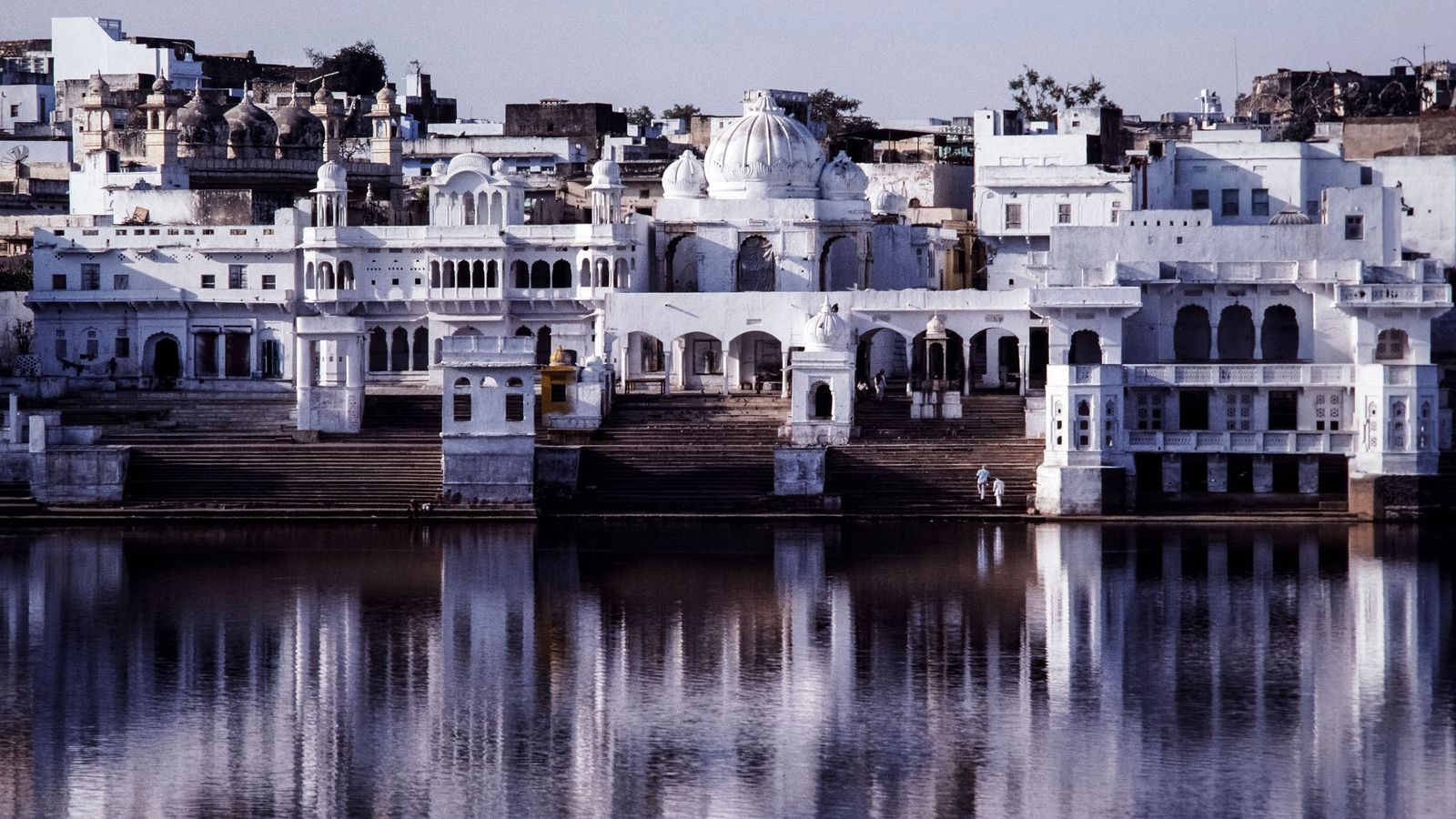
- 3:30 pm drive 15 km over Nag Pahar to Pushkar for the lake ghats and the Brahma temple (see our Pushkar by road guide).
- 6:30 pm leave Pushkar; reach Jaipur about 9:30 pm.
Two days (about 500 km billed). Stay near Ana Sagar so you can attend the evening qawwali at the Dargah without watching the clock. Day two covers Taragarh in the morning light, then Pushkar, and returns to Jaipur for dinner. The bill is the two-day minimum: Rs 18,000 Pay Now to Reserve in a sedan or Rs 28,500 Pay Now to Reserve in an Innova, plus one night allowance, tolls, parking and GST.
Practical tips for pilgrims and sightseers
- Walk the last stretch. Nobody drives up to the Dargah gate. Plan on 10 to 15 minutes on foot through the bazaar, longer during Urs.
- Head covering and dress. Everyone covers their head inside the Dargah. Loose, modest clothing is sensible for the Jain temple and the mosque too.
- Valuables. Crowds are dense; keep phones and wallets zipped. Leave bags you do not need locked in the car.
- Chadar and offerings. Rose petals and chadars are sold in the lanes. Prices vary widely; decide your budget first.
- Photography. Not allowed inside the tomb chamber. Ask before photographing people.
- Food. The bazaar is famous for sohan halwa, kadhi kachori and mutton dishes; Pushkar next door is strictly vegetarian, so eat in Ajmer if you want meat.
- Timings. The Dargah opens before dawn and stays open late, but the inner chamber closes for cleaning at set times. Check locally on the day.
If Ajmer is part of a longer journey, our Rajasthan tour by car lets you continue to Jodhpur or Udaipur with the same chauffeur, and the Jaipur by road guide covers the capital's forts before you set out.