Konark by road: distance, drive time and fares
Konark is about 65 km from Bhubaneswar, typically 1.5 hours by car via Pipili, and about 35 km from Puri along the coastal marine drive. RutzIndia.com charges Rs 3,960 Pay Now to Reserve one way by sedan and Rs 6,930 Pay Now to Reserve by Innova Crysta from Bhubaneswar, the minimum fare for each class, before 5% GST. A Bhubaneswar, Konark and Puri day loop is Rs 9,000 Pay Now to Reserve by sedan.
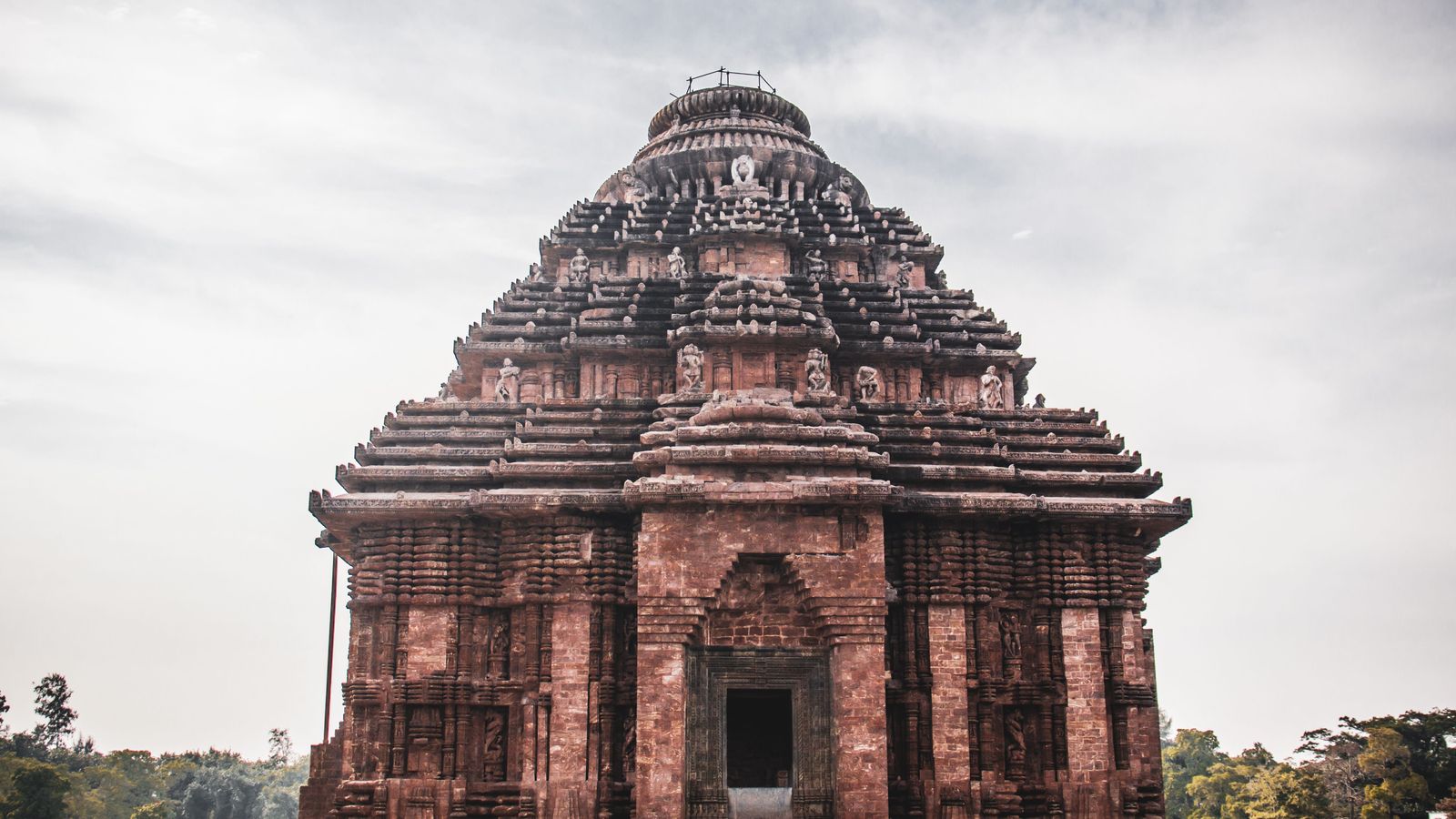
The Sun Temple at Konark is one of the most ambitious buildings ever made in India. Built in the mid-13th century under King Narasimhadeva I of the Eastern Ganga dynasty, it was conceived as the colossal stone chariot of Surya, the Sun God: a temple on a high platform carved with 24 great wheels and drawn by seven horses, facing east so the first light of the day reaches the entrance. The main tower has long since collapsed, but the surviving assembly hall and the carved platform are still breathtaking, and the site is a UNESCO World Heritage Site cared for by the Archaeological Survey of India.
Konark is small and quiet, with the temple, a museum, a couple of beaches and not much else, so almost everyone visits by car from Bhubaneswar or Puri, often in a single day that also covers the Jagannath temple. This guide explains the two approach roads, what to look for at the temple, the best time of day and year, how RutzIndia.com prices the trip and a few ways to combine it. When you are ready, book online and pay by card or UPI.
Reading the Sun Temple: what to look for
Start by walking around the base. The wheels, each nearly three metres across, are carved with delicate medallions of courtly life, animals and deities, and the shadows of their spokes were used as sundials: guides will show you how to read the approximate hour from them. The horses at the front stair, and the colossal elephants and lions near the site, give a sense of the scale the builders worked at.
The walls carry an enormous catalogue of sculpture: musicians and dancers, hunting scenes, warriors, royal processions, mythical beasts and the celebrated erotic panels found in many temples of the period. On the upper terraces, three green chlorite images of Surya face south, west and north, showing the god at morning, noon and evening.
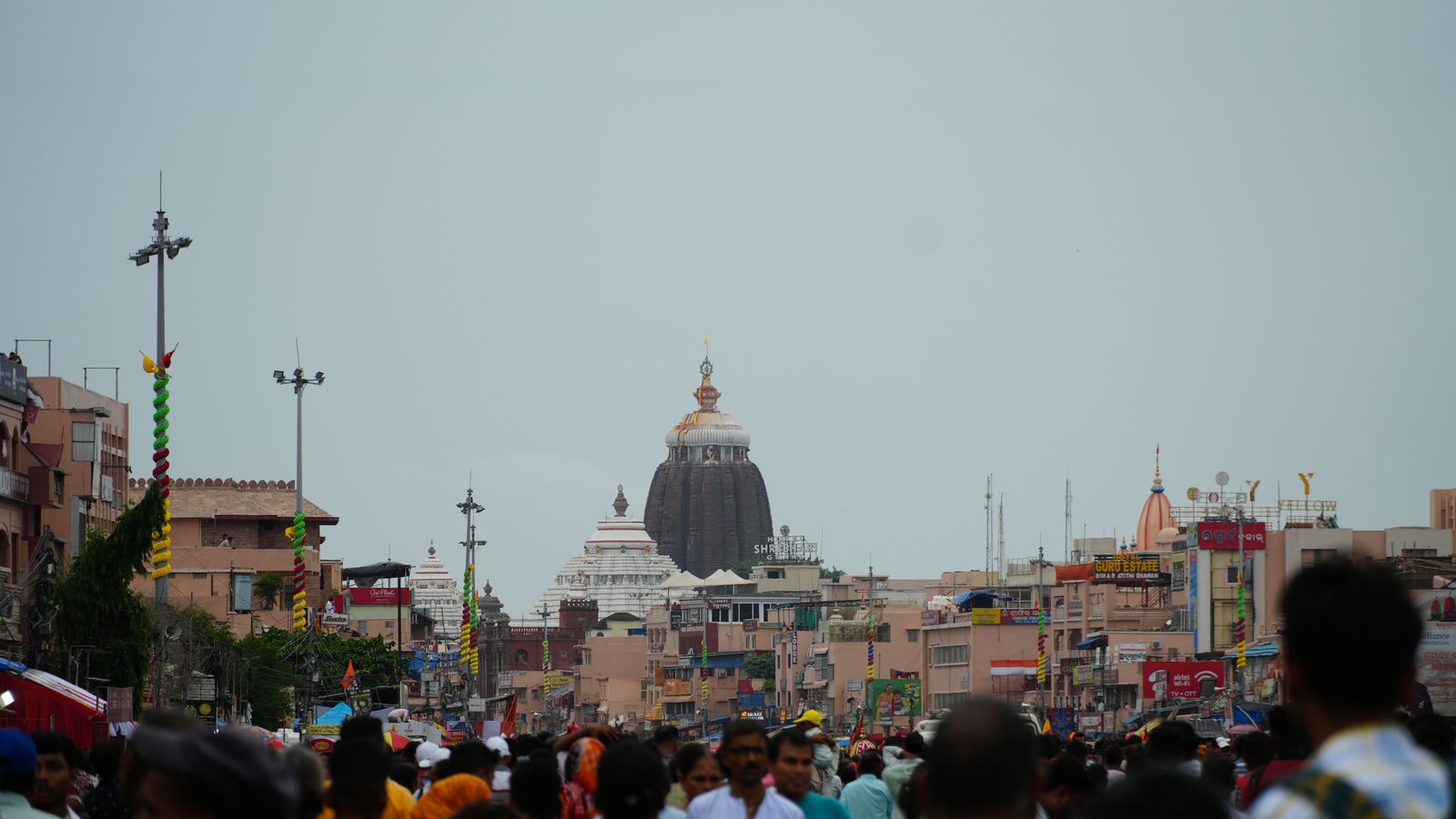
The standing structure is the jagamohana, the assembly hall in front of the vanished sanctum. In the early 20th century it was filled with sand and sealed to stop it collapsing, which is why you cannot go inside. Separately stands the Natya Mandap, the dance hall, with its richly carved pillars. European sailors once used the dark mass of the temple as a landmark and called it the Black Pagoda, to distinguish it from the White Pagoda of Puri's Jagannath temple.
Local tradition wraps the temple in stories. One legend links the site to Samba, a son of Krishna, who is said to have been cured of leprosy after worshipping the Sun at the mouth of the Chandrabhaga river; another tells of a lodestone crowning the tower that pulled ships off course until it was removed. Historians treat these as folklore, and the real reasons for the sanctum's collapse, whether weak foundations, lightning or later damage, are still debated. What is certain is the sheer labour involved: the builders hauled chlorite, laterite and khondalite stone to a sandy shore and raised a structure that still dominates the flat coastline more than seven centuries later.
Near the entrance, the ASI museum displays sculptures recovered from the site and is worth half an hour. Check timings, tickets and any restrictions on the Archaeological Survey of India page for the Sun Temple, Konark before you go; entry fees differ for Indian and foreign visitors and online tickets are usually available.
Two roads to Konark
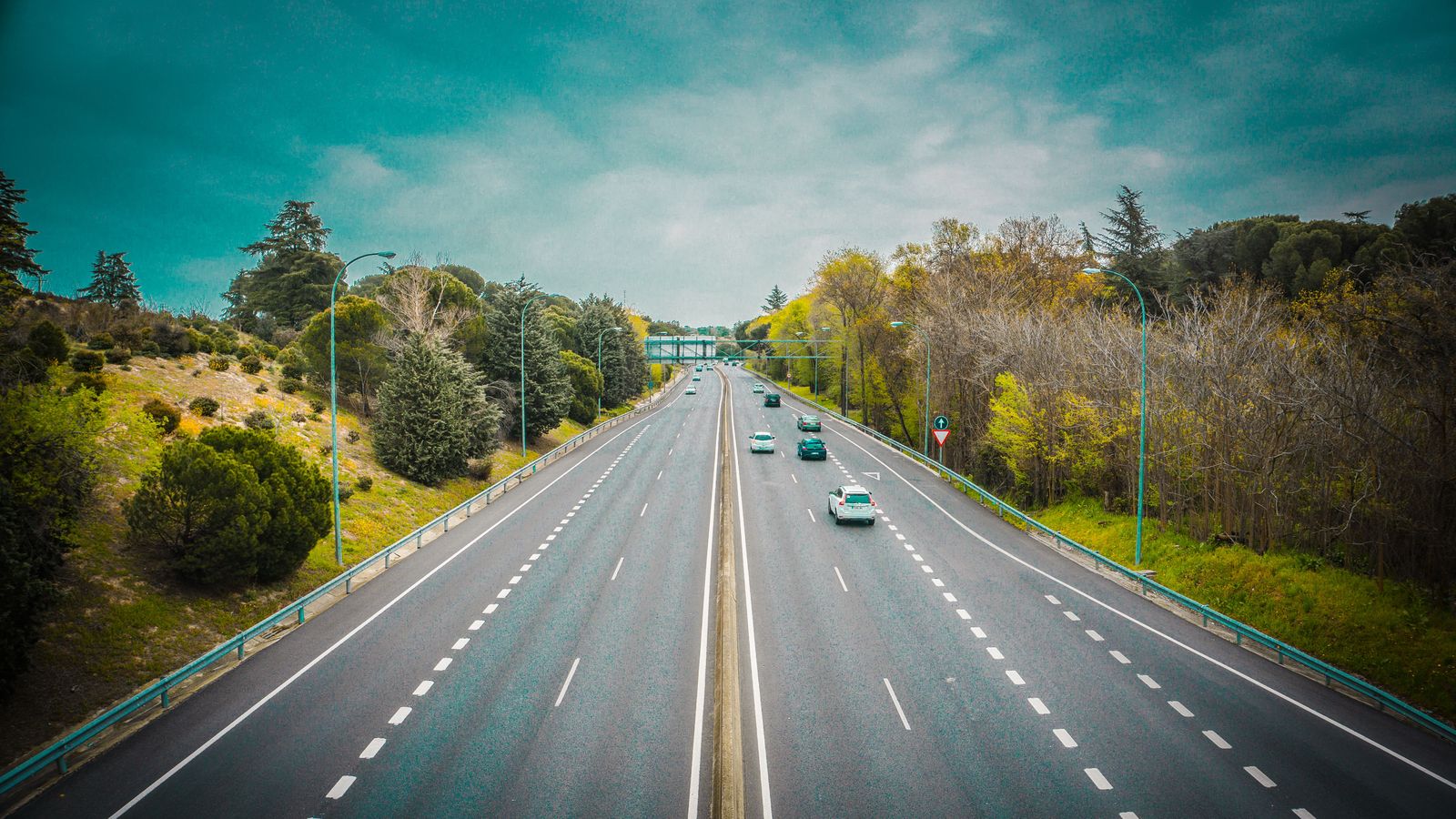
From Bhubaneswar (about 65 km). The car takes NH316 towards Puri as far as Pipili, then turns east onto the state road through the market towns of the Prachi valley to Konark. The first part is fast four-lane highway; the second is a good two-lane road through villages, paddy fields and coconut palms, with slower traffic near the markets on weekly haat days. Allow about 1.5 hours, and a little more if you stop in Pipili for its appliqué canopies and lanterns.
From Puri along the marine drive (about 35 km). The coastal road from Puri to Konark is one of the prettiest short drives in eastern India. It runs parallel to the Bay of Bengal through the casuarina and cashew plantations of the Balukhand-Konark Wildlife Sanctuary, crossing river mouths and passing the Ramachandi temple where the Kushabhadra river meets the sea. There are places to stop and walk down to near-empty beaches. The road is two-lane and quiet, but watch for cattle and cyclists; our drivers keep it to a relaxed pace. See our Puri by road guide for the Puri end.
From Kolkata, Konark is roughly 500 km, typically 9 to 10 hours on NH16 with the last section via Bhubaneswar or Puri. Most travellers from Bengal break the journey at Puri.
When to visit, and the Konark Dance Festival
October to March is ideal. The weather is pleasant, the stone is comfortable to walk on and the light is soft. The temple is at its best early in the morning, when the sun rises over the sea behind it and the carvings are sharp in low light, or in the late afternoon when the sandstone turns gold. Midday from April to June is fiercely hot on the open platform.
The Konark Dance Festival, held in early December at an open-air auditorium with the temple as a backdrop, brings leading Odissi, Bharatanatyam, Kathak, Kuchipudi, Manipuri and folk performers for several evenings. Dates are announced by the state; check the official Odisha Tourism website. The Chandrabhaga Mela, on the auspicious Magha Saptami in January or February, draws pilgrims to bathe at dawn at nearby Chandrabhaga beach. Both events fill local accommodation, so book cars and rooms early.
The monsoon (July to September) is humid and wet but not a barrier: the temple stays open and the marine drive is at its greenest, although heavy rain can make the grounds slippery.
Chauffeured services and fares for Konark
RutzIndia.com provides:
- Day trips from Bhubaneswar to Konark alone, or the classic Bhubaneswar, Konark and Puri loop.
- Short transfers between Puri and Konark along the marine drive.
- Airport pickups at Bhubaneswar with flight tracking and a name board, and 30 minutes of free waiting after domestic arrivals (60 after international).
- Odisha heritage tours covering Bhubaneswar's temples, Konark, Puri and Chilika over three or four days.
- Group transport in a Tempo Traveller for schools, cultural groups and festival audiences.
| Trip | Sedan (Rs 36/km) | Innova Crysta (Rs 57.6/km) | Tempo Traveller (Rs 78/km) |
|---|---|---|---|
| Bhubaneswar to Konark one way (about 65 km, minimum fare applies) | Rs 3,960 Pay Now to Reserve | Rs 6,930 Pay Now to Reserve | Rs 10,740 Pay Now to Reserve |
| Puri to Konark transfer (about 35 km, short-transfer rate) | Rs 3,960 Pay Now to Reserve | Rs 6,930 Pay Now to Reserve | Rs 10,740 Pay Now to Reserve |
| Bhubaneswar-Konark-Puri day loop (250 km billed) | Rs 9,000 Pay Now to Reserve | Rs 14,250 Pay Now to Reserve | Rs 19,500 Pay Now to Reserve |
| 4-day Odisha heritage circuit (1,000 km billed) | Rs 36,000 Pay Now to Reserve | Rs 57,000 Pay Now to Reserve | Rs 78,000 Pay Now to Reserve |
Prices are before 5% GST. Tolls, parking at the Sun Temple and any entry charges are passed on exactly as paid. Short hops of up to 40 km, like Puri to Konark, are billed at our standard airport-transfer fare rather than per kilometre. On multi-day tours the driver's night allowance is Rs 1,500 per night and each calendar day counts for a minimum of 250 km. A premium sedan such as a Honda City (Rs 48/km) is a comfortable upgrade for couples; see all classes on the fares page.
We use cars no more than four model years old. Cancellation is free until 72 hours before pickup; inside that, 10% is charged up to 48 hours before, 50% up to 24 hours before, and the whole fare within 24 hours or for a no-show. Details are on our cancellation policy page.
Book a Bhubaneswar to Konark cab
Itineraries that include Konark
Sunrise at Konark (about 180 km in the day). Leave Bhubaneswar at 4.30 am to reach Chandrabhaga beach for sunrise, walk to the temple as it opens, breakfast in Konark, take the marine drive to Puri for the Jagannath temple and lunch, and return to Bhubaneswar by evening.
Two days on the coast (about 230 km). Day 1: Bhubaneswar to Konark via Pipili, the temple and museum in the afternoon light, overnight at a beach resort on the Konark road. Day 2: Ramachandi beach and the marine drive to Puri, darshan, then Raghurajpur crafts village and back to Bhubaneswar.
Four days of Odisha (about 600 km). Bhubaneswar's temples and caves, Konark, Puri and a day at Chilika Lake, with the same car throughout. Our Bhubaneswar by road guide covers the city in detail.
Practical tips for Konark
- Hire an official guide at the ticket office; the carvings make far more sense with someone reading them for you.
- Footwear: the platform stones get hot by late morning, so wear comfortable shoes and carry water.
- Photography is allowed in most areas for personal use; drones and tripods need permission.
- Beaches: Chandrabhaga and Ramachandi are beautiful but the surf is strong; paddle, do not swim, unless lifeguards are present.
- Food: simple Odia meals in town; the resorts on the marine drive serve seafood.
- Groups: a Tempo Traveller or two sedans often work out cheaper per person than several autos, and keep everyone together.
Konark is a small detour with an enormous reward. If you only have one day in Odisha, spend it on this coastline. For longer circuits across India with a driver, browse tours by car, and for simple point-to-point drops see our one-way taxi service.